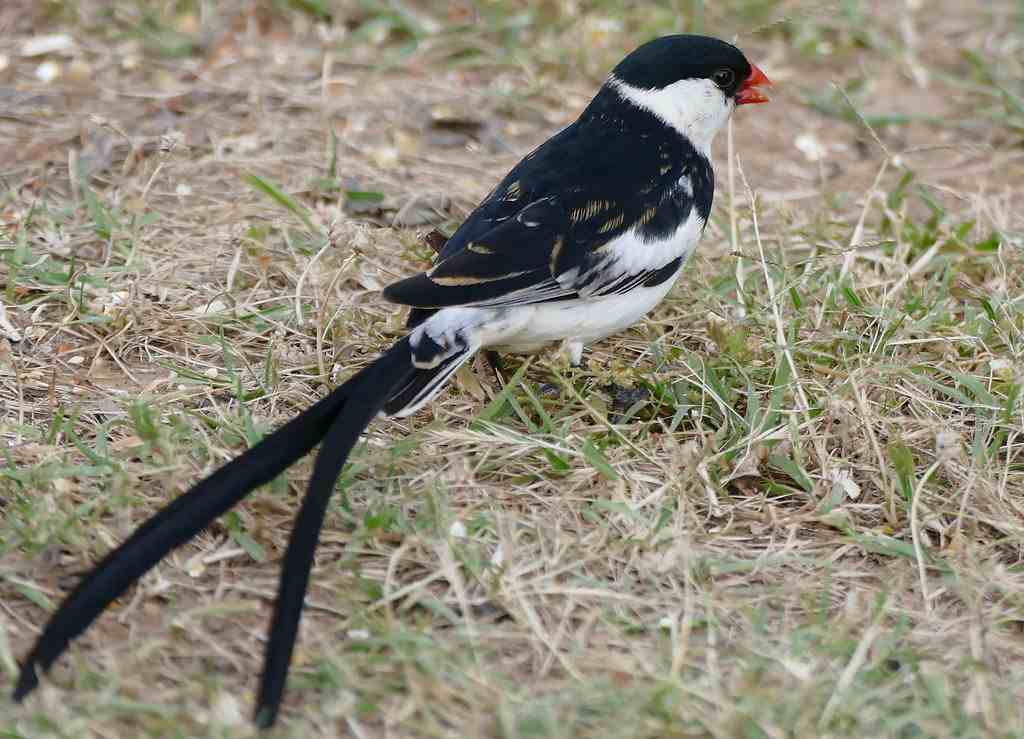
The Pin-tailed Whydah (Vidua macroura) is among Africa’s most visually stunning small birds. In Igbo land, it is called Ugeleoma, a name that reflects the delicate beauty and cultural significance of this remarkable songbird.
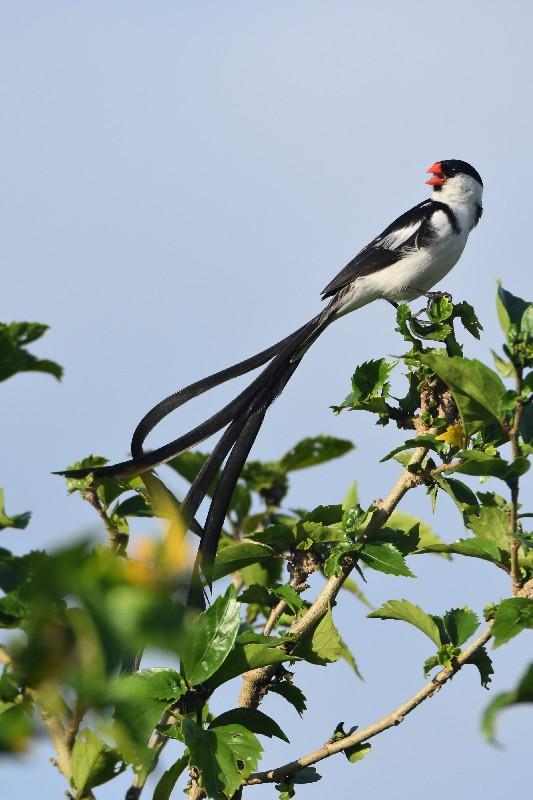
Ugeleoma is especially memorable for the breeding male’s long black tail streamers, bright reddish bill, and sharp black-and-white plumage. Found across much of sub-Saharan Africa, the Pin-tailed Whydah has an extremely wide range.
Ugeleoma as a Brood Parasite
The Pin-tailed Whydah is not only beautiful. It also has one of the most fascinating reproductive strategies in the bird world: brood parasitism.
Brood parasitism occurs when one bird lays its eggs in the nest of another bird, leaving the host bird to incubate and raise the chicks. In the case of the Pin-tailed Whydah, the female does not build a nest for her own young in the usual way. Instead, she searches for the nest of another small bird, usually a waxbill, and lays her eggs there.
One known host is the Anambra Waxbill (Estrilda poliopareia), an elusive finch associated with the wetter lowland habitats of southern Nigeria. The host bird then feeds and raises the young whydah, often alongside its own chicks.
This strategy is especially interesting because the Pin-tailed Whydah chick does not appear in the host nest as an obvious stranger. Young whydahs can closely resemble the host chicks in both appearance and begging behaviour. Research on Vidua species has shown that parasitic chicks may mimic the mouth markings and begging calls of their host species, increasing their chances of being fed and cared for by the foster parents.
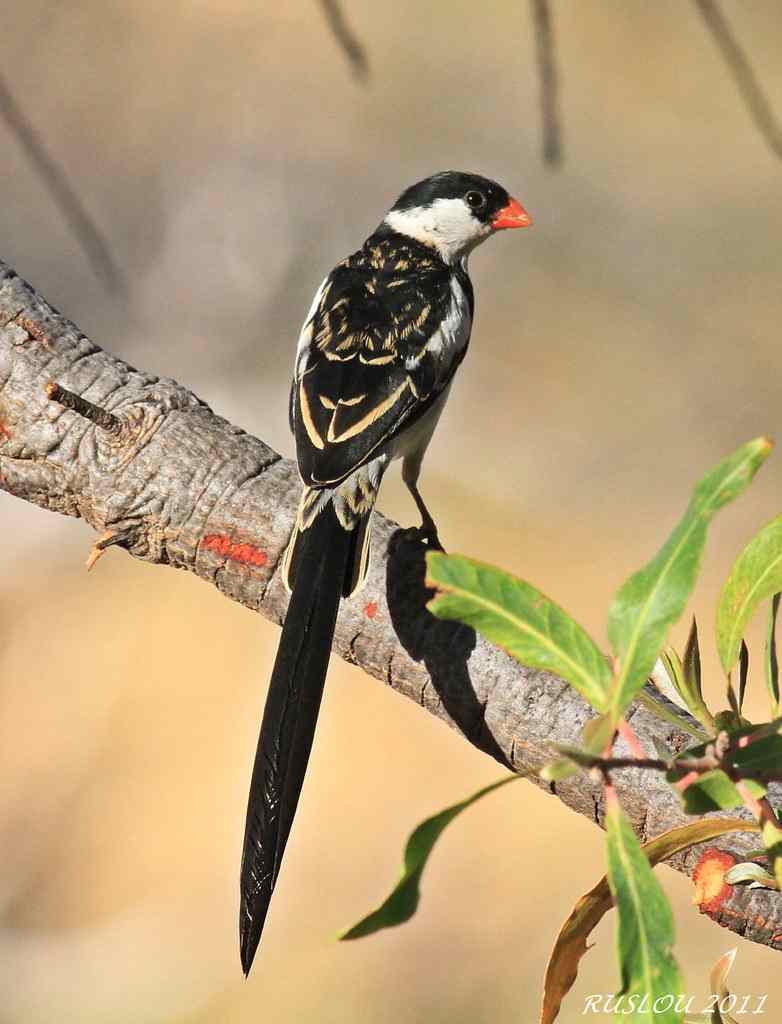
The Unique Beauty of the Ugeleoma Bird
The bird’s beauty hides a complex survival strategy. The male Pin-tailed Whydah uses his dramatic tail streamers during courtship displays, while the female’s reproductive success depends on finding suitable host nests. The species is known as an obligate brood parasite, meaning brood parasitism is not occasional behaviour but central to how it reproduces.
Relevance in Igbo Culture
For people interested in Igbo culture, African ecology, and traditional names for birds, Ugeleoma offers a powerful meeting point between indigenous knowledge and natural science. It reminds us that the birds named in local languages are not merely background creatures. They are part of memory, folklore, observation, and environmental intelligence.
The Pin-tailed Whydah shows how much meaning can live inside one small bird: beauty, deception, adaptation, survival, and cultural recognition. In Igbo land, where names often carry image, feeling, and story, Ugeleoma is more than a bird name. It is an invitation to look again at the living world around us.
Read Daniel Nkado’s Novels for More Igbo Culture
Daniel Nkado writes socially, emotionally, and culturally realistic fiction rooted in African experience, Igbo memory, and the complex forces that shape human relationships.
In his Ola-edo and the Moon Maiden series, names such as Ugeleoma, Ugbana, Udele, and others draw from Igbo language, nature, symbolism, and cultural imagination.
Daniel Nkado’s novels are available on Amazon and other online bookstores.