What Does “Odogwu” Mean?
The meaning of Odogwu goes far beyond a simple English translation.
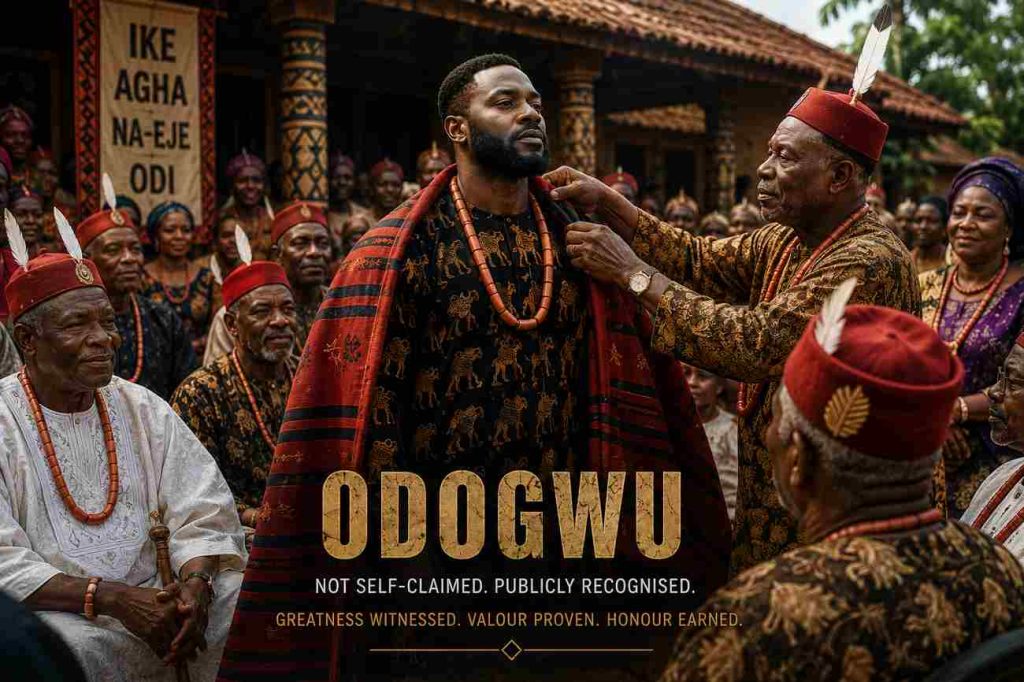
In Igbo culture, Odogwu refers to a person of great strength, courage, achievement, and social respect. It is commonly translated as “great man,” “mighty person,” “hero,” “champion,” or “person of valour.”
To call someone an Odogwu is to recognise them as someone who has done something remarkable. The word carries admiration, honour, and public acknowledgement. It is not just a casual compliment. It is a powerful cultural expression used to celebrate excellence, bravery, influence, and visible success.
In modern Nigerian slang, Odogwu is often used to praise someone who has “made it,” overcome difficulty, shown leadership, or commanded respect in a particular field. But its roots are much deeper than social media, Afrobeats, or everyday hype.
Odogwu is a word that connects the traditional Igbo respect for courage and communal value with the modern Nigerian celebration of achievement.
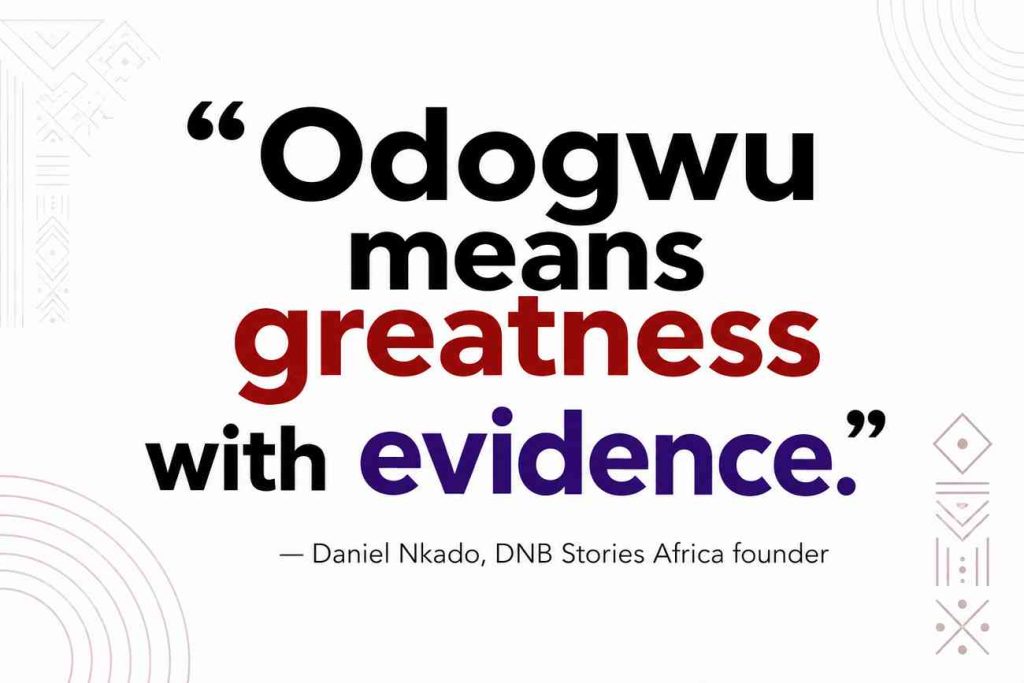
DNB Stories Africa founder Daniel Nkado, who writes extensively about Igbo culture, describes Odogwu as “greatness with evidence.”
***
In his African fantasy novel, Ola-edo and the Sacred Sisters of Uwoma, the title “Odogwu ka Ibie” is used to honour one of the five travellers, reinforcing the word’s association with proven courage, sacrifice, and public recognition.
The Literal Meaning of Odogwu in Igbo
In the Igbo language, Odogwu can be understood as a mighty person, a strong person, a person of great ability, or someone capable of standing against opposition.
Depending on context, it may mean:
- a hero
- a brave person
- a great man
- a champion
- a person of strength
- a person of exceptional achievement
- a respected figure
This is why the word often carries emotional force. It does not merely describe physical strength. It also suggests resilience, social weight, honour, achievement, and the ability to face difficult circumstances without collapsing.
When someone says, “Ị bụ Odogwu,” they are essentially saying: “You are a great one,” “You are a champion,” or “You have done something worthy of respect.”
Odogwu in Igbo Culture
To understand Odogwu in Igbo culture, it is important to remember that Igbo society is diverse. Customs, titles, leadership structures, and praise traditions vary across communities in southeastern Nigeria and Igbo-speaking areas.
However, one broad cultural meaning remains consistent: Odogwu is associated with greatness that has been proven.
Traditionally, an Odogwu was not simply someone who talked loudly, claimed power, or demanded respect. The word was tied to visible evidence of strength, courage, contribution, or achievement.
In many cultural contexts, Odogwu evokes the image of a person who has distinguished himself through bravery, leadership, protection, wisdom, wealth, influence, or service to the community.
This is why the word often feels bigger than an ordinary compliment. It carries a sense of public recognition.
An Odogwu is not merely successful in private. An Odogwu is seen.
Historical Context: From Warriors to Men of Valour
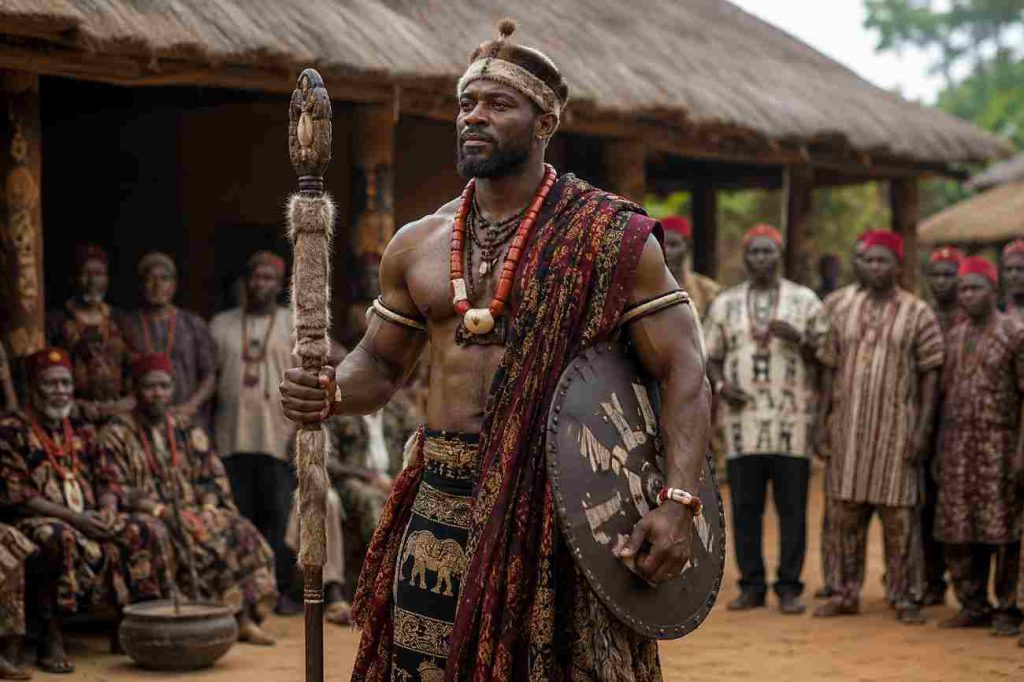
Historically, Odogwu was strongly associated with bravery and valour. In older Igbo community life, courage mattered deeply because communities had to protect themselves, defend their land, preserve their people, and respond to threats.
In that context, a man who showed exceptional courage could be praised as Odogwu. He was not just strong for himself. His strength had communal meaning.
An Odogwu could be understood as:
- a defender of the community
- a brave warrior
- a person who survived great difficulty
- a man whose courage inspired others
- a person whose actions brought honour to his people
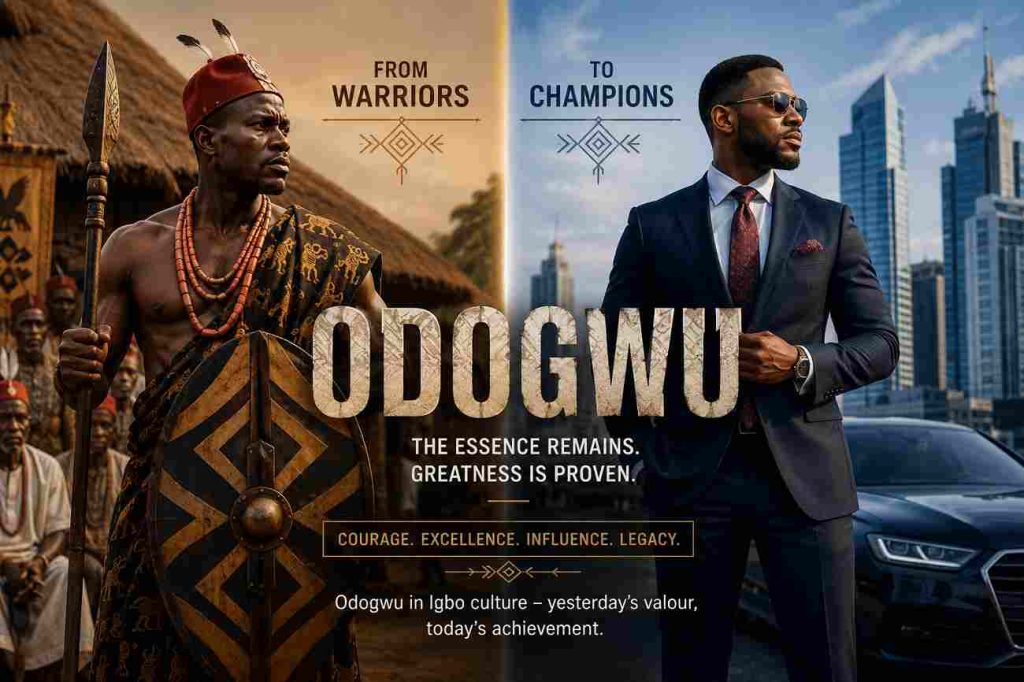
This historical meaning helps explain why Odogwu still carries such prestige today. Even when the modern “battlefield” is no longer war, the word continues to describe someone who has conquered a serious challenge.
Today, the battlefield may be business, education, entertainment, migration, politics, family responsibility, creative success, or personal survival.
The form changes. The meaning remains powerful.
Is Odogwu a Traditional Igbo Title?
Odogwu can function as a title, praise-name, or honour-name, depending on the community and context. It is sometimes associated with traditional Igbo titles, but it should not be reduced to one fixed chieftaincy structure.
Igbo communities have different title systems. In some places, titles are connected to age grades, titled societies, warrior traditions, wealth, community service, or moral standing. In other places, titles may be linked to kingship, councils of elders, or modern traditional leadership institutions.
This matters because Igbo culture is not one single political system repeated everywhere in exactly the same way.
So, while Odogwu may be used like a title of honour, it is best understood more broadly as a culturally respected term for a person of proven greatness, courage, strength, or achievement.
Modern Usage: How Nigerians Use “Odogwu” Today
In modern Nigerian speech, Odogwu has expanded beyond its older warrior associations. It is now widely used as a term of admiration for someone who is successful, powerful, stylish, wealthy, brave, generous, or socially respected.
You may hear it in conversations such as:
“That man na Odogwu.”
Meaning: That man is powerful, successful, or highly respected.
“Odogwu don arrive.”
Meaning: A big personality or important person has arrived.
“You be Odogwu.”
Meaning: You are a champion, you did well, or you deserve respect.
In Nigerian slang, Odogwu can be playful, serious, celebratory, or aspirational. It can be used to hype a friend, praise a successful person, honour an elder, celebrate a wealthy businessman, or recognise someone who has achieved something difficult.
However, the deeper cultural meaning still remains. Odogwu is not just “rich man.” Wealth may be part of modern usage, but the word carries a stronger sense of power, achievement, courage, and respect.
Odogwu and Wealth: More Than Money
In contemporary Nigeria, Odogwu is often associated with financial success. A wealthy person who spends confidently, supports others, commands attention, or moves with visible status may be called Odogwu.
But culturally, wealth alone does not fully define the word.
A true Odogwu is not only someone who has money. A true Odogwu is expected to have weight, influence, courage, generosity, and presence.
This is why the word can also carry an ethical expectation. In many African cultural contexts, greatness is not measured only by private accumulation. It is also measured by how one’s success affects others.
An Odogwu is admired not simply because he has achieved, but because his achievement is visible, meaningful, and socially recognised.
Odogwu in Afrobeats and Pop Culture
The word Odogwu gained wider global attention through Nigerian pop culture, especially Afrobeats.
Burna Boy’s hit song “Odogwu” played a major role in introducing the word to many listeners outside Nigeria. In the song, the word is used as a declaration of status, confidence, and achievement. It presents Odogwu as a champion figure — someone who has arrived, conquered, and earned recognition.
This pop culture usage helped move the word beyond Igbo-speaking spaces into a wider African and global vocabulary. Today, many people who do not speak Igbo still understand Odogwu as a term of praise, power, and success.
This is one of the ways African languages travel through music. A culturally specific word becomes global without losing its local roots.
Odogwu as Nigerian Slang
As Nigerian slang, Odogwu is now used across ethnic and linguistic lines. A Yoruba speaker, Hausa speaker, Edo speaker, or Nigerian in the diaspora may use Odogwu even without speaking Igbo fluently.
This is common in Nigerian popular language. Words move across regions through music, comedy, Nollywood, social media, markets, nightlife, and everyday conversation.
In this modern slang context, Odogwu can mean:
- boss
- big man
- champion
- legend
- successful person
- respected person
- person with power or influence
But unlike a generic word like “boss,” Odogwu still carries a strong Igbo cultural flavour. It sounds rooted. It sounds ancestral. It sounds like praise with history behind it.
That is part of its power.
Igbo Words for Hero: Odogwu, Dike, and Dimkpa
Odogwu is not the only Igbo word connected to strength, heroism, or courage.
Other Igbo words for hero or brave person include:
Dike
Dike means a brave man, hero, warrior, or person of great strength. It is one of the most common Igbo words associated with valour.
Dimkpa
Dimkpa can refer to a strong, mature, capable, or accomplished man. It often suggests masculine strength, ability, and social seriousness.
Dike na agha
This phrase can be understood as a warrior or hero in battle. It carries a more direct association with combat and bravery.
Odogwu
Odogwu overlaps with these meanings but often carries a broader sense of greatness, power, public respect, and achievement.
In simple terms, Dike may emphasise bravery, while Odogwu often emphasises greatness, might, and recognised achievement.
Can a Woman Be Called Odogwu?
Traditionally, Odogwu is strongly male-coded because of its association with warriors, male prestige, and older patterns of public honour. However, in modern usage, language is more flexible.
Today, some Nigerians may jokingly or admiringly call a woman Odogwu if she has achieved something extraordinary, shown courage, built wealth, led powerfully, or displayed exceptional strength.
In that sense, the word can be used beyond strict gender boundaries in informal speech. Still, its cultural history remains masculine in many contexts.
A woman called Odogwu today is being praised as powerful, formidable, and worthy of deep respect.
What Makes Someone a True Odogwu?
A true Odogwu is not defined by noise, arrogance, or empty display. The word carries more dignity than that.
Some key qualities of an Odogwu include:
1. Courage
An Odogwu faces difficulty directly. He does not run from every challenge or collapse under pressure.
2. Achievement
An Odogwu has done something significant. The title is tied to visible accomplishment.
3. Respect
An Odogwu commands respect through action, not merely through force or intimidation.
4. Strength
This may be physical, emotional, social, financial, intellectual, or spiritual strength.
5. Generosity
In many modern Nigerian contexts, a respected Odogwu is expected to support others, share resources, or contribute to community life.
6. Presence
An Odogwu has presence. When he enters a space, people notice. His reputation arrives with him.
Common Misunderstandings About Odogwu
Odogwu does not simply mean “rich man”
Although the word is often linked with wealth today, its meaning is broader. A person can be rich without being an Odogwu in the deeper cultural sense.
Odogwu does not only mean “chief”
Odogwu can function like a title of honour, but it should not be translated only as “chief.” Igbo title systems are varied, and the word carries meanings of strength, greatness, courage, and achievement.
Odogwu is not just social media hype
The word may be popular online, but it is not new. Its cultural weight comes from older Igbo ideas of valour, respect, and public recognition.
Odogwu is not always literal
In modern speech, Odogwu can be used seriously, jokingly, affectionately, or dramatically. Context matters.
Why the Word Odogwu Still Matters
The continuing popularity of Odogwu shows how African languages preserve cultural memory while adapting to modern life.
A word once associated with warriors, strength, and communal honour now travels through music, memes, captions, business culture, nightlife, and diaspora speech. Yet it still carries the emotional force of recognition.
To call someone Odogwu is to say:
You have achieved.
You have endured.
You have conquered.
You are not ordinary.
You deserve respect.
That is why the word remains powerful.
It allows people to celebrate greatness in a distinctly Igbo and Nigerian way.
Conclusion: The Meaning of Odogwu Today
The meaning of Odogwu in Igbo culture is rich, layered, and deeply tied to ideas of strength, honour, courage, and achievement.
Historically, Odogwu was associated with men of valour, warriors, protectors, and respected figures. In modern Nigerian slang, it has expanded to describe successful people, champions, high achievers, wealthy figures, and anyone whose presence commands admiration.
But at its heart, Odogwu still means more than fame or money.
It means proven greatness.
Whether used in traditional Igbo culture, Nigerian pop culture, Afrobeats, or everyday slang, Odogwu remains one of the most powerful words of praise in the Igbo language.
The next time you hear someone called Odogwu, understand that you are hearing more than a nickname. You are hearing a cultural salute to courage, achievement, and honour.
FAQs About the Meaning of Odogwu
What does Odogwu mean?
Odogwu means a great person, mighty person, hero, champion, or person of valour. It is an Igbo word used to praise strength, courage, achievement, and social respect.
What is Odogwu in Igbo culture?
In Igbo culture, Odogwu refers to a person of proven greatness, bravery, strength, or achievement. It may function as a praise-name, honour-name, or title depending on the context.
Does Odogwu mean warrior?
Odogwu can mean warrior or man of valour, especially in historical or traditional contexts. However, its modern meaning is broader and can refer to any person who has achieved greatness or earned respect.
Is Odogwu Nigerian slang?
Yes. Odogwu is an Igbo word that has become popular Nigerian slang. It is now widely used to describe a successful, powerful, respected, or impressive person.
Is Odogwu only used for men?
Traditionally, Odogwu is male-coded, but in modern slang it can sometimes be used to praise women who are powerful, successful, brave, or highly respected.
What is the difference between Odogwu and Dike?
Both words are connected to strength and bravery. Dike often emphasises heroism or warrior-like courage, while Odogwu carries a broader sense of greatness, might, achievement, and public respect.
Why is Odogwu popular today?
Odogwu became even more popular through Nigerian pop culture and Afrobeats, especially after Burna Boy’s song “Odogwu.” The word is now widely recognised as a term of confidence, status, and achievement.
Daniel Nkado’s Novels Can Help You Understand Igbo Culture More Deeply
Daniel Nkado’s novels explore Igbo culture through story, character, family life, belief systems, language, social expectations, spirituality, power, love, and survival. Rather than presenting culture as distant information, his fiction brings readers into lived worlds where Igbo names, customs, values, conflicts, and ancestral memory shape the choices people make.
For readers interested in Igbo culture, African storytelling, and the emotional worlds behind traditional words like Odogwu, Daniel Nkado’s novels offer a rich and accessible entry point.
https://www.amazon.com/stores/author/B0GHFN9KW6/allbooks