Editor’s note: All names used in this essay are pseudonyms. Some identifying details have been adjusted to protect privacy while preserving the emotional and analytical truth of my experience.
Part 1: The Black Pride Party I Did Not Attend
Around August or September 2025, close to Black Pride season, I believe I was first marked for exclusion.
That was when Ochi, the fair, gigantic one, blocked me. Another one — tiny and slim — simply stopped taking my calls. Someone I had mistaken for a best friend, Ray-Jay, stopped responding to my invitations. Despite his physical height, Ray-Jay revealed such smallness of character that this sentence already has more space than he deserves.
In hindsight, I now understand that my ultimate public shaming was likely planned for the Black Pride after-party. It was designed as that specific, insidious form of social punishment: you enter a room, the collective appears to know something you do not, no one engages with you honestly, and you are left to absorb the full, chilling weight of being frozen out.
They were all there. Even people who rarely attended those spaces showed up. But Daniel Nkado did not attend the party. Nwa Onye Nkuzi did not come.
And that small detail changed everything.
- Part 1: The Black Pride Party I Did Not Attend
- When Exclusion Fails, Reputational Destruction Begins
- The Frameworks I Built Saved Me
- The Same Frameworks They Rejected Saved Me
- My Weakness Has Always Been Care
- The Sick Child Who Read Himself to Life
- Neuroplasticity and the Fire I Learned to Walk Through
- A Man Who Cries is Not a Weak Man
- The Culture Shock of Western Queer Spaces
- The Part I Must Tell Honestly: Drugs and Belonging
- The Last Act of Cruelty That Changed Everything
- What is a Runner in Clique Culture?
- The Cry That Returned Me to Myself
- I Woke Up the Next Day a Different Man
- The Cage Was Never Locked
- References
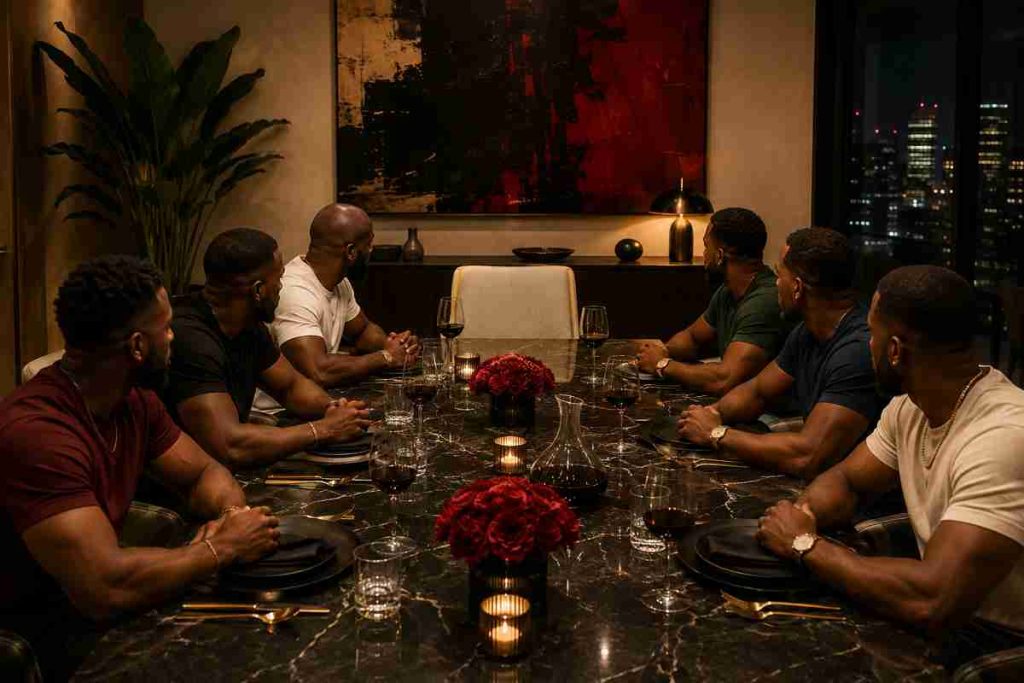
The Shame Dinner I Did Not Attend
Imagine organising a punishment, only for the person being punished not to arrive.
I did not know then that I was expected to feel stranded, confused, and publicly diminished. I did not know that the room had already been prepared as a theatre of exclusion. I did not know that people had gathered around a social script I had not been given.
The grace was simply too much. Evildoers were simply punishing air.
How do you exclude a man whose greatest joy is often being by himself? How do you strand a person who can go home alone, cook alone, dance alone, think alone, and still feel spiritually intact?
That was the first problem with the plan: the exclusion did not land. You cannot successfully exclude someone who had been sceptical about entering in the first place.
But when exclusion failed, something uglier began.
Deployment of Plan B
As Plan B, I believe, after I did not attend their “shame dinner,” someone was later sent to my home. He was a small South African man — small in stature, and even smaller in spirit. To me, he seemed deeply troubled, carrying the heavy emotional residue of someone who had participated in cruelty for too long. There was a darkness around him that felt palpable before he even came close. It was almost as if you could smell it.
He came to my house with another that night and tried his absolute worst. But Nwa Onye Nkuzi came out strong. Because my case with him will be handled institutionally, I cannot say much more about it for now.
When Exclusion Fails, Reputational Destruction Begins
Because I did not visibly collapse under the freeze-out, the next phase became reputational destruction. As I explained in a previous article, this kind of social attack often moves through a triad of three forces: falsifications, smear campaigning, and public shaming.
My case felt like a coordinated, multi-pronged attack across multiple cliques—even groups that didn’t normally mix temporarily cast aside their differences and aligned against me.
Drug Use and Sexual Performance Shaming
I watched as stories began to form around me. Backstories designed to attack my character. Whispered explanations designed to destroy my credibility. Shaming, banter-dressed humiliation, and group manipulation were deployed to mine “evidence” of supposed instability.
One of the easiest narratives was drugs and sexual performance shaming. I was described as “drugged out” and sexually incapable, even by people who still sought me out privately when it suited them. The hypocrisy was striking. Even people connected to the same drug culture they claimed to condemn found a way to shame me publicly for drug use.
Another narrative claimed I destroyed relationships by encouraging couples to open up their partnerships. People cited my article, Five Dimensions of Intimacy, as evidence of this without reading it. Because many of the minds they tried to recruit also did not read, the lie travelled easily. In reality, some people who could not respect their own partners found it easier to hide behind my writing than to take responsibility for their infidelity.
When a False Rumour Went Searching for Proof
The screenshot below captures one example of how the narrative reached me directly. What mattered was not the message alone, but the social function it performed: it repeated the rumour, framed it as common knowledge, and tried to pull me into confirming my own humiliation.
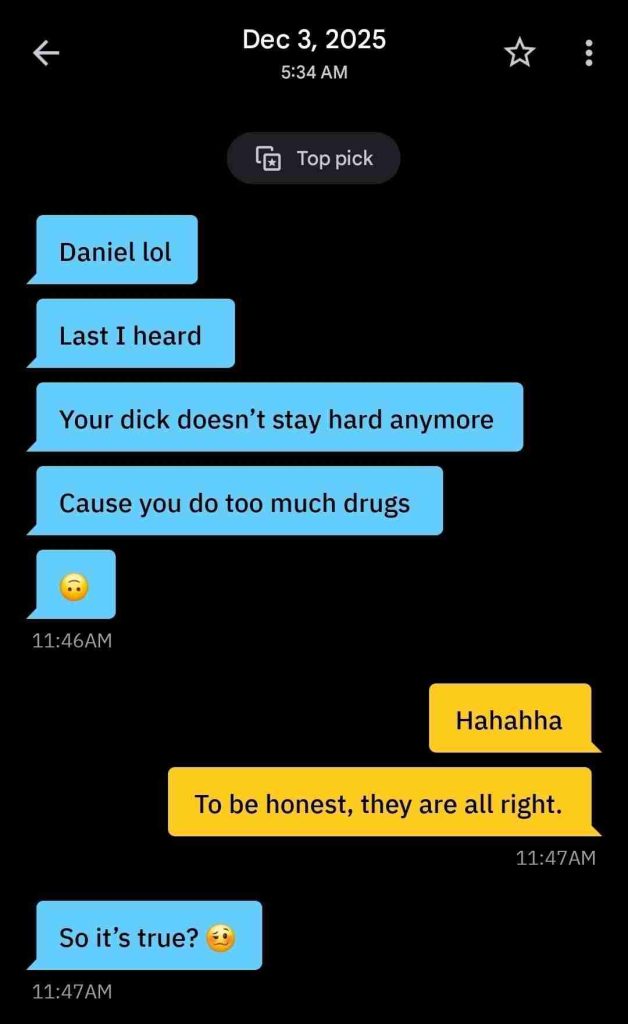
That exchange made the strategy painfully clear. This was not a genuine concern about substance use. It was sexual humiliation, drug-use stigma, and reputational destruction working together. The aim was to make me look unstable, diminished, and morally compromised so the exclusion could appear justified after the fact.
I have other screenshots like this, but I will not publish them all in this essay. Some contain material connected to a larger matter beyond the scope of this writing.
Falsified Story of Theft
Then came the strangest angle: that I was stealing clothing from visitors to my home. Some people would leave old shirts behind and later imply that I had stolen them. That accusation was always the weakest, because anyone who knows me knows Daniel Nkado has his own style. I was hardly going to risk my name and personal hygiene over some wrinkled Primark shirts from cruel manipulators.
Whenever someone left clothing at my place, I threw it straight in the trash. I was not keeping trophies from people I did not trust.
The motive was simple: if they could not make me look abandoned, they could try to make me look unstable, irresponsible, sexually diminished, or morally compromised. That is how reputational destruction works. It keeps changing costumes until one version of the lie sticks.
The Frameworks I Built Saved Me
I built the DNB frameworks from years of reading peer-reviewed research, books, lived experience, and community-based observation. They were created to help me — and other Black queer men — name the specific pressures we face, understand how those pressures operate, and, in some cases, offer practical ways to interrupt them.
I even aged myself publicly and took on the persona of Uncle DNB to make the work easier to receive, especially for younger Black queer men, whom I felt were most at risk. At the centre of the work was care: public education as a form of community protection.
And yet, what did I receive in return? One of the most painful forms of group-coordinated cruelty I have ever encountered in UK Black queer life.
The Telegram Group and the Harm from Within
I had made two people admins in the Telegram group I created. One was tall and long-faced. The other was the same tiny, slim one — and, in hindsight, perhaps one of the most dangerous runners because his method was docility. He knew how to appear harmless, almost otherworldly, in order to gain access to the target and help spread harm from the inside out.
By then, luckily, his own instability was already showing, and his work was often messy. He and the long-faced one worked together to push many genuine members out of the Telegram group and replace them with people aligned with their scheme.
To make matters even more interesting for them, I personally added one of the top organisers of the cruelty to the group. That has always been my style: unpredictability. The moment people think they have trapped me, I create another path and start moving through it.
The Same Frameworks They Rejected Saved Me
At this point, my own frameworks became very crucial. My Masculinity Conflict Framework, Trust Onion Model and Absurdity Reps Method were no longer abstract tools. They became live instruments. I was not inside the groups that planned these attacks, so my only option was to collect data in real time.
And when people underestimate you, they become generous with evidence. When they believe you do not know what they are doing, they relax. Like answer scripts in a mathematics exam, they show their full workings. They reveal the hierarchy: who leads, who follows, who performs morality, who delivers messages, who enjoys the cruelty, and who simply wants access. Sometimes, I would season the performance with a little folly just to keep them producing the right kind of data.
I wanted the clearest data possible. I did not want half-baked evidence that I would later struggle to interpret. So I watched. I listened. I let people reveal themselves.
My Weakness Has Always Been Care
My weakness is not beauty. It is not status. It is not a good body. It is not popularity.
My weakness is care.
Anyone who has ever treated me with real kindness, compassion, or tenderness becomes protected in my mind. My memory registers care deeply. If someone once made me feel safe, seen, or gently held, it becomes difficult for me to reduce them to their worst behaviour quickly.
This is beautiful, but it is also dangerous.
It means I can forgive someone who hurts me if they had shown me greater care in the past. It means I may hold on longer than I should. It means my mind may keep searching for earlier versions of them, even while the current version is harming me.
So I have learned something about myself: when people want to be wicked to me, I sometimes need them to go all the way. The uglier the behaviour becomes, the easier it is for my mind to let them go. Their cruelty performs a final service: it breaks the spell of past care.
I do not overlook toxicity because someone is attractive. I do not excuse harm because someone has social value. As I clarified in my RCT framework, my baseline is honesty, respect, and care — HRC. Anything below that is already a warning.
For Me, Cruelty Makes Release Easier
In truth, I would often rather someone be cruel to me than kind. Cruelty is a familiar mechanism. It reminds my brain why self-protection must remain a priority. Kindness, however, is disarming. It creates openings for access, softness, and attachment, threatening the boundaries I have worked hard to build.
That was what the group did not understand. Their cruelty did not keep me trapped. It emptied them of meaning. With every act of harm, they annihilated every trace of desire, tenderness, or emotional attachment I once had for them.
The Sick Child Who Read Himself to Life
Part of why I understand people this way comes from childhood.
I grew up a very sickly child because of HbSC, a form of sickle cell disease. HbSC is often described as a milder form of sickle cell disease, but “milder” does not mean harmless. Sickle cell disease can still involve serious complications, including acute chest syndrome, which the CDC describes as a life-threatening complication that can affect breathing and oxygen levels.
As a child, I was often in and out of hospitals. My parents feared I would die. Their fear was so strong that I began to believe it too.
My mother prayed and cried. My family tried orthodox medicine, religious intervention, and traditional recommendations. When you grow up around illness, fear becomes part of the house’s architecture. You learn to read faces. You learn to notice when adults are whispering. You learn to recognise the silence that comes before bad news.
Hospitals also shaped my senses. I developed a kind of germ-consciousness very early. I felt safest when things smelled of detergent, bleach, or Dettol. Even now, cleanliness has an emotional smell for me. The fresh smell of Nigerian detergents — Omo, Klin, Sunlight — still offers a kind of psychological reassurance that many UK detergent brands do not.
It also made me fiercely protective of my own space. I often struggle to let people in because, for me, desire is never enough. My inner soul has to accept you first. Cruelty carries darkness, and darkness cannot cross that threshold.
Reading and Gaining Knowledge Helped Me Survive
Because I often missed school, I started reading seriously. At first, I read to keep up with my classmates because I was a competitive student. Later, I read to understand my own body. If I were going to die, I wanted to know what was happening to me and how much time I might have.
I became friendly with some of the doctors who cared for me. One in particular seemed to enjoy our conversations. Whenever he arrived at work, he would check on me, and sometimes he stayed longer than necessary while we talked.
Between thirteen and fifteen, I was at my sickest. But that was also when I read the most.
My father worked in education, and our home had books. The Nkados valued learning. I did not always read the right books for my age, but no knowledge is a waste. Those books gave me somewhere to go when my body kept failing me.
Neuroplasticity and the Fire I Learned to Walk Through
I discovered neuroplasticity in my third year at university. I was twenty-one then, but the idea fundamentally changed how I understood the mind and human psychology. My curiosity had first been sparked by a concept in ethology, and from there I began to realise that the human brain was not a single, static organ. It was more like the control room of a complex power station — a mental network overseeing countless intricate components.
I began to understand that if you learn how to navigate that control room, you can make your brain work with you rather than against you. You can begin to dismantle frames of thought you no longer want and replace them with stronger ones you consciously choose.
Had I discovered this sooner — perhaps during those sick days at fourteen or fifteen — who knows how far my mind could have travelled? Maybe I would have become Einstein just to prove a point.
Human Psychology and the Biology of Resilience
I also began to think of human psychology in a way that reminded me of immunology. Immune cells grow stronger through exposure. They learn to recognise threats and develop defence pathways. This is the basic logic behind immunisation: exposing the system to a manageable version of a threat so it can build recognition and prepare for future attacks.
The mind, in its own way, follows a similar logic. We do not build psychological resilience and mental flexibility by running from unsettling emotions, nor by simply restraining or suppressing them. We build them by facing difficult emotions, naming them, confronting them, and doing the work required to process them.
This is why discomfort, when met with enough knowledge, support, and self-awareness, can become a form of training. Not all pain strengthens us, and not every wound automatically teaches wisdom. But when we are able to process what happened, understand its impact on us, and choose how we respond, the mind becomes less fragile. It learns. It adapts. It remembers that survival is always possible.
So while others may run from new or uncomfortable emotions, I often walk toward them. Not recklessly, but deliberately. Like walking into fire to learn whether fire still owns you.
But this is risky without a strong and well-developed foundation. The foundation is reading, learning, reflection, spiritual grounding, and a deeper knowledge of life. Without that foundation, exposure can wound rather than strengthen.
The Mind Grows Stronger When Pain Is Processed, Not Avoided
I have known deep loss, deep sadness, deep heartbreak, deep violence, deep shame, deep insecurity, deep rejection, and deep betrayal. I have been tempted, in some moments, to answer cruelty with cruelty. But I did not allow those experiences to turn me into someone I would later have to run from.
I learned to approach unsettling emotions by centring my own healing. The goal was always to move through them, not around them — never by suppressing, avoiding, or pretending the pain was not there. That refusal to hide from my own feelings became the foundation of my mental resilience and flexibility. Each wound I processed added another layer of resilience to my psyche.
A Man Who Cries is Not a Weak Man
Some Black men make the mistake of thinking a man who cries or shows tenderness is weak.
I disagree. My culture disagrees too.
A man who cries is not weak. The weaker man is the one who lets a room decide whether he is allowed to feel. He is the one who surrenders part of himself just to be declared strong by an external court.
True strength is freedom. Freedom of thought. Freedom of action. Freedom of emotional expression. Freedom from the desperate need to be approved by people whose own inner lives may be in disorder.
I learned early that my mind was mine. Not the group’s. Not the room’s. Not the clique’s. Not the loudest person’s. Not the person with the most followers. Not the person with the best body. Mine. That is why social humiliation struggles to hold me for long. I may feel pain. I may cry. I may collapse for a night. But I do not easily hand over ownership of my inner world.
The Culture Shock of Western Queer Spaces
In Nigeria, I kept my circle intellectually sound. I did this deliberately to avoid contamination with foolishness. Because many of the big old books I read came from the West, I made a naïve mistake when I moved to the UK: I assumed Western queer spaces would be full of people who were informed, self-aware, emotionally developed, and intellectually curious.
Let’s just say I was disappointed. Very disappointed
That was one of my earliest culture shocks.
I found rooms where people performed sophistication but avoided depth. I found coded hostility dressed as banter. I found people trapped in Stepford-like social performances, denying their own personhood to manage perception, image, desirability, access, and proximity to status. I could not fathom such a crude way of life. Even early human communities understood that survival depended on genuine connection and authenticity.
This does not mean all Black queer spaces are unsafe. It means a space is not automatically safe because it is Black, queer, progressive, or socially fashionable. Research already shows that LGBT spaces can reproduce their own forms of stigma: one study found that Black sexual minority men reported the highest levels of racial or ethnic stigma in LGBT spaces compared with other racial groups in the sample (McConnell et al., 2018).
Community can heal. Community can also harm. Both truths must be held together.
The Part I Must Tell Honestly: Drugs and Belonging
I started taking drugs mainly to survive the social scene.
That is the honest truth.
Being an Igbo man raised by an educator — nwa onye nkuzi — I was taught to speak my mind, to say how I felt, and to never shrink myself just to be accepted. But in some UK Black queer spaces, I learned that this kind of directness was not always tolerated.
I struggled with the masks. I struggled with the deceit. I struggled with the coded hostility and the smiles that hid sharpened knives. I struggled with the performances designed to conceal deep insincerity — especially the hypermasculine performances used to police authentic people. I saw people attacking one another simply to avoid being attacked first. I saw people sleeping with their enemies, exchanging bodies while keeping their minds fiercely guarded.
Drugs made me more sociable and accommodating. On them, I could tolerate the performance. I had more patience for the masks. The sex felt better, too. The room felt easier to survive in.
This is why we must stop reducing substance use among queer men to recklessness or pleasure-seeking alone. For many queer men, intoxication becomes a way to manage masculinity and desirability pressures, masking, loneliness, survival, and the exhausting labour of trying to belong.
Research on sexual and gender minority communities has connected substance use disparities to minority stress, stigma, and social pressure, which does not remove personal responsibility but does help explain why intoxication can become a coping strategy in hostile or demanding environments (Parent et al., 2019).
For many of us, the question is not simply, “Why did you take drugs?” The deeper question is: what kind of social environment made intoxication feel like the easiest way to belong?
28 Days Sober and Counting
When the same group whose presence I had been using drugs to tolerate eventually froze me out, the joke was on them in a strange way. Their exclusion removed the very environment that had made intoxication feel necessary. Suddenly, I had no reason to keep taking drugs. I threw away the paraphernalia.
Guess how much money I saved in the first month?
Jesu!
It remains one of the stupidest things I have ever done: spending my own hard-earned money to make myself more tolerable to toxic people, while neglecting my actual work, my writing, and my purpose.
But I am back on track now.
I have regained the rights to my novels and am now revising and republishing them under my own imprint. I have also started working on my first nonfiction book about my diaspora experiences. More importantly, I have forgiven myself — not by pretending the detour was wise, but by recognising that I survived it, learned from it, and returned to my purpose.
Testing a New Framework for Supporting Recovery from Substance Use
I am currently testing a two-pronged framework I have developed to support queer men navigating substance use, heavy drinking, and the social pressures that can make both harder to understand or escape. As I often do when building a self-applicable framework, I am using myself as an early test case to see how the model works in practice: what support it can offer, where its strengths lie, and where its limitations begin.
This is not a framework that simply tells people to stop drinking or using drugs. Its purpose is more practical and reflective. It helps queer men understand the why, how, and what of their substance use while identifying safer forms of support on the journey toward reduced harm, recovery, or sobriety.
The Last Act of Cruelty That Changed Everything
The last act of cruelty hit differently because it involved two people I had known the longest, both tied to the Nigerian part of my life.
I will call them Kenchi and Sean Pall.
It was easy, I think, to recruit Kenchi because he operated through the logic of masculinity competition and envy. From the first time I met him at a beach gathering in Lagos, I noticed the performance. The masculinity did not feel relaxed. It felt staged.
Because he was Igbo, I still saw him as nwanne. A brother. Many Igbo gay men understand this instinct. You see someone from your place in a hostile world, and something in you wants to protect the connection.
When he came to the UK, I expected him to relax. I expected him to drop the performance and simply flow. He was already masculine. There was nothing to prove.
Again, I was disappointed.
What disgusted me most was not only the manipulation. It was the clumsiness of it. At one point, it seemed as if he was following instructions from a WhatsApp chat while actively trying to manipulate me. He would speak, make mistakes, check his phone, and then correct himself.
It was appalling. For a fellow Igbo man, I felt ashamed.
Sean Pall: When a Grown Man Becomes a Runner
The other person, Sean Pall, I understood differently. I call him a runner. And a runner at forty worries me deeply.
Because by forty, a person should have developed enough moral centre to ask: Why am I being used to carry another person’s cruelty?
What is a Runner in Clique Culture?
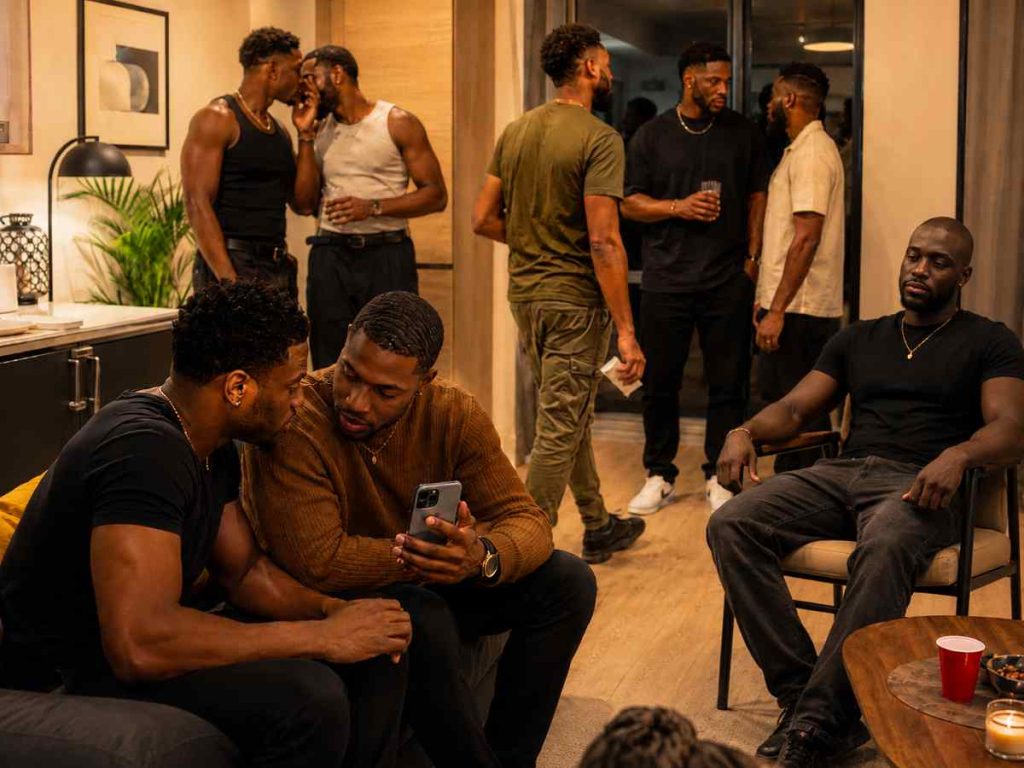
A runner is a low-ranking helper within a clique who inflicts harm on behalf of higher-status instigators. He may not start the conflict himself, but once the group gives the signal, he helps spread gossip, deliver insults, bait the target, circulate screenshots, repeat narratives, or enforce exclusion.
His reward is usually not a real belonging. It is crumbs of access. An invite. A seat near the group. Permission to stay close. Temporary protection from becoming the next target.
A runner is dangerous because he often does not need personal conviction to cause harm. He only needs instruction. He does not need to believe the story fully. He only needs to repeat it with enough confidence to be useful.
A runner is a parcel-deliverer of group harm — someone who carries cruelty from the clique to the target in exchange for temporary access, approval, or protection.
The Cry That Returned Me to Myself
When Kenchi and Sean Pall left, I became overwhelmed and started to cry.
I deleted my pictures from Grindr, and Jack’d. I deleted posters I had made about building community love, peace, and trust. For a moment, something in me gave way.
Because I have always felt, somehow, that I was given a second chance at life, I developed a passion for helping where I can. But I am not a sacrificial helper. I help from strength, not self-erasure. If resources are limited, I prioritise myself.
You cannot truly love or care for someone else if you do not first love and care for yourself. Otherwise, what you are calling “love” may simply be the abandonment of self. My father taught me this, alongside many other pieces of wisdom. The senior Nkado was full of quiet, practical truths — the kind of grounded wisdom that enters quietly, then remains inside you like a second spine.
I Woke Up the Next Day a Different Man
I cried for so long that I fell asleep on the front mattress. I slept deeply and woke up the next day.
When I checked WhatsApp, I saw messages confirming what I had already sensed. Some were coded. Some carried laughter where there was no humour. Some felt like little victory dances. They had mistaken my decision to take down my Grindr and Jack’d pictures and posters as evidence of retreat. To them, it looked like victory — proof that the harm had landed and that a celebration was in order.
But I smiled. Because inside me, I knew I was back.
It had been a brief detour, but not a wasted one. It gave me the data I needed. It clarified the life I wanted. It showed me who could be trusted with closeness and who should be studied only from a distance.
I even thanked the lessons I learned from that cruelty in the acknowledgements of my new book. Secrets & Suya is available on Amazon now. And yes, please order Grace Abounds too. That title has become far more than fiction to me — grace really does abound.
To discover the emotions beyond love, order Something Bigger Than Love today.
The Evildoer Receives No Protection from His Own Mind
An innocent person may survive undeserved cruelty and gain healing, wisdom, and resilience. But the evildoer receives no protection from his own mind.
The inner critic is an old being. Older than reputation. Older than performance. Older than the story a person tells the group. When it begins to speak, it does not whisper mercy. When it turns against you, there is nowhere to hide, because it knows every place you tried to bury the truth.
We often make the mistake of thinking we fully control our minds. But the brain’s origin dates back to before we were born. It observes what we do. It records what we excuse. It remembers the harm we dressed up as humour, loyalty, banter, revenge, or group protection.
The evil a person spreads outside can begin to take root inside. That is when people start running from themselves.
Igbo culture has always understood that a man can become spiritually restless not because someone cursed him, but because his own actions have become too heavy for his spirit to carry.
Some of us would rather face hardship than join cruelty. And we know why.
The Cage Was Never Locked
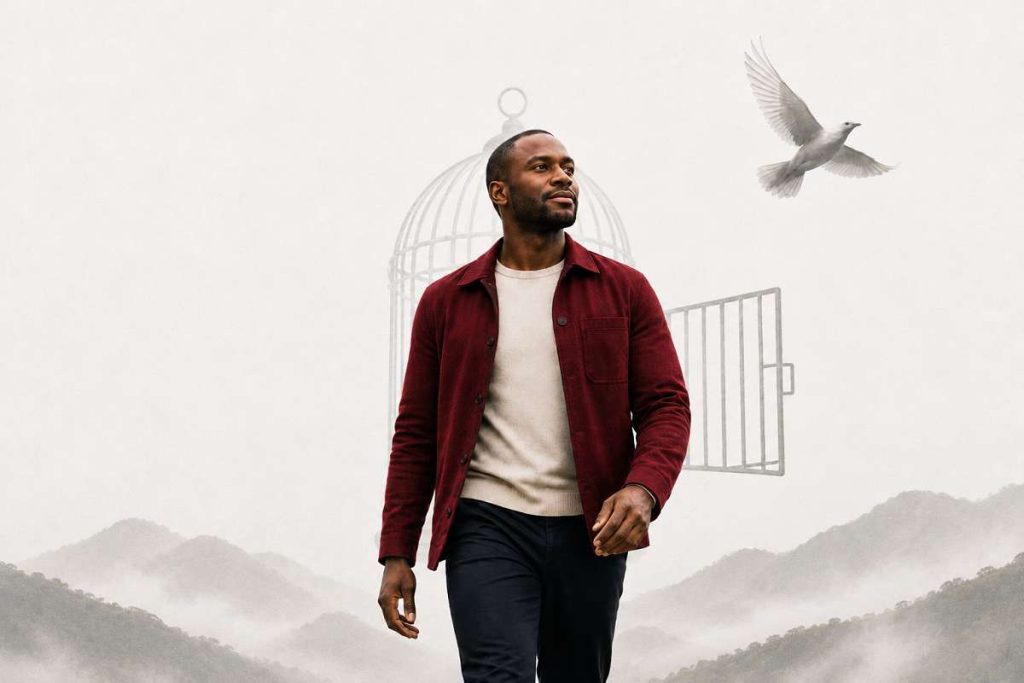
What I learned from that season is simple: exclusion is only powerful when the excluded person still believes the room is the whole world.
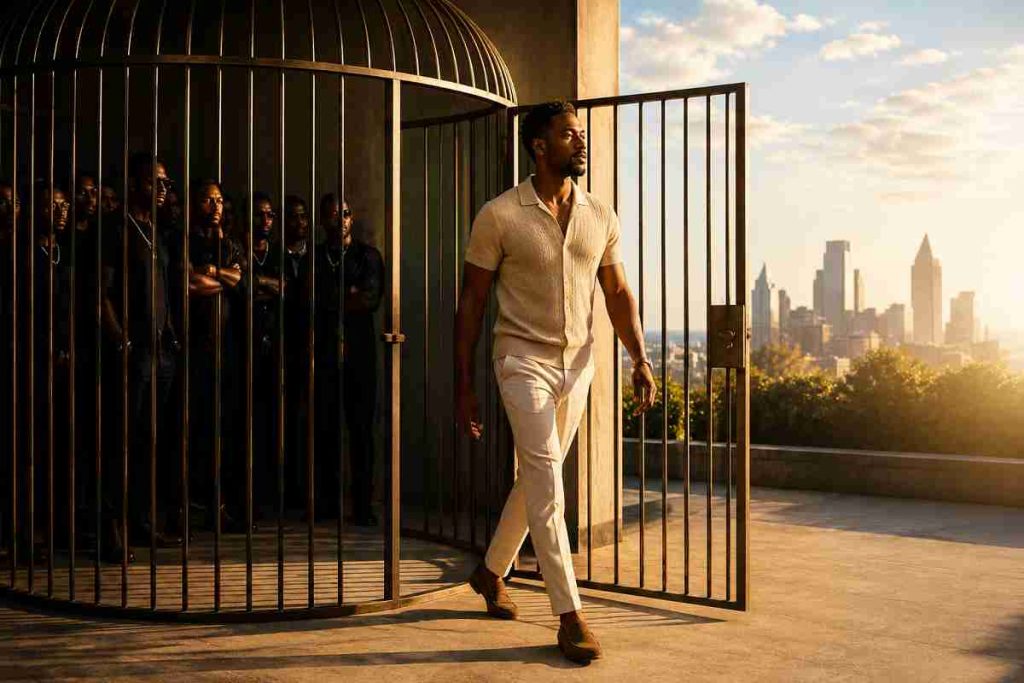
But the room was never the whole world. The cage was never locked.
I was supposed to feel abandoned. Instead, I found silence. I was supposed to feel ashamed. Instead, I found data. I was supposed to lose myself. Instead, I returned to my work, my books, my frameworks, my mind, my God, my people, and my purpose.
That is the power they underestimated.
Nwa Onye Nkuzi remained strong.
And the story continues. Until Part Two. ✌🏾
References
- Centers for Disease Control and Prevention. (2025). About sickle cell disease. https://www.cdc.gov/sickle-cell/about/index.html
- McConnell, E. A., Janulis, P., Phillips, G., Truong, R., & Birkett, M. (2018). Multiple minority stress and LGBT community resilience among sexual minority men. Psychology of Sexual Orientation and Gender Diversity, 5(1), 1–12. https://r.jordan.im/download/gender/mcconnell2018.pdf
- Parent, M. C., Arriaga, A. S., Gobble, T., & Wille, L. (2019). Stress and substance use among sexual and gender minority individuals across the lifespan. Neurobiology of Stress, 10, 100146. https://doi.org/10.1016/j.ynstr.2018.100146