- Strong But Not Smart: The Creation of a Myth
- Impact of Slavery on Black Masculinity
- 1. Racial Stereotypes and the Reconstruction of Black Male Identity
- 2. Toughness as Value in Black Communities
- 3. Strategic Disconnection of Black Life from Education
- 4. Emotional Hardness and Hatred for Softness
- 5. A Culture of Silence and Shame
- 6. Procreation for Status
- 7. Internal Division in Black Communities
- 8. High Homophobia
- Black Gay Men Dynamics: The Afterlife of These Legacies
- Forging a Path Toward Healing…
- References
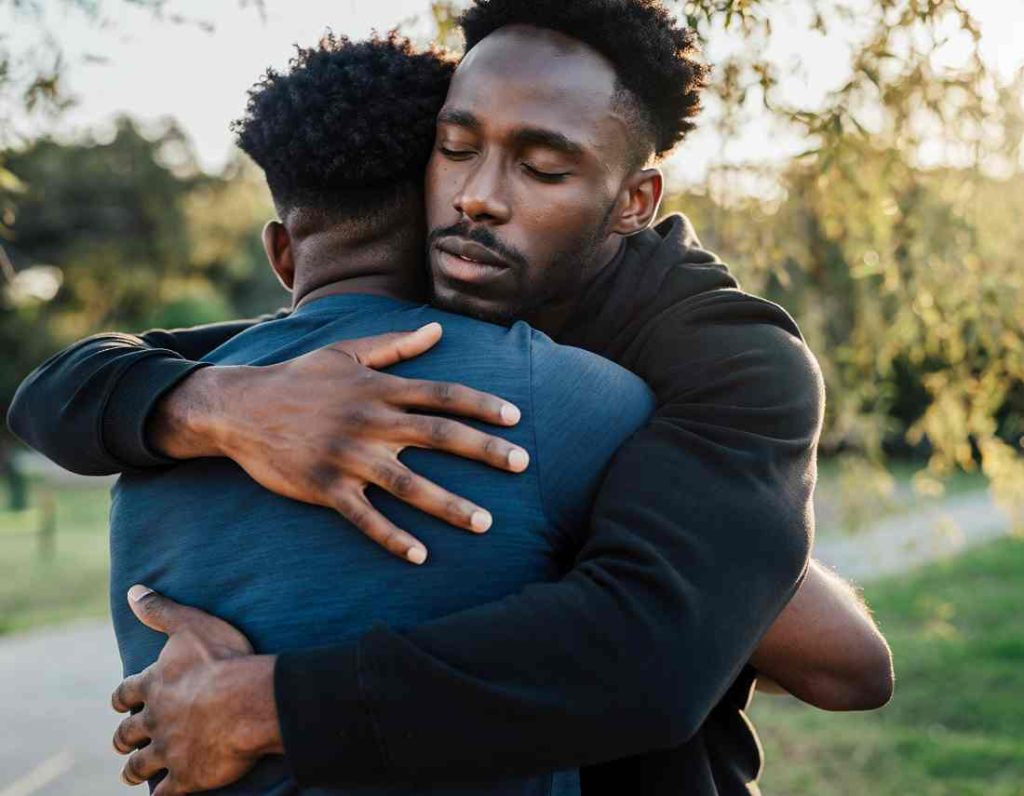
Strong But Not Smart: The Creation of a Myth
American slavery was instrumental in promoting the harmful myth of “strong bodies, weak minds,” which portrayed Black men as physically strong but mentally inferior. This ideology was used to justify forcing Black people into hard labour and violently denying them education and freedom (Williams, 2009)[16].
How Slavery Weaponised “Science” to Spread a Lie
To justify slavery, white supremacists and pro-slavery advocates leaned on scientific racism—a set of pseudoscientific claims that framed Black people as physically formidable “brutes” with “child-like” minds (Douglass, 1845).
Key pseudoscientific arguments included:
- “Small Skulls”: Pseudoscientists and medical exploiters of the era claimed Black men had smaller craniums, falsely linking this to limited intelligence and justifying the exclusion of Black men from intellectual life/recognition.
- “Primordial Nervous Systems”: Racialist physicians falsely stated that Black people had coarser nerves and a reduced capacity for pain. This was used to justify brutal punishment during slavery.
Modern studies in genetics and anthropology have since debunked these claims. Pro-slavery advocates used these arguments to advance a false paternalistic logic — the idea that Black people were like children who needed white guidance and control. Some of these ideas spread widely and became deeply embedded in social structures, where their echoes still influence racial stereotypes and the perceptions of Black life today (Hogarth, 2017)[8].
Turning Black Resistance Into Mental Illness
Some physicians from the slavery era misused medical terminology to label rational responses to enslavement as mental illness. One of the most infamous examples is the work of Dr Samuel A. Cartwright, a well-known racialist doctor of that period, who in 1851 coined the term drapetomania to describe a supposed “mental disorder” that allegedly caused enslaved people to “run away.”
Cartwright also invented “dysaesthesia aethiopica,” another fabricated disorder he claimed affected enslaved Blacks and manifested as “laziness” or a tendency to avoid work. In some Black communities, this idea later became known as the pathology of “rascality.”
One of Cartwright’s most enduring legacies was the instillation of fear and stigma around mental illness in Black people, which arguably contributed to a persistent mistrust of medical institutions and therapies still evident in some Black communities today.
Slavery Renamed Oppression “Black Defect”
Slavery undermined the conditions needed for intellectual, moral, and psychological growth. Under slavery, white supremacists repeatedly interpreted coping strategies to forced enslavement as evidence of Black deficiency. They labelled slower work as “laziness” even when enslaved individuals might be trying to conserve strength under forced labour or quietly resisting a system that offered no reward for effort.
Pro-slavery advocates saw petty theft as a moral failing, despite enslaved people having no property rights and slaveholders stealing the results of their labour. They perceived dependence or submissiveness as a natural trait, even when coercion, trauma, and punished autonomy produced these behaviours. Claims of Black intellectual and moral inferiority overlooked the impacts of fear, exclusion, and denied education on human development (Jorati, 2025)[10].
Oppression caused the damage, and the oppressors called it “nature.” As Saidiya Hartman notes in Scenes of Subjection (1997)[6], this reframing concealed slavery’s terror while helping to produce enduring stereotypes.
Impact of Slavery on Black Masculinity
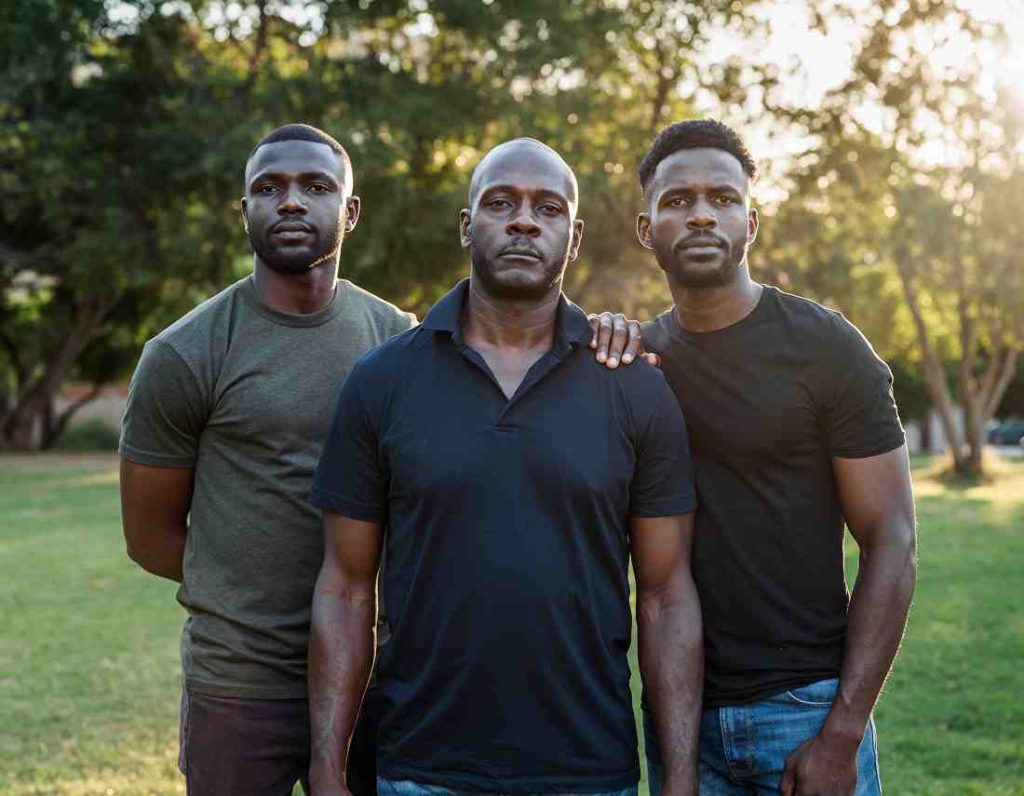
Slavery left a big mark on Black masculinity through systems of domination, humiliation, divide‑and‑conquer, and sexual violation. These forms of violence contributed to deep, enduring trauma that shaped many compensatory strategies, most of which are still felt today. Some of these post-slavery influences can be perceived in the legacies of hypermasculinity, identity conflict, a culture of silence, shame and surveillance, and internal tensions within Black communities (Hartman, 1997)[6].
1. Racial Stereotypes and the Reconstruction of Black Male Identity
Even after emancipation, the myth of “strong bodies, weak minds” never seemed to vanish completely. Instead, it transformed, fueling the “brute” and “buck” caricatures that depicted Black men as hypermasculine, aggressive, and sexually threatening. White supremacists exploited these stereotypes to justify mob violence, including lynchings, and to rationalise Jim Crow laws that limited Black movement and rights.
These stereotypes continue to influence modern perceptions of Black men, contributing to racial bias in policing, media, and daily life. In law enforcement, they underpin beliefs that Black men are dangerous, extraordinarily strong, and require harsher force. They also gave rise to the portrayals of Black men as “athletes,” “hoods,” and “thugs” in the media. These tropes were dominant in 1990s Hollywood, where Black men were often depicted as gang-loving rather than as emotionally or academically complex. Some portrayals in pornography frequently romanticise these traits as the epitome of Black masculinity (Davis, 1981)[3].
Donald Bogle’s analysis of film stereotypes traces how these tropes narrowed the perceptions of Black male identity and manhood.
2. Toughness as Value in Black Communities
However limited attention or status enslaved Black men earned mostly came from performing strength, endurance or rugged masculinity. Enslavers strategically chose Black men perceived as physically strong, mentally agile and ambitious — willing to enforce discipline while demonstrating loyalty to white authority — for supervisory or “overseer” roles (Hartman, 1997)[6].
These practices encouraged others to associate status with physical endurance, rugged masculinity, control, and, in some cases, loyalty to white power. Over time, these values were widely internalised, and visible displays of strength became a means of securing praise, protection, or limited privilege within enslaved communities (hooks, 2004)[7].
3. Strategic Disconnection of Black Life from Education
Slaveholders worked hard to sever Black masculinity from literacy and learning by criminalising education and confining the worth of Black men to their bodies and physicality. Despite this, many enslaved people consistently risked harm to learn and teach others to read and write, confirming an enduring desire for education (Douglass, 1845; Williams, 2009)[16].
4. Emotional Hardness and Hatred for Softness
Staying “unreadable” was a crucial survival tactic under slavery—a way to cope with pain, navigate surveillance, and prevent revealing information that could be used against you.
Open emotional expression—crying when hurt, smiling when happy— helps people release tension, communicate their inner state, and build trust with others. It is one of the basic ways human beings create intimacy and a sense of belonging.
Yet forms of Black masculinity forged under racialised oppression often displaced this capacity with emotional restraint, hardness, and suppression (hooks, 2004[7]; Majors & Billson, 1992)[11]. One of slavery’s most enduring harms may be its assault on Black emotional life. By teaching Black men to treat visible feeling as danger rather than relief, it weakened trust, restricted intimacy, and disrupted the very conditions needed for collective healing.
5. A Culture of Silence and Shame
Sexual violence was used to dominate and humiliate Black men, reinforcing the idea that their worth existed only in their bodies. When your body and masculinity are framed as your only value, violating those becomes a form of emotional destruction, leaving survivors with deep shame and lifelong silence. Public stripping and physical punishment intensified this humiliation, creating lasting discomfort around vulnerability and exposure. To cope, many families buried these stories, producing a culture of secrecy and inherited shame that still echoes across Black generations today (Foster, 2011[4]; hooks, 2004)[7].
The limited records on the sexual abuse of enslaved Black men reveal how deeply this shame was buried in both white and Black historical narratives (Hartman, 1997)[6].
Thomas A. Foster’s Rethinking Rufus (2019) documents the systematic sexual exploitation of enslaved men by both white men and white women, a history long understudied because of cultural taboos.
6. Procreation for Status
Slaveholders viewed newborns as a source of wealth. They encouraged and, in some documented cases, forced enslaved people to have children. This exploitation entangled reproduction with masculinity and economic value, creating a logic that may help explain why procreation became a sign of achievement and masculine status in some Black communities.
Gregory D. Smithers’s Slave Breeding: Sex, Violence, and Memory in African American History (2012) shows how slavery fused sexual violence, coerced reproduction, and profit, reducing Black bodies to reproductive property. Smithers also traces how the memory of this violence endured in African American historical consciousness long after slavery ended.
7. Internal Division in Black Communities
White supremacy did not just create one or two, but an entire cast of caricatures that taught society how to perceive and interpret Black life.
The most notable ones included:
- Mammy, the loyal caretaker
- Uncle Tom, the submissive servant
- Rastus, the clownish helper
- Jezebel, the sexualised Black woman
- Brute, the violent Black criminal
- Buck, the uncontrollable sexual beast
- Sambo, the docile Black loyalist.
Internalised oppression is powerful. Over time, repeated exposure to these projections pushed some Black people to start moving through society using the very categories forced on them. The result was not only a fractured social reality, but divisions within Black communities themselves. These caricatures supplied a distorted language for naming difference, ranking worth, and sorting people into social positions—a strategic script for dividing a people (Collins, 2004[2]; Bogle, 2016)[1].
Internalised oppression is a socio-psychological process in which members of a marginalised group subconsciously begin accepting and believing the negative stereotypes and misinformation about themselves conveyed by a dominant society.
8. High Homophobia
High homophobia in modern Black communities cannot be attributed to a single factor, but slavery played a role in the early development of stigma around queerness within some Black communities. Slavery led to the formation of a narrow, survival‑oriented model of Black masculinity focused on physical strength, emotional restraint, and strict composure. These traits initially served as survival strategies against surveillance and violence during slavery, but later became ingrained in post‑slavery scripts of Black masculinity that struggled to coexist with emotional expression, softness, or vulnerability.
This vigilant, survivalist masculinity, combined with anti-LGBTQ+ views of Christianity—another source of hope for Black communities during crises—created a rigid belief system that cast queerness as a threat to ‘real’ Black manhood. Communities came to regard intimacy, or any gentle bond between two men, not only as sinful or emasculating but also as deeply shameful (Ward, 2005[15]; Snorton, 2014)[14].
Black Gay Men Dynamics: The Afterlife of These Legacies
Post‑slavery narratives of Black masculinity continue to shape how many Black gay men—particularly those with limited access to broader frameworks on history, gender, and identity—understand and evaluate masculinity, social power, and gay desire.
In response to deep homophobia within Black communities, many Black gay men adopted survival strategies anchored to heterosexual norms, such as the performances of hypermasculinity, secrecy, and “straight‑acting” identities[3]. These are protective measures assembled under the anxiety and disorientation of confronting hostility from within. Some of them end up splitting the community even further (McCune, 2014)[12].
Slavery was a war fought and survived together, but never celebrated together.
Post‑Slavery Legacies in Black Gay Culture:
1. Bodies Over Intellect
In many contemporary gay spaces, Black gay men are still most visibly valued for their bodies—muscle, sexual performance, hardness—while intellect, tenderness, and complexity are rendered secondary, sometimes valueless. This happens even among Black gay men themselves (Johnson, 2011)[9].
2. Sexual Dominance as Masculine Proof
Colonial caricatures like the “Buck” and “Black Brute” framed Black men as aggressive, hypersexual beasts. As these myths passed through narratives in media and porn, many Black men internalised them as distorted markers of status and desirability. In many areas of Black gay life, this legacy continues to echo in the rigid sexual hierarchies gay men build to rank each other (McCune, 2014)[12].
While personal preferences exist, the emphasis on dominance and the shaming of vulnerability among Black gay men often reflects internalised historical tropes of hypersexuality and aggression. Challenging these patterns requires completely disentangling gay desire from racialised scripts, allowing Black men to define their own masculinity and relationships beyond imposed racial standards (Muhammad, 2019)[13].
From Plantation “Buck” to Grindr “Top”
Reworked versions of the Black Buck caricature—once used to ridicule and terrorise Black men—continue to echo in sexualised gay spaces through high-selling labels like “Black Dom Top” or “Alpha -BBC Top.” These sexual scripts, constructed from racial stereotypes, turn Black bodies into sexual objects for consumption. In these encounters, racial power can appear briefly inverted for the sake of excitement, but the true social hierarchy usually remains intact once the encounter ends (Han, 2007)[5].
3. The Legacy of Survivalist Hypermasculinity
Scripts of the dominant Black masculinity in that era centred on toughness, emotional restraint, and a form of social recognition described in some Black communities as “rascality.” These traits overlapped most closely with the Buck and Brute stereotypes, leading some Black men to embody aspects of them in order to align with the prevailing cultural ideal. The Masculinity Anchors Model (MAM) helps explain this. The result was the enduring legacy of a survivalist hypermasculinity (Majors & Billson, 1992)[11].
The echoes remain visible today in the way many Black gay men idealise hood, thug, trade, DL and macho archetypes—reworked performances forged from the oppressor’s blueprint (Collins, 2004)[2].
4. Shame in Black Gay Culture
Enslaved people cried, wailed, and sang openly aboard slave ships. Emotional expression was not alien to Black men, and restraint was not our natural default. Secrecy, stoicism, and fear of visible vulnerability were learned responses to repeated violation and dehumanisation that enslaved Black men endured under slavery (Johnson, 2011)[9].
Silence often became a survival strategy after sexual violence because speaking up rarely brought justice. Instead, it invited disbelief, retaliation, humiliation, and further harm. A culture of silence also taught Black people the potency of shame as a social weapon. Emotional containment became safer than disclosure (Snorton, 2014)[14].
Slavery Aftermath: Summary
- Masculinity becomes social currency, not just personal identity.
- Hypermasculine and secretive aesthetics gain symbolic value.
- Sexual roles become tied to rank, power, and masculine proof.
- Physicality is rewarded more quickly than intellect or emotional depth.
- Masculinity is performed for safety, status, and desirability.
- Emotional honesty becomes risky; concealment becomes adaptive.
- Internal hierarchies harden around dominance categories and masculine codes.
- Self-worth becomes vulnerable to systems that reward hardness over wholeness.
Dismantling Stereotypes and Reclaiming True Pride:
The work starts with our collective refusal to perform or conform:
- Understand hypermasculinity as performance, not identity.
- Value intellect and emotional depth over sex appeal.
- Separate self-worth from sexual roles or positions.
- Reject silence as the cost of belonging—speak your truth.
- Embrace masculinity as diverse, relational and self-defined.
Forging a Path Toward Healing…
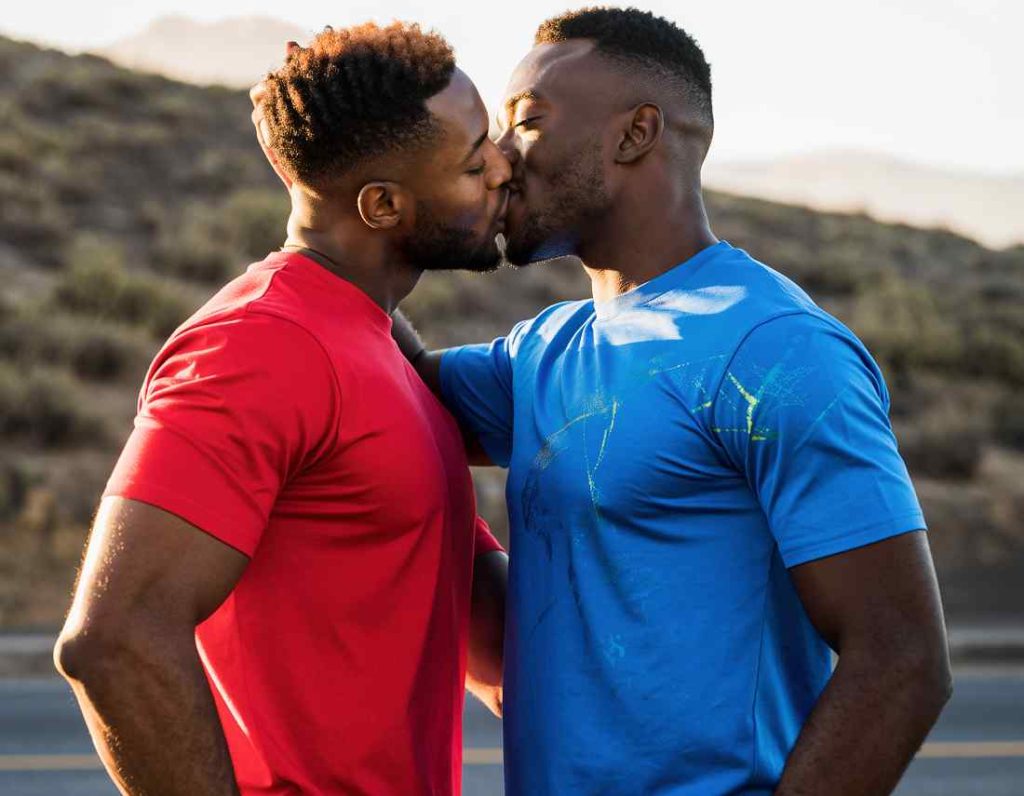
Healing begins when we stop shrinking ourselves into roles that were never ours to begin with. We must reject the lie that our bodies matter more than our minds, our hearts, or our complexity. When we let our minds shine, our hearts speak, and our bodies simply be, we move closer to reclaiming the fullness of Black humanity that slavery tried to distort. What was stolen can be restored, and what was twisted can be made whole again.
It starts with us believing.
References
- Bogle, D. (2016). Toms, coons, mulat*oes, mammies, and bucks: An interpretive history of Blacks in American films (Updated and expanded 5th ed.). Bloomsbury Academic..
- Collins, P. H. (2004). Black sexual politics: African Americans, gender, and the new racism. Routledge. https://doi.org/10.4324/9780203309506
- Davis, A. Y. (1981). Women, race & class. Random House.
- Foster, T. A. (2011). The sexual abuse of Black men under American slavery. Journal of the History of Sexuality, 20(3), 445–464. https://doi.org/10.1353/sex.2011.0059
- Han, C. (2007). They don’t want to cruise your type: Gay men of colour and the racial politics of exclusion. Social Identities, 13(1), 51–67. https://doi.org/10.1080/13504630601163379
- Hartman, S. V. (1997). Scenes of subjection: Terror, slavery, and self-making in nineteenth-century America. Oxford University Press.
- hooks, b. (2004). We real cool: Black men and masculinity. Routledge. https://doi.org/10.4324/9780203642207
- Hogarth, R. A. (2017). Medicalising Blackness: Making racial difference in the Atlantic World, 1780–1840. University of North Carolina Press.
- Johnson, E. P. (2011). Sweet tea: Black gay men of the South. University of North Carolina Press. https://uncpress.org/9780807872260/sweet-tea/
- Jorati, J. (2025). The effects of slavery on enslaved people and eighteenth-century antislavery arguments. Journal of Modern Philosophy, 6(2), 1–30. https://doi.org/10.25894/jmp.2498
- Majors, R., & Billson, J. M. (1992). Cool pose: The dilemmas of Black manhood in America. Lexington Books. https://psycnet.apa.org/record/1995-97721-000
- McCune, J. Q., Jr. (2014). Sexual discretion: Black masculinity and the politics of passing. University of Chicago Press.
- Muhammad, K. G. (2019). The condemnation of Blackness: Race, crime, and the making of modern urban America. Harvard University Press.
- Snorton, C. R. (2014). Nobody is supposed to know: Black sexuality on the down low. University of Minnesota Press. https://www.upress.umn.edu/9780816677979/nobody-is-supposed-to-know/
- Ward, E. G. (2005). Homophobia, hypermasculinity and the US Black church. Culture, Health & Sexuality, 7(5), 493–504. https://doi.org/10.1080/13691050500151248
- Williams, H. A. (2009). Self-taught: African American education in slavery and freedom. University of North Carolina Press. https://uncpress.org/9780807858219/self-taught/


Thanks for the insights.
Often I have felt uncomfortable with a pervasive shallowness in gay culture: shallowness meaning emphasis on performance instead of a genuine interest in who we are as whole human beings. I have long blamed it only on homophobic models of power that force us into an underground existence in which accountability to self and one another is not a priority. But this work does enrich my understanding.
And it isn’t to say that other communities (than the ex-enslaved ones) are problem free, or even free from similar problems.
I think ultimately we need to build and promote a culture of thoughtfulness, of authenticity and of compassion for one another. Tyranny of performance is the enemy we must overcome.
Thank you for engaging so thoughtfully. I appreciate how you name the “tyranny of performance”; that’s exactly the through-line. Homophobia shaped the underground conditions, but culture also evolves inside those conditions, and we’re allowed to examine what we’ve inherited without turning that into blame.
Even though it shows up across gay culture, it doesn’t hit everyone the same way. Black queer people often carry way more of the weight because of the piling up of race, sexuality, class, and stereotyping, among others.