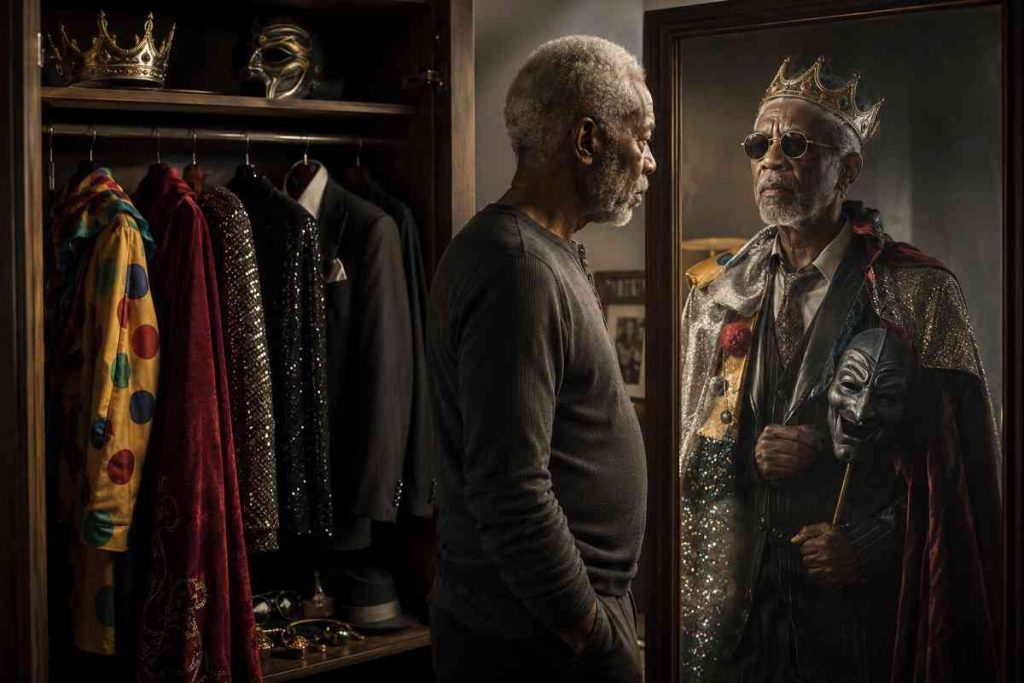
As social animals, we all do a little touch-up now and then. A small adjustment. A little polish. A version of ourselves made slightly more presentable for the room.
And still, underneath it all, we remain recognisably ourselves.
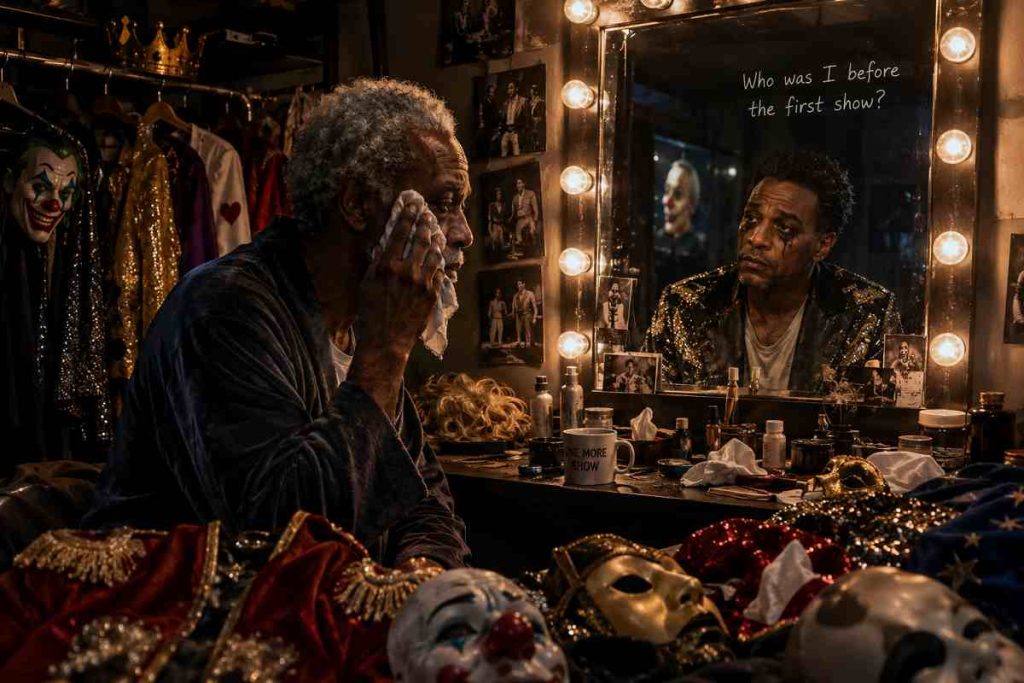
We can go home, wash it off, and feel safe being seen as we really are. The surface fades. The self remains.
The trouble begins when the touch-up becomes a transformation.
When we go full circle and become a whole new character, complete with costume, voice, posture, attitude, and storyline.
The attention comes.
The applause follows.
And soon, we are dazzled by our own reflection.
Instead of taking off the makeup and hanging up the costume until the next special occasion, we leave it on.
“Just a bit longer,” we say.
Two weeks later, we have built wardrobes for twenty-two more characters, each harder and crustier than the one before.
The real self is still in there somewhere — waiting, holding its breath, dreaming of fresh air.
But the door never opens.
Years pass.
The costumes pile up.
One day, we are seventy-five, and memory flickers in fragments.
We can no longer remember who we were — only the costumes we have worn:
Joker.
Iron Man.
Captain … Miss … Miss Americana … Captain Americana.
Heartbreak Prince….King.
Beyoncé.
And when the lights finally go out, we recognise neither who we were before the performance began, nor who we are now on our deathbed.
As we close our eyes, one last flicker of awareness passes through us:
We are really dying as Elon Musk.
Not even Thanos, our most cherished character.
Executive Summary: The Last Show
“The Last Show” is a darkly comic reflection on performance, identity, and self-erasure. It explores what happens when ordinary social presentation becomes a permanent costume and the real self is slowly buried beneath applause, reinvention, and public performance.
The piece begins from a humane premise: everyone adjusts themselves slightly for social life. The danger does not lie in presentation itself, but in losing the ability to return to one’s unperformed self. Through the metaphor of makeup, costumes, characters, and a final curtain, the essay shows how performance can become addictive, multiplying into new personas until the original self is trapped and suffocated.
Its central strength lies in the shift from ordinary self-polish to full identity captivity. The image of building wardrobes for “twenty-two more characters” captures how false selves rarely remain singular; they become an entire ecosystem of roles, defences, fantasies, and public masks.
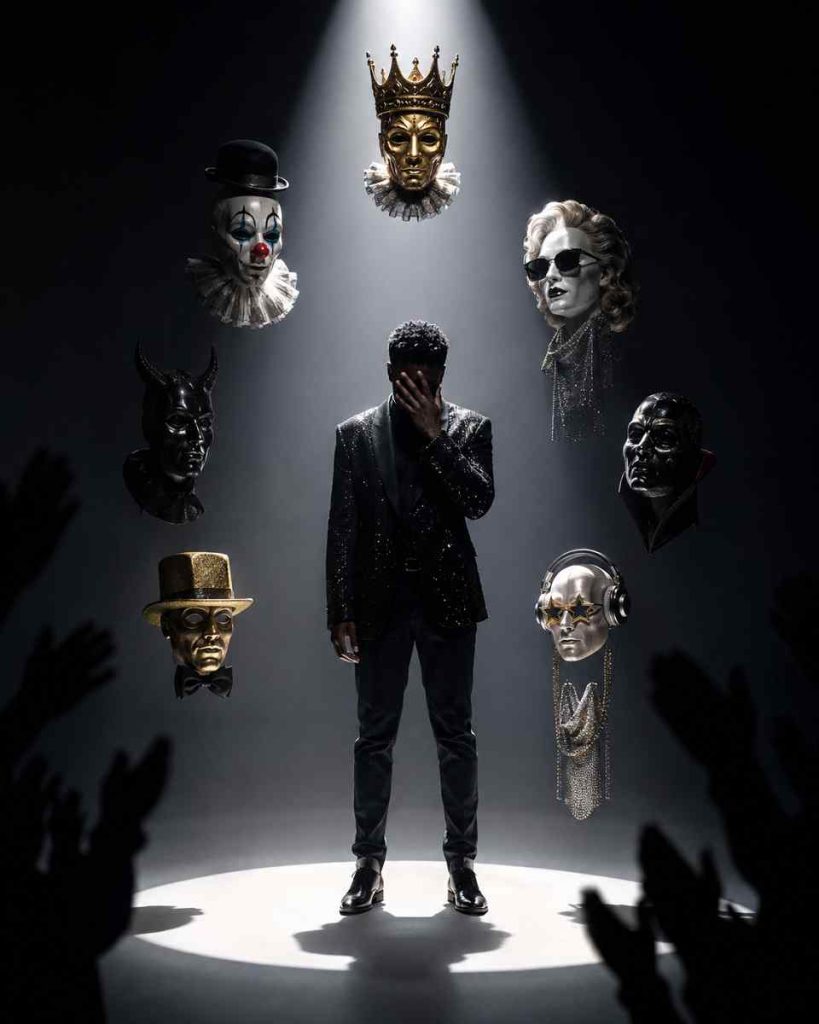
The ending works because it combines tragedy with absurd comedy. Dying “as Elon Musk” rather than “Thanos” turns the final moment into both a joke and a humiliation: the person not only loses their real self, but also ends up trapped in a costume that is not even their most cherished fantasy.
Overall, “The Last Show” critiques social media performance, celebrity mimicry, reinvention culture, status hunger, and the modern danger of becoming addicted to a version of ourselves built for the public rather than the truth.
Its deepest emotional claim is that a person can become so successful at performing that the performer disappears.
Read Daniel Nkado’s Fiction
My novels explore power, love, secrecy, shame, belonging, betrayal, family, survival, and the emotional choices people make when life becomes complicated.
If “The Last Show” made you think about identity, performance, self-deception, and the stories people build around themselves, my fiction delves deeper into those same human tensions.
Read Daniel Nkado’s novels on Amazon:
https://www.amazon.com/stores/author/B0GHFN9KW6/allbooks