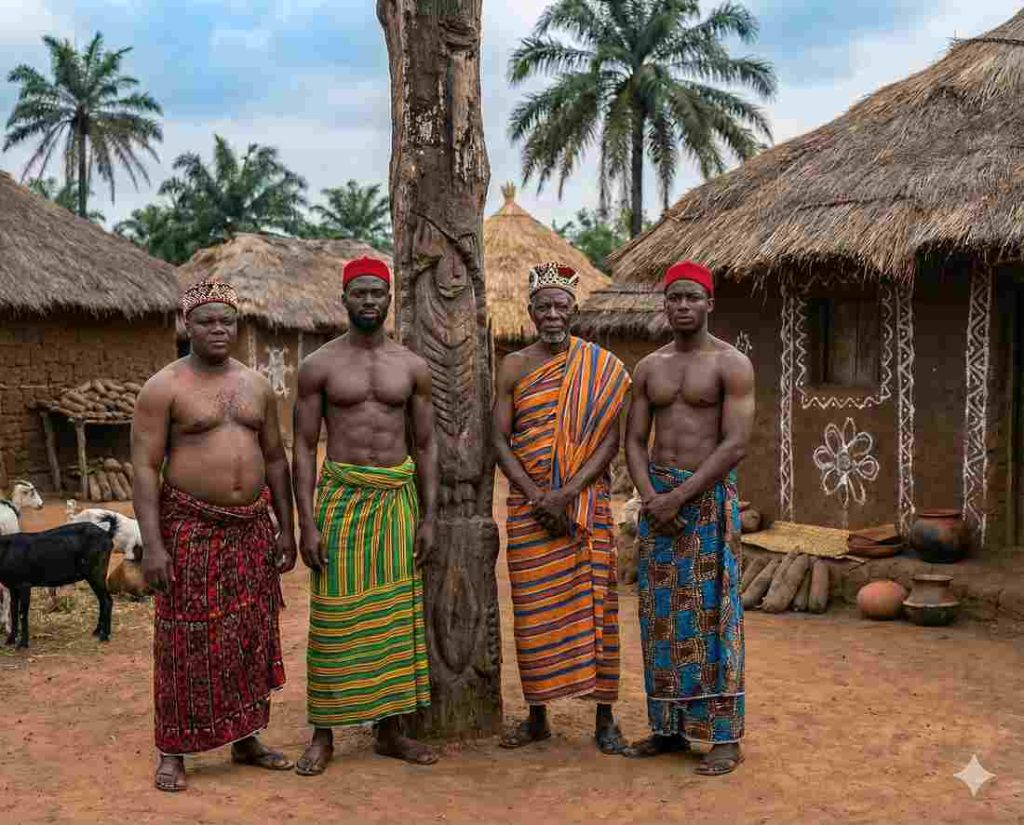
The Igbo people of southeastern Nigeria share a rich culture centred on philosophy, spirituality, and communal values. Our fundamental way of seeing and interpreting the world rests heavily on three core values—personal responsibility, communal harmony, and moral uprightness. This last principle—expressed as “keeping one’s hand straight” (ikwụba aka ọtọ)—acts as the vital link between the other two, symbolising the non-negotiable commitment to honesty, integrity, and the rejection of corruption at all times.
This article examines the origins of the Igbo metaphor “keeping one’s hand straight,” the significance of “the hand” as a core moral symbol, and its link to the Ikenga (strength of the right hand). It also explores the hand’s lessons for contemporary social ethics and trust.
The Core Values of Personal Growth and Healthy Community
- Personal Agency or personal responsibility
- Igbos believe that a person’s god (Chi) can influence their destiny, but the outcome largely rests in their own hands. A person must first commit to their chosen path; only then will their Chi decide whether to lend support or abandon them. This principle is captured in the proverb: “Onye kwe— Chi e ekwe” (When a person agrees, their god agrees). Akalaka onye bụ ya na chi ya — (one’s destiny is between them and their god).
- Communal harmony
- Peaceful coexistence and unity both in his household, kindred, immediate community and the village at large are paramount. “Ndụ bụ isi, udo eso ya”— “Life is first, followed by peace”.
- Moral uprightness (ikwuba aka ọtọ)
- Upholding moral purity always through integrity, honesty, righteousness, and consistent virtue. This requires actions to align with what is right, demonstrating fairness, accountability, and a commitment to the well-being of others.
Integrity is defined by “straightness” in action and judgment—no crookedness to gain advantage, no hidden bias, and no cheating (Abalogu & Okolo, 2020)1. It underscores the Igbo belief that genuine, lasting success results only from straightforward, principled actions, not deceitful shortcuts.
1. The origin and meaning of ‘keeping one’s hand straight’
At its most basic level, the command to keep one’s hand straight is a call for transparency at all times. In Igbo ethical language, justice is not just a legal concept; it is a character trait. People are personally bound by the ọfọ to choose uprightness always.
The significance of the Ọfọ
The Ọfọ is the spiritual emblem of moral purity, signifying that “right is might”. The Ọfọ holds one crucial message: the innocent will always prevail (oji ọfọ ga-ala). This is why it is used for oath-taking to prove one’s innocence, as it creates a spiritual link between the ancestors (representing the Earth Goddess and Her attendant deities and spiritual entities rather than simply older family generations) and the Creator (Chukwu Okike). While some families use a carved wooden branch to represent it, the Ọfọ is really a spiritual entity that can be invoked anywhere, provided one’s actions are just.
In fact, an alternative way of saying ikwuba aka ọtọ is iji Ọfọ oge ọbula.
A genuine fear arises when an offender, committing a malicious act, is reported to the ancestors by a victim who holds a potent Ọfọ—meaning they are innocent of wrongdoing.
The ancestors do not intervene immediately, of course. They often await guidance from the patient Creator, who observes to see if the wicked individual will change and make amends, as all are the Creator’s children, after all. Only when it is clear that repentance is impossible—usually after the victim’s death, when forgiveness can no longer be sought—do the ancestors finally strike, this time with raw anger.
Hopelessness is a man whose ancestors are out to punish. His curse follows him to the grave and beyond it.
2. The origin of the metaphor— ‘keeping one’s hand straight’
Use of the phrase “keeping one’s hand straight” to refer to moral uprightness or rectitude is relatively new. A much older term that holds just the same meaning is “keeping one’s hands clean”. Before picking up the Nzu (white chalk), perhaps during a traditional ritual or when visiting kin, one must first wash their hands. Clean hands symbolise innocence, purity of heart, and peaceful intent before others and the earth goddess, Ani.
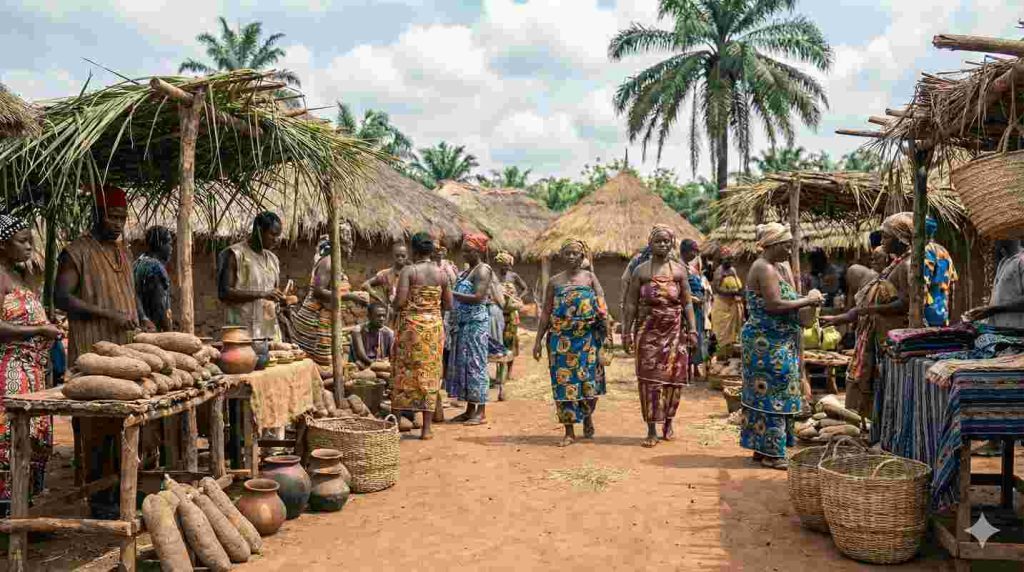
The origin of “keeping one’s hand straight” can be traced back to the time of agricultural boost. In traditional Igbo communities, land (ala) is the most valuable shared resource. Dividing land for farming required visible, physical fairness. When boundaries were marked, the person holding the measure was always instructed to “keep the hand straight” so that the boundary lines would not bend to secretly favour one neighbour over another.
Obidigbo (2021)[4] identifies ikwuba aka ọtọ as a traditional image for justice rooted in this practical need to share land without cheating. If the hand is “crooked,” the land division is unfair, leading to conflict. Thus, morality is not just about inner goodness; it is visible fairness that preserves social peace (the preserver of communal harmony). One earns community trust by keeping their hands straight at all times.
3. The connection to Ikenga
Ikenga is the deity of personal destiny. It embodies the philosophy that one’s destiny rests in their own hands, a personal affair between them and their god (Chi). Success or failure depends largely on personal ambition, effort, and one’s connection/relationship with their Chi (personal god).
The concepts of Ikenga and Ikwụba aka ọtọ are deeply interconnected, underscoring the Igbo philosophy that authentic, lasting success comes from hard work and integrity (Azuawusiefe, 2020)3.
- Ikenga symbolises the inherent power to achieve success through the strength and capability of the ‘right hand’—a metaphor for the pursuit of honest endeavours.
- Ikwụba aka ọtọ is the moral imperative to maintain absolute uprightness in all one’s affairs—keeping one’s hand ‘right’ denotes the non-negotiable duty to act with uncompromising integrity at all times, regardless of the situation.
When understood together, these two principles reinforce a core message: Integrity and hard work are the essential foundation for true success that endures and brings peace.

4. Social Ethics: Why One Crooked Hand Stains Many
Igbo proverbs (ilu) often teach that personal conduct has communal consequences. A “crooked hand” is not just a personal failing; it is a community liability.
Abalogu and Okolo (2020)[1] highlight proverbs that frame justice as a shared responsibility:
- “Ofu mkpụrụ aka lụta mmanụ, o zue ora ọnụ.”
- Translation: When one finger gets stained in oil, it quickly spreads to the others.
- Meaning: The corruption or wrongdoing of one person stains the reputation and safety of the whole group.
- “Aka nri kwoo aka ekpe, aka ekpe akwoo aka nri.”
- Translation: When the right hand washes the left, and the left washes the right in return.
- Meaning: Mutual responsibility leads to communal success and well-being.
These sayings reinforce the idea that trust is a social infrastructure. When people trust each other, cooperation is easy; suspicion leads to defensiveness. Dishonesty, even once, cracks the community’s harmony.
The distinction between stained and soiled hands
Igbo philosophy highlights a big difference between physically soiled hands and morally stained hands.
| Concept | Nature of “Dirt” | Cultural Value | Resolution |
|---|---|---|---|
| Physically Soiled Hands | Physical (Soil, sweat, labour) | Virtuous: Symbolises hard work and honest success. | Washing with water (Physical hygiene). |
| Morally Stained Hands | Moral/Spiritual (murder, theft, rape, betrayal, sin) | Abominable: Symbolises defilement of both the land and community. | Spiritual cleansing/Ritual (Ikpu aru) or banishment in severe cases. |
- Proverb: “Aka aja aja na-ebute ọnụ mmanụ mmanụ.”
- Translation: Hands soiled with earth are the reason for the oily mouth (Anyanwu, 2018)2.
Conclusion
The Igbo worldview values success achieved through hard work and integrity. The core ethic is to work hard and work clean (without corruption). These two aspects provide the pathway to achieving the highest level of human purity.
Diligence (igba mgbọ) + Integrity (ikwuba aka ọtọ) = Ezigbo mmadu (an individual of exceptional moral character, marked by transparency and good conduct, living in harmony with humanity and the gods).
References
- Abalogu, D. M., & Okolo, E. A. (2020). The Igbo concept of justice: Towards an understanding. Preorcjah, 5(2). https://journals.ezenwaohaetorc.org/index.php/preorcjah/article/download/5-2-2020-006/pdf
- Anyanwu, J. I. (2018). A linguistic study of the themes, functions and aesthetic devices of selected Igbo proverbs (PhD thesis). Ahmadu Bello University, Zaria. https://kubanni.abu.edu.ng/bitstreams/19ac6a13-8cc0-4ffa-a473-efb24906e288/download
- Azuawusiefe, C. (2020). Ikenga: Reimagining an iconography of cultural achievement. Igbo Studies Review, 8, 38–57. https://igbostudies.org/media/articles/pdfs/isr-no-8-2020-pp-38-57.pdf
- Obidigbo, J. C. (2021). Socio-religious significance of Igbo laws and justice. AKU: An African Journal of Contemporary Research, 2(1). https://www.acjol.org/index.php/aku/article/download/3533/3459