
Editor’s Note:
This article discusses gossip, relational aggression, social-control manipulation, exclusion, and reputational harm in Black queer communities, with particular attention to Black queer friendship networks. It focuses on observed patterns within certain UK Black queer circles and is not intended to generalise about all Black queer people, friendships, or communities. Triangulation occurs across many social groups and cultural contexts.
Some informal and author-coined terms are used throughout the article to improve clarity, memorability, and public understanding. Their use should not detract from the analytical weight of the piece, especially where such terms help name patterns that may otherwise remain difficult to recognise.
Introduction: Why Manipulators Target Friendships
In Black queer spaces, friendship is rarely just a symbolic association. In many cases, Black queer friendships carry deep emotional and social value. They can provide protection, emotional refuge, cultural recognition, chosen family, social access, and sometimes the first place a person feels truly seen.
That is why, when someone becomes the target of a manipulator, these friendships are often the first relationships the manipulator tries to weaken or destroy.
Once the target has no stable friendships to fall back on, the manipulator’s job becomes easier. Gaslighting, emotional rollercoaster dynamics, selective affection, withdrawal, punishment, and engineered dependence become more effective when the target has been cut off from people who might offer clarity, grounding, or emotional protection in times of distress.
This article explains how triangulation works in Black queer spaces, why it is so powerful, and how communities can interrupt it before harm becomes permanent.
- Editor’s Note:
- Introduction: Why Manipulators Target Friendships
- How Triangulators Choose Their Targets
- Why Triangulation Is Such a Friendship-Destroying Mechanism
- Triangulation Works by Distorting Truth
- Triangulation Works Hand in Hand with Smear Campaigning and Toxic Gossip
- Planting the Seed of Division
- Gossip, Triangulation, and Confirmation Bias
- The Social Power of Gossip: UK vs Nigeria
- The Basic Pattern of Black Queer Triangulation: Isolate, Recruit and Rewrite
- Real-World Triangulation Examples in UK Black Queer Spaces
- 1. The “I’m Just Warning You” Setup
- 2. The Cropped Screenshot
- 3. The Group Chat Trial
- 4. The Loyalty Test
- 5. The “Everyone Says It” Manipulation
- 6. The Weaponised Vulnerability
- 7. The Public Calm, Private Poison Pattern
- 8. The Event-Space Divide
- 9. The Repair Block
- 10. The Staged Affection Dynamic or the Macos Threesome
- How The Macos Threesome Plays Out in Real Life
- The Wale Wonder: When One True Detail Becomes the Whole Story
- The Manipulator’s Greatest Trick: Staying Clean
- Why Triangulation Works So Well in Black Queer Spaces
- Triangulation and the Dark Triad: Machiavellianism, Psychopathy, and Narcissism
- Triangulation as Relational Aggression
- The Emotional Impact of Triangulation on the Target
- The Danger of Moral Performance
- How the Manipulator Disguises Harm as Care
- How To Recognise Triangulation Early
- How to Interrupt Triangulation in Real Time
- DL Triangulators and the Multiple Names Dynamic
- What the Target of Triangulation Should Do
- What The Recruited Friend Should Do
- Conclusion: What UK Black Queer Communities Must Learn
- FAQs
- References
How Triangulators Choose Their Targets
The motive can vary. The manipulator may be trying to punish the target for rejecting him, disrespecting him, threatening his position in the social hierarchy, or exposing a mask he relies on for respect or livelihood — such as hypermasculine performance or performative DL secrecy.
In other cases, he may genuinely like the target but want the relationship to operate on his terms, with him in control rather than being emotionally exposed. Sometimes, the manipulator may not even be acting only for himself. He may be doing the social dirty work of a higher-ranking person, clique leader, or patron who benefits from the target’s isolation while remaining clean in public.
Whatever the motive, the result is the same: friendship becomes the first battlefield. The manipulator weakens or destroys the target’s support system, making the target easier to isolate, confuse, destabilise, and control.
Why Triangulation Is Such a Friendship-Destroying Mechanism
Triangulation is destructive because it attacks friendship at the level of trust, not simply at the level of disagreement. In an ordinary conflict, two people may argue, misunderstand each other, step back, and eventually repair the relationship. In triangulation, however, a third person interferes with the bond between them by controlling what each person hears, believes, fears, and assumes about the other.
This makes the damage harder to detect. The friendship may not end with a single clear betrayal. It may weaken through continued suspicion, silence, emotional distance, selective information, and small acts of withdrawal that no one explains directly. One friend begins to feel watched. The other begins to feel warned. Both start responding to a version of the relationship that has been quietly rewritten by someone else.
Triangulation Works by Distorting Truth
Triangulation is powerful because it does not always rely on obvious lies. Unlike reputational destruction, which may involve outright falsification, triangulation often works through selective truth, emotional framing, and strategic omission.
In many cases, the manipulator uses something real — a fragment of truth: a private comment, an old disagreement, a visible tension, a moment of frustration, a screenshot, a mistake, or a vulnerability once shared in confidence.
The harm begins when these fragments are removed from context and given a new meaning.
This is why triangulation can be so difficult to challenge. Sometimes, yes, something did happen. But the manipulator has framed, amplified, rearranged, and delivered that real context in a way that forces the targets to interpret the truth through his divisive frame.
The manipulated person may say, “But he really did say that,” or “But that situation really happened.” And sometimes, yes, it did. But the issue is not whether the fragment is real. The issue is what the manipulator has turned it into.
Triangulation Works Hand in Hand with Smear Campaigning and Toxic Gossip
Triangulation rarely works alone. It often travels with smear campaigning and toxic gossip because all three rely on the same mechanism: controlling how people interpret someone before that person has a fair chance to speak for himself.
Triangulation creates the divide.
Smear campaigning supplies the character attack.
Toxic gossip spreads the interpretation through the wider network.
Together, they can turn private tension into public verdict.
Planting the Seed of Division
The manipulator first inserts himself between two people, then feeds each side selective information. Once he plants suspicion, smear campaigning gives that suspicion a moral story: the target is fake, dangerous, unstable, jealous, manipulative, desperate, disloyal, or “not who people think he is.” Toxic gossip, often through the use of runners, then spreads from person to person until it becomes common knowledge.
This is how a strategic manipulator and instigator can destroy a friendship without a single direct confrontation between the two people involved. He warns one person: “Just be careful, sha.” He shows another person a screenshot with the full context removed. Someone else hears a cropped version of an argument. A fourth person is told, “I’m not the only one who has noticed.”
Before long, the target’s reputation is being discussed as if a full investigation has already happened.
This is the tragedy of many wounded social spaces: people living under severe economic inequality, racial pressure, social exclusion, and emotional scarcity sometimes abandon the harder work of collective wealth-building, care, and mutual protection, and instead spend their energy planning, conniving, and strategising over how to pull one another down.

Gossip, Triangulation, and Confirmation Bias
Gossip creates social momentum, making the dynamic more dangerous. Once enough people repeat a frame, the frame begins to resemble evidence, and the target’s ordinary behaviour is reinterpreted through the smear.
If he is quiet, he is guilty.
If he defends himself, he is manipulative.
When he withdraws, he becomes unstable.
When he stays calm, they say he is pretending.
This is where truth becomes unstable. People stop asking, “What happened?” and start asking, “What does this prove about him?” At that point, the triangulator begins to exploit confirmation bias: the tendency to notice, accept, and organise information in ways that support an existing belief.
Once that belief takes hold, every action can be made to fit the accusation. Kindness becomes performance. Silence becomes guilt. Anger becomes instability. Self-defence becomes manipulation.
The Social Power of Gossip: UK vs Nigeria
While gossip often drives triangulation in male friendships, not all cultures permit men to build influence through rumour. The following section contrasts gossip dynamics in UK and Nigerian contexts and explains why this distinction matters.
In many Nigerian relational contexts between men, gossip is frowned upon as a small behaviour. Men may still do it, but a man who spends too much time carrying stories risks looking unserious, idle, or socially weak.
The rough masculine logic is simple: if someone threatens your power, build more power. Make more money. Strengthen your position. Outperform the noise. Do not reduce yourself to a messenger of another man’s downfall.
The Basic Pattern of Black Queer Triangulation: Isolate, Recruit and Rewrite
Triangulation in Black queer communities often follows a recognisable pattern. The problem is that many queer men do not have the language, tools, or social literacy to recognise it while it is happening.
A. Stages 1 to 3
First, the manipulator identifies a friendship with emotional value. This may be two people who trust and defend each other, invite each other into rooms, or share a private bond that threatens his control.
Second, he introduces doubt. He may say, “I don’t want to cause drama, but…” or “I just think you should know…” or “I noticed something about him.” The language often begins softly because the goal is not an immediate explosion. The goal is infection—a gradual infection of the friendship with doubt and suspicion.
Third, he positions himself as the emotionally responsible one. He may say, “I’m only being honest,” that he is only trying to “protect” you, that he is “tired of all these fake people,” or simply “just saying what everyone else is scared to say.” This allows cruelty to appear as courage.
B. Stages 4 to 6
Fourth, the manipulator turns loyalty into a test. The recruited friend is pressured to prove his loyalty, gratitude, or usefulness by taking sides, withdrawing from an existing friendship, sharing screenshots, confronting the target, or repeating the manipulator’s version of events as if it were his own conclusion.
Fifth, the manipulator blocks repair. If the two friends attempt to speak directly, he may escalate, reframe, or accuse one of them of betrayal. Repair threatens triangulation because repair removes the manipulator’s power as interpreter.
Finally, he rewrites the aftermath. If the friendship collapses, he frames the outcome as proof that the target was dangerous all along. The broken friendship becomes evidence, even though he helped break it.
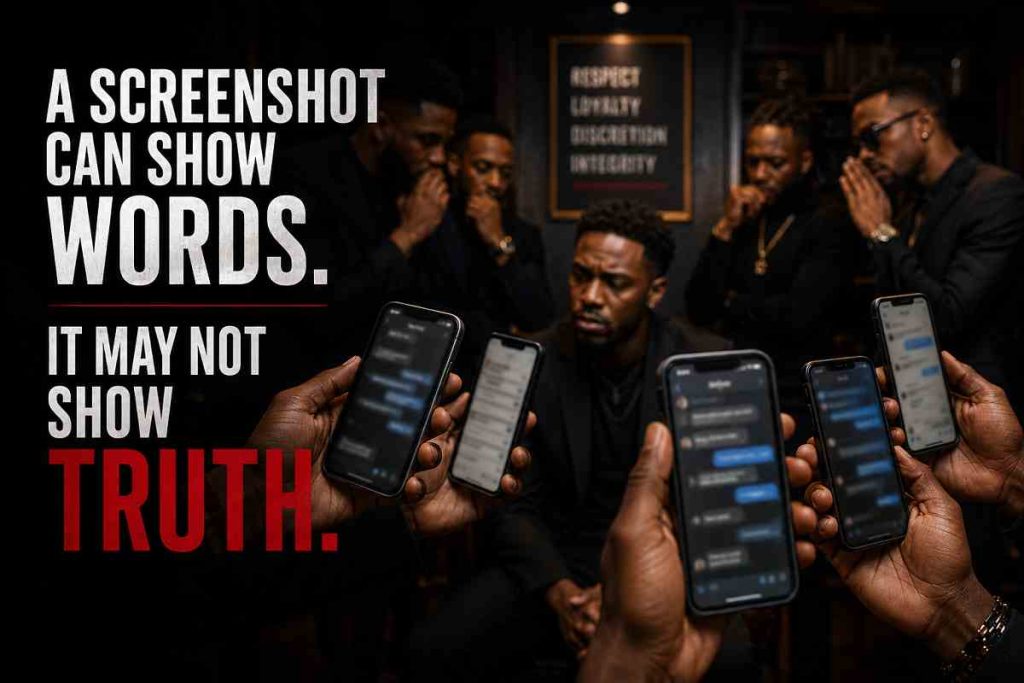
Real-World Triangulation Examples in UK Black Queer Spaces
Triangulation rarely announces itself as open manipulation. The manipulator often disguises his actions as concern, loyalty, warning, humour, or “community protection.” In UK Black queer spaces, where social circles can be small, overlapping, and reputation-sensitive, the damage can move quickly from one friendship into an entire network.
Here are some realistic examples.
1. The “I’m Just Warning You” Setup
A manipulator tells one friend:
“I’m not saying don’t be close to him, but just be careful. He talks about people.”
The statement is vague enough to avoid accountability but strong enough to create suspicion. The recruited friend begins watching the target differently. Normal behaviour is now interpreted through a lens of distrust.
2. The Cropped Screenshot
A private exchange is screenshotted and shared without context. The part showing provocation, apology, humour, or emotional history is removed.
The target’s words may be real, but the meaning has been altered. The screenshot becomes “evidence,” even though it has been edited to make it appear as a weapon.
3. The Group Chat Trial
Instead of speaking directly to the person involved, the manipulator takes the issue to a group chat. People react before hearing the full story. Jokes, memes, side comments, and “I always knew” responses begin to form a social verdict.
By the time the target hears about it, the room has already judged him, named him, and decided what kind of person they believe he is.
4. The Loyalty Test
The manipulator pressures a friend to prove loyalty by distancing himself from the target:
“If you still chill with him after what I told you, then I know where you stand.”
Or he may disguise the manipulation as a warning:
“When it happens, just don’t say I didn’t tell you o.”
This turns friendship into a moral test. The recruited friend may not fully understand the issue, but the fear of being seen as disloyal, foolish, or unprotected pushes him to comply. Instead of asking for clarity, he begins to perform loyalty through distance.
5. The “Everyone Says It” Manipulation
The triangulator says:
“Everyone has been saying the same thing about him.”
Or he may frame it this way:
‘That boy is just too much drama. He has a problem with everybody.’
But “everyone” is usually one or two people, or sometimes just the manipulator himself, using imagined consensus to create pressure. The target is made to feel socially outnumbered without knowing who has actually said what.
6. The Weaponised Vulnerability
Something the target once shared in confidence is repeated to another person, but with a darker interpretation attached.
A moment of sadness becomes “he is unstable.”
A boundary becomes “he thinks he is better than people.”
A private fear becomes “he is always playing victim.”
The manipulator turns intimacy into evidence.
7. The Public Calm, Private Poison Pattern
In public, the manipulator appears polite, neutral, or even kind to the target. He may greet him warmly, laugh at his jokes, comment on his posts, or behave as if nothing is wrong. But privately, he feeds other people’s suspicion, resentment, and negative interpretations about him.
I call this the Lex-Yao Pattern: a triangulation tactic where the manipulator maintains a clean public image and a seemingly cordial relationship with the target, while privately poisoning the target’s reputation behind closed doors.
This allows him to maintain innocence. If challenged, he can say:
“But I’ve never done anything to him. You all can bear me witness.”
The visible record looks clean because the real damage happened behind closed doors.

8. The Event-Space Divide
The manipulator tells the target or his friend not to invite the other to an event—such as a birthday or house party, Pride plan, club night, or group chill—because “it might be awkward.” Then he goes back to the uninvited person and says, “Why didn’t your friend invite you? I thought you guys were supposed to come together.”
I call this the Dance of Slim Minds: a triangulation tactic where the manipulator engineers exclusion from one side, then reports the exclusion to the target as if he had nothing to do with it.
The tactic works by manufacturing confusion between two people who might otherwise have spoken directly. One person believes he is avoiding awkwardness; the other feels deliberately rejected. The manipulator then steps in as a concerned observer, even though he was the architect of the very wound he is now pretending to notice.
9. The Repair Block
When the two friends attempt to speak directly, the triangulator interferes:
“Don’t bother. He’ll just manipulate you.”
“He already knows what he did.”
“You’re too forgiving. That’s why people use you.”
This is one of the clearest signs of triangulation. The manipulator does not want clarity because clarity may expose the distortion. His power depends on keeping people apart.
10. The Staged Affection Dynamic or the Macos Threesome
This is perhaps one of the most immediately effective forms of triangulation because its effects can be felt in real time. Here, the manipulator stages or engineers a sexually or emotionally charged three-person situation, often involving the target’s friend, partner, or close associate.
During the encounter, he strategically gives one person more attention, warmth, sexual interest, tenderness, humour, or aftercare in order to provoke jealousy, insecurity, rivalry, or emotional confusion in the other.
I call this the Staged Affection Dynamic, or the Macos Threesome: a triangulation tactic where intimacy is used as theatre, and affection is distributed unevenly to destabilise the bond between two people. The point here is not really desire but control.
How The Macos Threesome Plays Out in Real Life
The manipulator may compliment one person more openly, touch him more tenderly, laugh harder at his jokes, check on him afterwards, buy him gifts or food, and create the impression that a special connection has formed — all the while deliberately ignoring the other person, who is often the true target of the performance and, in some cases, the person he actually cares about, or simply want to punish.
The excluded person is left wondering whether he is being compared, replaced, mocked, punished, or quietly pushed out. Meanwhile, the favoured person may begin to feel chosen, desired, or superior, even though he may simply be functioning as a prop in someone else’s emotional theatre.
Intimacy Becomes Competition
This is why the Macos Threesome is so destructive. It turns intimacy into competition. A space that should require consent, clarity, and emotional maturity becomes a breeding ground for insecurity. The manipulator does not need to say, “Your friend is more desirable than you.” He only needs to perform it convincingly enough for the target to feel the wound.
Over time, the target may become suspicious of his friend or partner rather than recognising the manipulator’s role in creating the imbalance. The friend may also become defensive, flattered, or confused. What began as a sexual or social encounter becomes a relational fracture.
The cruelty lies in the manipulator’s ability to turn affection into evidence. He creates jealousy, then sits back and entertains himself by watching two people struggle through the emotional fallout he deliberately engineered.
The Wale Wonder: When One True Detail Becomes the Whole Story
In triangulation, gossip becomes a weapon because it is not used to understand a problem; it is used to manage perception. The manipulator does not need to tell a complete lie.
The most effective triangulation often works with fragments of truth — what I call the Wale Wonder: a tactic in which the manipulator or runner mines real details by staging interactions with the target and storing whatever information he can extract. He then removes the surrounding context, rearranges the meaning, and presents the material to a group or recruited parties in a way that serves the manipulator’s agenda.
- A real argument.
- A misunderstood message.
- A private insecurity.
- A mistake already apologised for.
- A joke removed from its original tone.
- A screenshot cropped at the most damaging point.
- A voice note edited to preserve only the part that serves the accusation.
That is what makes the tactic convincing. The fragment presented may be real, but its meaning has been manipulated. The Wale Wonder works by taking something that happened and turning it into something it does not fully prove. People are less likely to question a narrative when it contains something recognisable. They hear one true detail and assume the entire interpretation must be true as well.
- A moment becomes a pattern.
- A normal human flaw becomes a character verdict.
- A misunderstanding becomes evidence of betrayal.
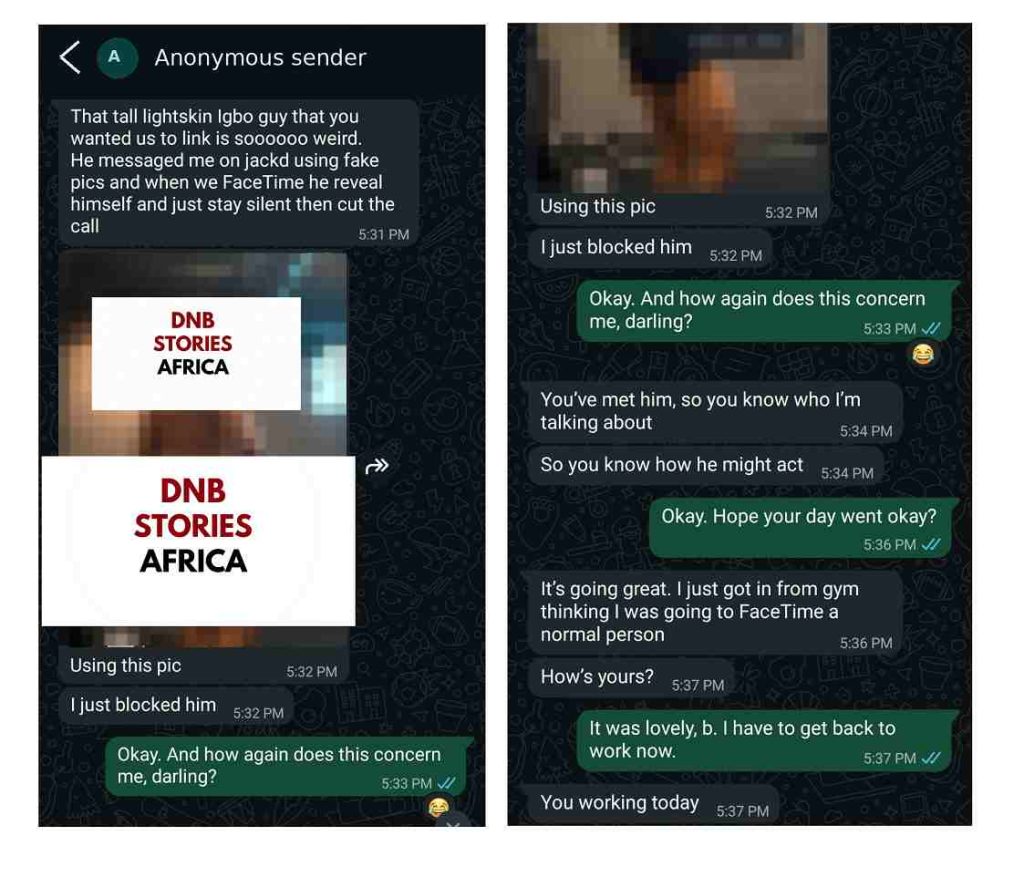
Examples of How Manipulators Plant Suspicion in Friendships
Triangulators and instigators rarely begin with direct accusations. They often plant suspicion through half-statements, vague warnings, and emotionally loaded interpretations:
- “He’s jealous of you.”
- “He talks about everyone.”
- “He only keeps you around because you’re useful.”
- “He said something, but I don’t want to repeat it.”
- “I’m not saying anything. Just watch him. You’ll see.”
- “Have you asked yourself why he has no friends?”
- “I don’t wanna say everything I heard, but just be careful.”
The aim is not to inform. The aim is to make the recruited friend suspicious enough to start interpreting everything through the manipulator’s frame.
The Manipulator’s Greatest Trick: Staying Clean
The most skilled triangulator does not always appear aggressive. He may appear calm, wounded, reflective, or even generous. This is why communities often misread him.
The manipulator lets others perform the visible cruelty for him while his reputation stays clean. He allows one person to send the harsh message, another to withdraw the invitation, another to repeat the rumour, another to make the public joke, and another to lead the confrontation. This is how triangulators remain slightly behind the action, close enough to influence it but far enough to deny responsibility.
This is not accidental. It is a strategy.
Why Triangulation Works So Well in Black Queer Spaces
Triangulation works best in communities where belonging is already fragile. Many Black queer men move through social environments shaped by racism, homophobia, family rejection, migration pressure, masculinity anxiety, desirability politics, and the need to build alternative support systems.
Minority stress theory describes how prejudice, expectations of rejection, concealment, and internalised stigma can create chronic psychological pressure for sexual minority people (Meyer, 2003).
This matters because triangulation does not enter a neutral room. It enters a room where many people already fear being excluded, misunderstood, laughed at, replaced, or publicly shamed. A manipulator knows this. He may not describe it in academic language, but he understands the emotional economy of the room.
Over time, he has learned how to read people’s vulnerabilities: he knows who fears being left out, who wants to be seen as loyal, who still carries an old grievance, who is desperate to appear more masculine, and who wants access to a cooler, more desirable, more socially powerful group.
He knows who is tired of being alone and who wants to be chosen too badly. He knows who can be flattered into obedience, shamed into silence, or provoked into action. So he does not need to create insecurity from nothing. He only needs to locate the already tender area and press there.
Triangulation and the Dark Triad: Machiavellianism, Psychopathy, and Narcissism
Triangulation often reflects behaviours associated with what psychology calls the Dark Triad: Machiavellianism, psychopathy, and narcissism. Paulhus and Williams (2002) popularised the term to describe three distinct but overlapping socially aversive personality traits: narcissism, Machiavellianism, and psychopathy.
Later research continues to link Dark Triad traits with manipulation, hostility, callousness, and relational aggression, though the language should be used carefully rather than as a casual diagnosis.
How This Plays Out in Black Queer Spaces
In triangulation, Machiavellianism shows up in the planning. This is the calculated side of the behaviour: managing who hears what, when they hear it, how the story is framed, and who is recruited to carry the emotional labour of the conflict. The Machiavellian triangulator does not always need to shout or confront. He works through timing, omission, secrecy, plausible deniability, and social positioning.
Psychopathy, in this context, appears less as a clinical label and more as a pattern of emotional coldness. It is the ability to watch two friends suffer through confusion, jealousy, exclusion, or mistrust without being moved enough to stop the harm. The triangulator may understand that people are hurting, but their pain does not matter as much as the control he gains from it.
Narcissism appears in the entitlement. The manipulator believes his feelings, wounds, jealousy, status anxiety, or desire for control justify the disruption of other people’s relationships. If he feels ignored, rejected, less desired, or less central, he may treat another person’s friendship as something he has the right to invade, rearrange, or destroy.
The Planner, Performer and Punisher Dynamic
This is why triangulation can be so dangerous. It combines the planner, the performer, and the punisher. Machiavellianism supplies the strategy. Psychopathy supplies the emotional detachment. Narcissism supplies the grievance and entitlement.
The result is a person who can poison a friendship while still appearing calm, wounded, charming, or reasonable. He may not look like the aggressor because his aggression is indirect. It moves through gossip, screenshots, loyalty tests, emotional comparison, selective affection, private interpretation, and carefully managed social distance.
Not for Diagnosis but For Recognition
For this article, the important point is not to call every manipulative person a narcissist, psychop*th, or Machiavellian.
The important point is to recognise the behavioural pattern: strategic manipulation, reduced empathy, entitlement, and control of reputation.
When these traits operate together inside a close-knit Black queer social network, triangulation becomes more than interpersonal drama. It becomes a weapon for controlling belonging.
Triangulation as Relational Aggression
Triangulation overlaps strongly with what researchers call relational aggression: non-physical behaviour designed to damage a person’s relationships, reputation, or social standing. A 2024 study in Frontiers in Psychology describes relational aggression as interpersonal manipulation that undermines another person’s social status, reputation, or relationships through behaviours such as rumour-spreading, neglect, threats, and group exclusion (Jiang et al., 2024).
This is why triangulation can feel devastating even when nobody has shouted, threatened, or thrown a punch. The harm is social rather than physical. It moves through whispers, screenshots, selective disclosure, staged concern, private group chats, and sudden changes in how people treat the target.
Often, the target feels the damage before he understands the mechanism. Invitations reduce. Replies become colder. People who once greeted him warmly now act unsure. Someone who used to defend him now says, “I just don’t want to be involved.” Nobody names the allegation clearly, but everyone behaves as if something has already been decided.
That is the terror of triangulation: the trial happens in rooms the target cannot enter.
The Emotional Impact of Triangulation on the Target
Social exclusion is not a minor wound. Research on ostracism shows that being ignored, excluded, or rejected threatens fundamental needs such as belonging, self-esteem, control, and recognition. Brief episodes of ostracism can produce sadness and anger, and people may respond either by trying to restore connection or by acting defensively to regain control (Williams, 2007).
This explains why triangulation can destabilise a person so quickly. The target is not only grieving one friendship. He is trying to understand why the social atmosphere has changed without a clear accusation, a fair conversation, or a repair pathway.
The target may begin to over-explain, start sending long messages or apologise for things he did not do. He may become anxious in group settings and start scanning the room for who has heard what, or may withdraw completely, which the manipulator then uses as “proof” that he is guilty, unstable, or antisocial.
The wound becomes self-reinforcing.
The Danger of Moral Performance
Triangulation often survives for a long time in Black communities because it dresses itself in moral language, and because many people are not equipped to recognise sociological control mechanisms or covert relational danger while it is unfolding.
By the time the target, recruited parties, accidental runners, bystanders, and neutral community members realise what has happened, the damage may already be severe. The target may have been pushed out, socially ruined, emotionally broken down, or driven into crisis.
How the Manipulator Disguises Harm as Care
The manipulator rarely says, “Help me punish someone I envy.”
Instead, he says, “I’m protecting people.”
He rarely says, “I want to control who gets close to whom.”
Instead, he says, “I just don’t trust his energy.”
He rarely says, “I need you to choose me.”
Instead, he says, “Now I know who my real friends are.”
This is why morally alert communities can still become vulnerable to manipulation. When people are trained to respond quickly to harm but not trained to investigate coded social processes, a manipulator can weaponise the language of safety, accountability, and protection.
The result is cruelty disguised as care. A healthy community does not ignore harm, but it also does not hand one person the power to define the harm, name the target, convict him, recruit punishers, and prevent direct clarification.
How To Recognise Triangulation Early
Triangulation often reveals itself through patterns rather than single incidents.
Be careful when someone repeatedly brings you negative information about another person while discouraging you from speaking to that person directly. Always watch it when someone frames your neutrality or non-reaction in a situation as betrayal. Be careful when someone says “everyone feels this way”, but cannot name who “everyone” is. Be careful when someone gives you just enough information to make you anxious but not enough details to verify anything.
Also, notice the emotional demand underneath the information. Are you being asked to understand the situation, or to join a side? Think: are you being trusted with context, or are you being positioned as a weapon? Are you being invited into clarity, or pulled into someone else’s unresolved grievance with another person? The strongest sign of triangulation is not gossip alone. It is gossip plus pressure.
How to Interrupt Triangulation in Real Time
Triangulation survives when people pick sides too quickly, react too quickly, and verify too slowly. It thrives in communities where emotional speed is mistaken for loyalty, and where asking for context is treated as betrayal.
a. Demand Direct Engagement
The first interruption is directness. When someone brings you a claim about a friend, refuse to become the court.
You can say:
- “That sounds serious. Have you spoken to him directly?”
- “What exactly happened, and what part did you witness yourself?”
- “Is there a reason he cannot be part of this conversation?”
- “Are you asking me to understand the issue, or are you asking me to take a side?”
- “I’m not comfortable forming a conclusion without hearing from him.”
b. Don’t Act Too Fast
The second interruption is slowing down momentum. Manipulation relies on urgency. The instigator wants you to react before you verify, prove loyalty before you process the information clearly, and take action while your emotions are still hot. Slowing things down becomes a form of protection because it gives truth time to catch up with the accusation.
c. Refuse Screenshot and Voice Note Culture
The third interruption is refusing to treat screenshots as automatic evidence. A screenshot may document something, but it can also distort context.
- Ask what came before.
- What came after.
- What relationship history exists.
- Ask whether the person has had a fair chance to respond.
A screenshot can show words, but it may not show tone, provocation, apology, humour, pressure, editing, or the full emotional context. In triangulation, screenshots are often used not to clarify truth, but to manufacture certainty.
d. Don’t Isolate a Friend Before Seeking Clarity and Repair
The fourth interruption is protecting repair. In a healthy community, conflict should not automatically become exile.
Before isolating a friend, seek clarity. Ask what happened. Ask what was misunderstood. Move to understand whether the person has been given a fair chance to explain, apologise, or repair.
People should be able to clarify, apologise, make amends, and re-enter friendships unless there is a genuine safety concern that requires distance. Not every conflict deserves social banishment. Sometimes the healthier response is conversation, accountability, and repair — not immediate exclusion.
Remember, the manipulator you abandon a friend for will sooner or later show you his true colours.
e. Read, Learn, and Know How to Name the Pattern
The fifth interruption is learning how to name the pattern, not just the event. Triangulation survives when people argue only about one message, one rumour, one screenshot, or one awkward moment, while missing the wider structure of control underneath it.
Instead of asking only, “What was said?” also ask:
Who benefits from these two people not speaking?
Ask who keeps interpreting everyone else’s motives?
Who becomes more central each time confusion spreads?
Ask who keeps discouraging direct clarification?
Who is always close to the conflict but never responsible for it?
Naming the pattern changes the conversation. It moves the focus from isolated drama to social process. Once people can recognise triangulation, they become harder to recruit, harder to confuse, and harder to use as runners in someone else’s campaign.
DL Triangulators and the Multiple Names Dynamic
A special way of recognising triangulation in UK DL/secrecy contexts is the use of multiple names and hidden identity. In some cases, manipulative individuals may use the names of past victims when approaching a new target.
For example, if their last victim was called Collins, they may introduce themselves to the next person as Collins. If the last victim was Daniel, they may use Daniel. If the last victim was Jordan, they may use Jordan next.
I call this the Multiple Names Dynamic: a secrecy-based tactic where the manipulator keeps his own identity hidden while borrowing, recycling, or weaponising other people’s names to move through social spaces without leaving a clear trail.
The goal is to keep his track clean. If nobody knows his real name, he becomes harder to trace, confront, verify, or hold accountable. He can move from one situation to another, carrying gossip, suspicion, or emotional confusion, while remaining socially unpinned.
Hidden Identity Matters in Triangulation
Hidden identity matters in triangulation precisely because of this. A person who will not even give you his real name has no moral authority to speak into your friendships, judge your relationships, or influence who you should trust.
Before someone is allowed to shape your view of another person, he should at least be identifiable enough to stand behind what he is saying.
In short, someone hiding behind shifting names should not be trusted with the power to name your enemies.

What the Target of Triangulation Should Do
If you are the target of triangulation, do not chase every rumour. That can exhaust you and make you look more chaotic to people already primed to misread you.
Start with the relationships that matter most. Ask for a direct conversation. Keep your language calm and clear. Avoid over-explaining to people who are committed to misunderstanding you. Document what is necessary, but do not become consumed by proving innocence to an audience that enjoys the trial.
Most importantly, protect your nervous system. Triangulation can make a person feel socially hunted. Step back from rooms where you are being studied but not spoken to. Spend time with people who relate to you directly. Let your conduct become steady evidence. A manipulator wins when you become reactive enough to resemble the story he’s made up about you.
What The Recruited Friend Should Do
If you realise you have been accidentally recruited into triangulation, the most responsible thing you can do is stop carrying the script immediately. You do not need to publicly humiliate the manipulator to repair your part.
You can quietly refuse further involvement, speak directly to the person you helped misread, and acknowledge where you acted without enough context. Repair begins when you stop repeating someone else’s version of events and return to direct, honest communication.
A useful apology sounds like this: “I allowed myself to be influenced by one side of the story. I should have spoken to you directly before changing how I treated you.”
That sentence can repair more than a thousand vague claims of “no bad vibes.”
Conclusion: What UK Black Queer Communities Must Learn
Black queer spaces need more than vibes. They need conflict literacy. A community that cannot distinguish accountability from manipulation will eventually reward the best performer. When a group treats gossip as evidence, it will punish the least socially defended person. When a community confuses popularity with truth, it will mistake coordination for credibility.
Triangulation is powerful because it turns friendship into infrastructure for someone else’s control. It makes people carry messages they did not verify, enforce punishments they did not design, and destroy bonds they once valued.
The answer is not paranoia. The answer is process. Direct communication. Slower judgment. Clear boundaries. Refusal to carry unclear allegations. Protection of repair. Careful attention to who benefits when two people stop speaking.
The manipulator’s ultimate tool is not gossip itself. It is a community that reacts before it verifies, punishes before it understands, and acts on suspicion before truth has had a chance to speak.
FAQs
Triangulation occurs when a third person is drawn into the tension between two people, preventing direct communication and shifting emotional power toward the person managing the information. In manipulative friendship dynamics, it often involves gossip, selective disclosure, loyalty tests, and pressure to take sides.
Because friendship can function as chosen family, social protection, and emotional refuge. When someone manipulates those bonds, the harm is not only interpersonal; it can also affect a person’s sense of safety, belonging, and access to community.
Do not carry accusations without verification. Encourage direct conversation. Refuse loyalty tests. Slow down before reacting. Ask who benefits from two people not speaking to each other.
Focus on direct communication with the people who matter, avoid chasing every rumour, document only what is necessary, and stay grounded. Do not let the pressure to defend yourself turn you into the unstable version of yourself the manipulator wants others to see.
References
- Hartung, F.-M., Krohn, C., & Pirschtat, M. (2019). Better Than Its Reputation? Gossip and the Reasons Why Individuals With “Dark” Personalities Talk About Others. Frontiers in Psychology, 10. https://doi.org/10.3389/fpsyg.2019.01162
- Jiang, Y., Tong, L., Cao, W., & Wang, H. (2024). Dark Triad and relational aggression: the mediating role of relative deprivation and hostile attribution bias. Frontiers in Psychology, 15. https://doi.org/10.3389/fpsyg.2024.1487970
- Meyer, I. H. (2003). Prejudice, social stress, and mental health in lesbian, gay, and bisexual populations: Conceptual issues and research evidence. Psychological Bulletin, 129(5), 674–697. https://doi.org/10.1037/0033-2909.129.5.674
- Patafio, B., Skvarc, D., Mayshak, R., Harries, T., Curtis, A., Benstead, M., Hayley, A., McNeil, D. G., Bereznicki, H., & Hyder, S. (2025). Dark and light personalities: A utilitarian perspective on their impact on relational aggression. Personality and Individual Differences, 242, 113209–113209. https://doi.org/10.1016/j.paid.2025.113209
- The Bowen Center for the Study of the Family. (2024). Triangles. https://www.thebowencenter.org/triangles
- White, J., Sepúlveda, M.-J., & Patterson, C. J. (2020). Families and Social Relationships. In www.ncbi.nlm.nih.gov. National Academies Press (US). https://www.ncbi.nlm.nih.gov/books/NBK566090/
- Williams, K. D. (2007). Ostracism. Annual Review of Psychology, 58(1), 425–452. https://doi.org/10.1146/annurev.psych.58.110405.085641
Research on sexual and gender diverse communities shows that many LGBTQ+ people rely heavily on selected friends and chosen-family ties for support, with gay and bisexual men often relying more on friends than family for major support needs (Frost et al., 2016).The same review notes that racial and ethnic minority sexual and gender diverse people may report less overall support than others, which makes trusted bonds even more socially important.