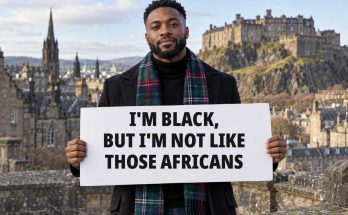
Racial control can operate through intimate social relationships, where trust, personal knowledge and selectively shared information can become instruments of psychological manipulation.
As I have always said: not all forms of racial power operate through open racism. Some operate through approval, opportunity, recognition, social incentives and the psychological management of social relationships.
When people discuss racism, attention often turns to the most visible forms of prejudice and racial abuse: discrimination, exclusion, intimidation and unequal treatment. These are highly recognisable expressions of racialised power, but they do not represent every way racial power can influence behaviour and reinforce social control.
Sometimes, the person exercising influence does not need to threaten or insult anyone. They only need to understand what someone wants badly enough to turn that desire into an instrument of manipulation.
A Black person seeking professional advancement may be influenced through access. Someone seeking social acceptance may become especially receptive to selective validation. Another person struggling with personal insecurity may respond to messages that elevate them above others who share their racial background.
The result can be a form of psychological management in which people begin acting in ways that serve someone else’s interests while believing they are making entirely independent choices.
This article examines how such dynamics can operate in Britain, particularly where white individuals or predominantly white institutions possess disproportionate influence over opportunities, credibility and social recognition.
My argument is not that every white person deliberately manipulates Black people, or that every unequal racial interaction conceals a conspiracy. My point is that racial power can operate through ordinary social relationships and institutional arrangements in ways less visible than open hostility.
Understanding these mechanisms is essential to understanding how power is maintained.
1. What Does It Mean to “Keep Black People in Check?”
When people describe British racism as highly “coded”, there is an important point behind that observation. Racial prejudice and unequal power do not always announce themselves through explicitly racist language or openly hostile behaviour.
To keep someone in check is to influence, restrict or regulate their behaviour, often by rewarding certain choices and making others costly.
In a racial context, this can involve encouraging Black people to behave according to expectations established by people or institutions with greater social authority.
Those expectations may concern how Black people speak, express disagreement, challenge unfair treatment, pursue professional opportunities or relate to one another.
The person being controlled does not necessarily receive a direct instruction. They may simply learn that certain behaviours attract approval while others invite criticism, exclusion or loss of opportunity.
Over time, this can produce a powerful form of behavioural regulation.
A Black professional may become reluctant to challenge racial prejudice because they fear being labelled difficult. Another may distance themselves from Black colleagues to maintain their reputation for being “different”. Someone else may interpret access to influential white social networks as evidence of personal superiority.
These choices can also arise from practical considerations, personal preferences or legitimate differences of opinion. Their existence alone does not establish manipulation.
The important question is whether a powerful individual or institution deliberately exploits the pressures and vulnerabilities created by unequal racial relationships to influence Black people’s behaviour.
Control becomes particularly effective when the person being influenced begins to treat externally imposed expectations as personal choices.
2. White Authority and the Confidence That Any Black Person Can Be Controlled
One aspect of racial power that deserves closer examination is the confidence some white individuals can develop in their ability to influence, manage or control Black people.
This confidence can emerge from repeated experiences of occupying positions of greater social or institutional authority, particularly in environments where predominantly white institutions control access to opportunities, recognition, protection or professional advancement.
Over time, someone accustomed to exercising such power may begin to believe that virtually any Black person can be brought under their influence, provided the right approach is used.
The assumption is not necessarily that all Black people are the same. In fact, the opposite may be true. Effective manipulation often depends on recognising that different people have different vulnerabilities.
One Black person may be motivated by money. Another may desperately desire acceptance. Someone else may value professional recognition, social prestige, romantic attention or the opportunity to feel superior to other Black people.
A person seeking influence can study these differences and adjust their approach accordingly.
Where one person responds to flattery, another may respond to intimidation. Where one desires access, another may fear exclusion. When direct pressure fails, carefully managed information or engineered social relationships may work better.
This is why I consider the presumption of control particularly troubling.
It reduces human relationships to a question of identifying which psychological pressure or incentive will produce the desired behaviour.
Power Can Breed the Confidence to Manipulate — But Power Alone Does Not Make Someone Manipulative
An important distinction exists between possessing institutional authority and deliberately attempting to manipulate someone. Not every white person in a position of power holds this attitude, and the presence of an unequal relationship does not, on its own, establish manipulative intent.
The concern is when some white people begin using racialised power imbalances as opportunities to control other people’s choices. In such situations, some white individuals may interpret a Black person’s independence not as something to respect, but as a challenge to overcome.
The underlying presumption is that every Black person has a pressure point, and that finding it is merely a matter of understanding what they want, fear or cannot afford to lose.
This presumption, however, should never be confused with actual power over every Black person. Some people can recognise manipulation and patronage disguised as praise, reject conditional approval, resist institutional pressure and maintain independent judgement.
That distinction matters because racial authority is neither absolute nor automatically successful. Nevertheless, examining the confidence with which some individuals attempt to exercise such influence helps explain how racial manipulation may persist even where openly racist behaviour is publicly condemned.
3. Selective White Approval as a Tool of Racial Manipulation
Imagine an older white man speaking to three Black professionals at a private gathering in London.
He tells them:
You three are so different from other Black people I have met.
On the surface, this appears complimentary.
But consider what the statement potentially communicates.
The three individuals are being praised not simply for their personal qualities, but through a comparison that positions other Black people as inferior. The compliment becomes dependent on their separation from a wider racial group.
One person may feel flattered. Another may recognise the prejudice concealed in the comparison. A third may feel uncomfortable but remain silent to avoid disrupting the interaction. Someone else may challenge the remark openly.
And it is this last response — a Black person openly challenging racialised praise — that can attract punishment from white authority.
Where the person being challenged holds social or institutional power, such resistance may be interpreted as disrespect, ingratitude or defiance, potentially leading to withdrawal of access, covert hostility or retaliation.
This illustrative scenario shows how racialised approval can produce different psychological responses and consequences in people exposed to the same message.
Selective approval becomes manipulative when recognition depends on accepting the presumed inferiority of others.
A Black person who repeatedly receives such validation may begin to associate proximity to white authority with superior judgement, greater civilisation, better character or higher social worth.
Borrowed Superiority in Black Spaces
In more extreme circumstances, that person may become invested in maintaining this distinction, even going to war with other Black people who question or appear to disregard their perceived “borrowed superiority”.
This is one way racial hierarchy can reproduce itself psychologically among some Black people. The person receiving approval may genuinely feel empowered, while the sense of having been “chosen” reinforces their respect for, and belief in, the authority of the person granting that approval.
Praise from a white person is not inherently manipulative. The relevant questions concern its content, the power relationship, and whether recognition encourages dependence, prejudice, or hostility toward others.

How selective white approval can create a sense of borrowed superiority, reinforcing loyalty to the authority granting recognition.
4. The Parable of the “Chosen” Black Person: Why Some Black People Defend White Authority
Imagine a white man who tells a Black person that they are different from other Black people he has encountered.
He praises their intelligence, manners, judgement and character, repeatedly contrasting these qualities with supposedly inferior traits he associates with other Black people.
The Black person feels recognised. Being singled out becomes a source of pride.
Over time, the relationship brings access, opportunities and social recognition. Other Black people begin to admire the individual’s proximity to white authority.
But something else begins to happen.
The Black person increasingly accepts the idea that they are exceptional, not simply because of their achievements, but because someone with perceived racial authority has selected them.
The approval becomes a source of superiority, while the person granting it becomes a source of legitimacy.
When another Black person questions this arrangement, the criticism may be interpreted as jealousy, disrespect or an attack on a status the individual has come to value.
The supposedly empowered individual may now defend the authority granting that recognition, even against other Black people.
And the person who originally bestowed the approval may no longer need to intervene.
The “chosen” Black person has become invested in protecting the very hierarchy that made them feel chosen.
This is the paradox of borrowed superiority: the individual may feel elevated above others while remaining dependent on someone else’s judgement for that elevation.
Being chosen by power is not the same as possessing power.
4. How White Access Can Become Black Social Status
Access is not the same as power, but access to powerful people can become a valuable social resource.
In some professional and social environments, knowing influential individuals creates opportunities that would otherwise be difficult to obtain.
This is not inherently problematic. Professional networks are an ordinary part of social life.
The concern arises when access to white authority becomes a measure of status within Black communities.
Consider a Black professional whose relationship with a powerful white executive provides entry into exclusive gatherings, prestigious opportunities and influential networks. The professional may then receive considerable recognition from other Black people who hope to access similar opportunities.
At that point, something important can happen.
Even while the original source of recognition lies outside the Black community, the social rewards generated by that recognition are reproduced among Black people.
Other people begin competing for proximity to the person who possesses the perceived privileged access. The individual may become a gatekeeper, intentionally or otherwise.
This can produce a hierarchy in which some Black people are treated as more important because of their proximity to powerful white individuals. In such circumstances, people may find themselves competing for “white access” rather than questioning why opportunities are so unevenly distributed in the first place.
The problem is not that Black people develop relationships with influential white people. The problem is that white recognition can then become the standard by which Black people measure one another’s social worth.
This illustrates how some powerful white individuals can strategically distribute access to cultivate loyalty among Black people and reinforce their own influence and authority over them.
5. The Psychology of Making Black People Police Other Black People
One particularly troubling possibility arises when racial authority influences how Black people judge, criticise or punish one another.
This mechanism does not always involve money, employment or professional advancement. Sometimes, it operates through information.
Imagine a white man telling one Black person that another Black person has been disrespecting Blackness. The allegation may be framed as a concern about racial loyalty, cultural disrespect or unacceptable behaviour.
The recipient, believing they are defending their community or identity, becomes hostile towards the accused person. A conflict develops between two Black individuals, while the person who introduced the allegation remains outside the confrontation.
If the information was deliberately distorted to provoke hostility, the situation represents a form of interpersonal manipulation.
The person encouraged to act may genuinely believe they are defending an important principle. Yet their actions may be serving an entirely different purpose.
In the worst cases, the person who engineered the hostility may derive satisfaction, entertainment or social advantage from watching the conflict unfold.
I consider this an important illustration of what I describe as strategic psychological management.
This is why accusations involving racial loyalty deserve careful scrutiny. Black people should be able to challenge racism, prejudice and harmful conduct without automatically accepting one person’s description of another person’s intentions.
A person who claims to be defending Blackness may still be acting on information supplied for manipulative purposes.
Equally, the fact that an allegation comes from a white person does not automatically make it false. The responsibility is to examine the evidence, apply critical thinking, and exercise independent judgement rather than surrender judgement to the person making the accusation.
6. Divide and Conquer: When Black Conflict Benefits White Authority
The divide-and-conquer principle is historically associated with efforts to preserve power by exploiting divisions among people who might otherwise challenge a common authority.
Its basic logic is straightforward. A divided group finds it harder to organise collectively, identify shared interests, or challenge unequal arrangements. The person benefiting from the division does not necessarily need to participate openly in the resulting conflict.
In racialised environments, this can involve rewarding certain individuals, amplifying existing rivalries, spreading selective information or encouraging competition for recognition.
One person receives approval. Another receives access. A third is portrayed as a problem. The individuals involved may believe they are responding to entirely separate circumstances. Yet their actions can collectively reinforce an existing hierarchy.
To put it in chess language, one person is playing others like chess pieces, and the pieces do not have to know they are part of the same game.
This metaphor illustrates a possible pattern of strategic influence. It does not suggest that Black people are passive objects or that their choices lack agency. Nor does it claim every conflict among Black people originates from an outside manipulator.
Black communities contain genuine differences in politics, religion, class, identity, personality and interests. We should not automatically attribute those disagreements to external interference.
Importantly, a powerful group may benefit from an existing division without having created it. We must therefore distinguish between the deliberate engineering of conflict, the opportunistic exploitation of existing disagreements and structural conditions that encourage competition.
These processes can produce similar outcomes, but they are not the same.
7. Racial Manipulation in Britain: Workplaces, Institutions and Social Networks
The United Kingdom provides an important setting for this discussion because racial inequalities can persist alongside the country’s highly publicised commitments to equality, diversity and inclusion.
British institutions may publicly promote racial equality while, behind the scenes, continuing to reproduce unequal opportunities and workplace environments in which minority employees feel pressured to conform.
Research helps illustrate the problem.
In their Broken Ladders study, the Runnymede Trust and Fawcett Society reported that 61% of surveyed women of colour had changed aspects of themselves to fit in at work. These changes included language, hairstyles and even names.
This finding is relevant to the psychological pressures surrounding institutional acceptance. However, changing one’s behaviour to navigate a workplace is not automatically evidence of manipulation. It can also represent a conscious strategy for managing unequal circumstances.
That distinction matters. Individuals working within unequal systems frequently make practical decisions to protect their income, reputation or professional development. The existence of those pressures does not mean every individual exercising authority has deliberately engineered them.
Nevertheless, institutions can create conditions in which people learn that conformity is safer than disagreement.
A further example of documented institutional inequality comes from the 2023 Baroness Casey Review of London’s Metropolitan Police, which found evidence of institutional racism, misogyny and homophobia.
The review documented serious failures in organisational culture, the treatment of minority personnel and policing practices affecting Black Londoners.
Racial Power Can Move Through Institutions
These findings demonstrate how racial inequality can be embedded within institutional processes rather than confined to openly hostile individuals — even when those same institutions loudly and repeatedly proclaim their commitment to justice, equality and fairness.
They do not prove a coordinated project of psychological manipulation across British society. Instead, they establish something necessary to this analysis: institutional systems can reinforce racial inequalities even where individual intentions differ. Within such environments, manipulation may occur through workplace relationships, social networks, professional gatekeeping or the strategic distribution of credibility and opportunity.
Understanding racial power therefore requires attention to both institutional structures and individual conduct.
8. Does Racial Manipulation Require an Organised White Conspiracy?
No.
This distinction is important to my argument.
I use the expression white gang-up to describe situations in which white individuals act collectively against a Black person in a manner that involves racialised hostility, exclusion or unfair treatment.
But psychological manipulation does not always require multiple perpetrators. Sometimes, one person with sufficient knowledge of several individuals can influence relationships between them.
That person may understand who wants recognition, who resents whom, who fears exclusion and who is likely to respond emotionally to particular information. By selectively distributing information, access or validation, an individual can attempt to influence how other people relate to one another.
The resulting conflict may appear spontaneous to those participating in it. This is why I regard the management of incentives and information as an important part of understanding social power.
It also explains why racial manipulation should not be treated as an activity that only white people can perform. Black individuals can participate in or reproduce racial hierarchies. They can also manipulate others using the authority or recognition they have acquired.
My arguement remains focused on behaviour, power, incentives, and evidence, rather than assuming that race alone establishes someone’s intentions.
9. How Black People Can Recognise and Resist Racial Manipulation
Recognising possible manipulation begins with understanding the difference between receiving information and accepting someone else’s interpretation of events.
Someone can tell you that someone has insulted you, undermined you, or disrespected your community. But that does not mean you must immediately adopt their conclusion. Before entering a conflict, consider the source of the information and whether important details have been omitted.
Ask whether the person presenting the allegation has anything to gain from your reaction. Examine whether you can independently verify their account. Pay attention to relationships where approval seems to depend on distancing yourself from other Black people.
Someone who consistently praises you by degrading people who share your racial background may be communicating more than personal admiration.
Similarly, access to prestigious institutions should not require surrendering independent judgement. Black people can develop meaningful relationships with white colleagues, mentors and friends without accepting racial hierarchies as the price of belonging.
Institutional accountability also matters. Transparent promotion procedures, independent complaint mechanisms, fair recruitment practices and protections against discrimination reduce opportunities for arbitrary exercises of power.
In the UK, the Equality Act 2010 provides legal protections against unlawful race discrimination, harassment and victimisation in relevant settings. Where unfair treatment occurs, documentation, independent advice and appropriate reporting channels can be more effective than escalating personal conflict.
Black Solidarity Can Coexist With Black Accountability
Finally, Black solidarity should not be confused with overlooking wrongdoing by a Black person in the name of racial loyalty. Being Black does not make a person automatically right, innocent, trustworthy or undeserving of criticism. Black people must remain free to disagree, expose wrongdoing and hold one another accountable.
The purpose of resisting manipulation is not to eliminate disagreement.
It is to ensure that disagreement arises from independent judgement, credible information and genuine concerns rather than someone else’s attempt to manufacture hostility.

How social access, selective approval and unequal power relationships can become instruments of racial manipulation.
10. The Most Effective Form of Control May Be the One We Do Not Recognise
When we discuss racial power, we should look beyond obvious expressions of hostility. Power can also operate through relationships that appear supportive, opportunities that seem generous and recognition that feels deeply personal.
A powerful individual may influence behaviour not by issuing orders, but by understanding what another person desires, fears or hopes to become. Sometimes that influence is ordinary social interaction. Sometimes it reflects unequal institutional arrangements. Other times, it becomes deliberate manipulation.
We must be able to recognise the differences.
My concern is with situations in which racial power is used to turn Black people’s aspirations, insecurities, loyalties or disagreements into instruments of control. A person can believe they are protecting their dignity while defending someone else’s interests. They can believe they are exercising independence while responding to incentives another person has strategically arranged.
And they can believe they are fighting for Black people while participating in a conflict that someone else has deliberately encouraged.
None of these possibilities means Black people lack intelligence or agency.
It means human vulnerability becomes easier to exploit when unequal power combines with intimate knowledge, selective information, and social incentives.
This is why I believe understanding racial manipulation must involve more than identifying racist language or openly discriminatory conduct. We must also understand how influence moves through relationships, institutions and communities.
And before we accept any invitation to wage war against another Black person, we should ask one essential question:
Who benefits when Black people are encouraged to fight one another?