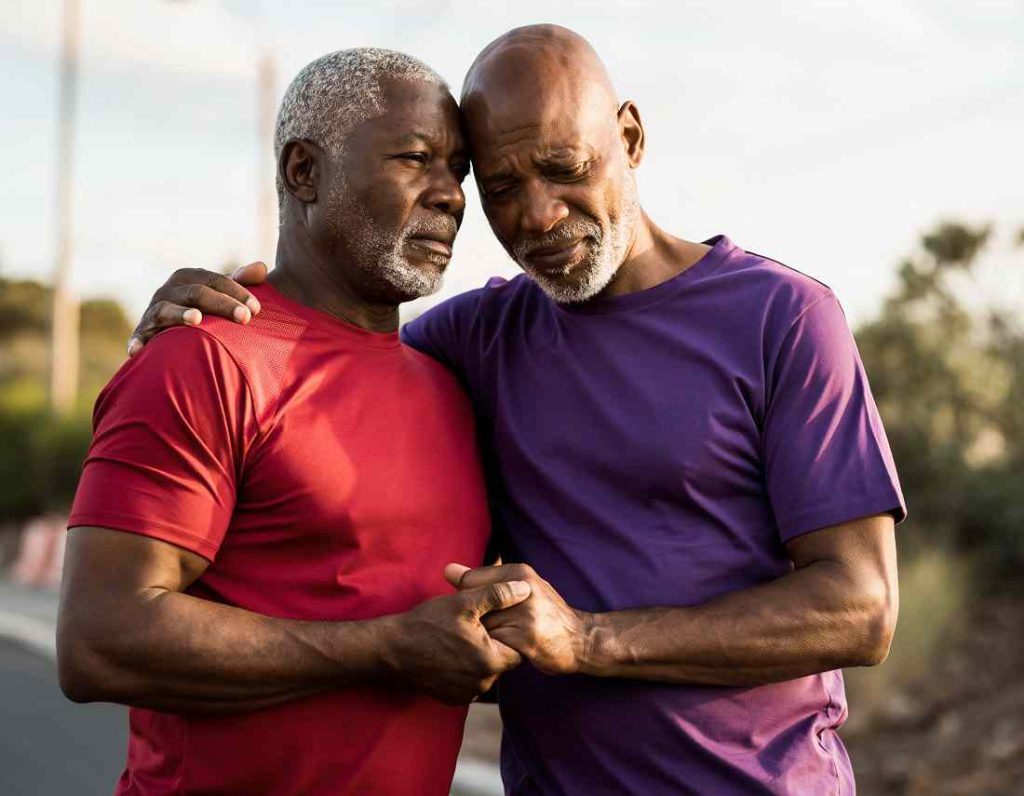
It can feel like hard-won victories slipping away.
LGBTQ+ elders are facing a new crisis: the return to the closet in old age. After surviving criminalisation, police raids, the AIDS epidemic, and decades of enforced silence, many now fear losing their dignity and safety in care homes, hospitals, and unreliable family‑based support systems.
For Black queer men in particular, elder‑care anxiety has become one of the most powerful—and least discussed—pressure points.
This article explores why elder‑care anxiety is rising, how re‑closeting operates across cultures, and what dignity‑driven solutions can protect queer people as they age.
Note: While this piece focuses on the experiences and challenges most familiar to gay and bisexual Black men, many of these patterns also shape the lives of other LGBTQ+ elders.
The Final Closet: What Re‑Closeting Means
Re‑closeting refers to the phenomenon where LGBTQ+ elders are forced to hide their sexual orientation or gender identity again after years of living openly. It most often happens in care settings—nursing homes, assisted‑living facilities, or family‑based elder care—where safety can feel uncertain, and visibility becomes a risk. For many, retreating into secrecy is a survival strategy to avoid discrimination, neglect, or hostility from staff, other residents, or relatives[1].
For Black queer men, re‑closeting takes different shapes across contexts.
- In the UK, re-closeting is often a return to silence. Men who have lived openly may retreat into silence when entering institutional care, fearing discrimination from staff or peers who do not share their cultural or generational context.
- In Nigeria, re-closeting is often a continuation of the “closet” that was never left. Elder care relies on family systems that demand conformity, making silence a lifelong condition of survival rather than a new development.
In both cases, silence functions as risk management—a calculated strategy to ensure one is fed, bathed, and housed without hostility.
UK Context: Legal Protections vs Lived Reality
The UK has robust legal frameworks, such as the Equality Act 2010, which technically protects LGBTQ+ people from discrimination in care settings. However, the lived reality for Black queer men often tells a different story (Justice in Aging, 2015)[3].
The Complex Case of Black Queer Elders in the UK
Research from Stonewall and SAGE shows many LGBTQ+ elders lack trust in care systems and worry that revealing their identity will lead to poorer treatment (SAGE, 2025[4]; Stonewall, 2022)[5].
Black queer men in care facilities often face a “triple jeopardy.” These spaces are usually predominantly white, predominantly straight, and culturally unfamiliar—creating a complex intersection of racism, homophobia, and cultural isolation that compounds vulnerability.
The Quiet Return to the Closet—Ed-Gar’s Story
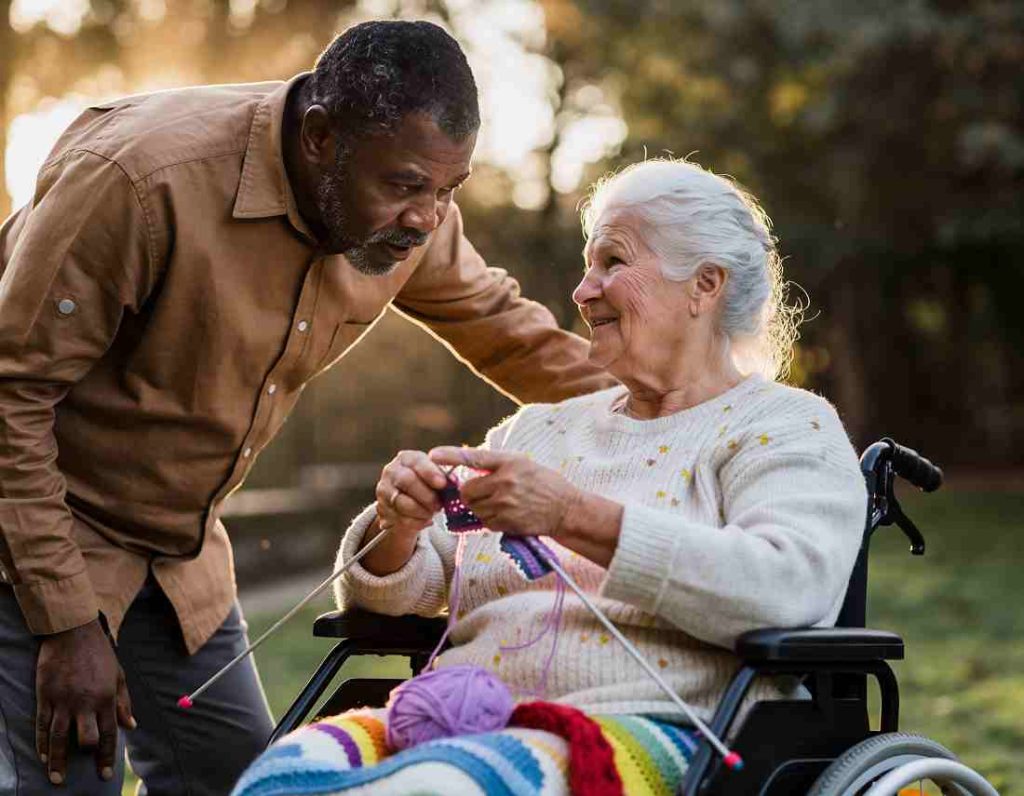
Ed-Gar, a 75-year-old Black gay man, moved into a care home in Hackney last month. He’d migrated decades ago from Jamaica, worked most of his life as a bus driver, and built a “chosen family” of friends and partners. In the care home, he is separated from his support network. Surrounded by strangers who do not understand his history of migration or his queer identity, he stayed up one night, while everyone was asleep, to remove and refold photos of partners and friends he’d initially put up to blend in. His new roommate, Martha—a lovely woman who knits magic with her hands—has already confessed she likes him. For Ed-Gar, the tragedy isn’t just ageing; it is the forced “re-closeting” required to avoid being othered in the very place meant to care for him.
Nigeria Context: Family Surveillance and Kinship Control
In Nigeria, the context is radically different. Unlike the UK’s institutional model, elder care in Nigeria is overwhelmingly family-based. This creates a specific vulnerability: Kinship Control.
This often means:
- Dependency on children and extended family is the primary social safety net.
- “Coming out” even in old age risks not just social stigma, but total abandonment.
- Religious authority (both Christian and Muslim) is deeply integrated into family life, framing queerness as a moral failure or spiritual attack.
Elder Care: A Common Reason African Gay Men Marry Women
To secure care in old age, many Nigerian gay men, including those in the diaspora, often enter heterosexual marriages. These “duty-driven marriages” act as social insurance or a form of retirement plan, providing children who will care for them in later life.
In contexts where elder care is family-based and same-sex relationships are criminalised and heavily stigmatised, this is more of a survival strategy than personal choice.
But while this approach can offer protection for African gay men, it also risks crossing ethical boundaries when sexuality is not disclosed to the woman involved. The psychological toll is significant on both sides: the gay man who must maintain a lifelong concealment, and the wife who may experience profound betrayal trauma if the truth ever emerges. The emotional fallout can be devastating for both parties.
These harms are preventable by choosing marriage arrangements that prioritise honesty, transparency, and informed consent from the outset.
Shared Vulnerabilities: Dementia and Identity Erasure
Despite the geographical differences, Black queer men in both the UK and Nigeria face hauntingly similar threats when their health declines.
LGBTQ+ Elders and The Dementia Trap
Dementia often acts as a “truth-teller” as weakened cognitive filters collapse the ability to maintain a double life. Queer elders with dementia may unintentionally reveal hidden aspects of their identity, such as mentioning queer partners or recounting memories. The consequences vary sharply by location. In the UK, this might result in awkwardness or isolation if care staff lack adequate LGBTQ+ training. In Nigeria, however, such disclosures carry greater risks. They could potentially be interpreted as spiritual possession or confession of sin in some communities, leading to abuse or harmful “spiritual cleansing” rituals.
Legal Erasure of Chosen Family
Death and incapacity are moments where the system defaults to biology.
- In the UK, without airtight legal documentation (like a Power of Attorney), hospitals and care homes default to “next of kin.” Lifelong partners and friends can be barred from bedsides or excluded from funeral planning.
- In Nigeria, the erasure is often total. Biological families may seize assets, override burial wishes, and “deadname” the deceased in obituaries to scrub any trace of their queer identity.
How Elder‑Care Anxiety Pushes Diaspora Queer Men Back to Nigeria:
Some older queer Black men in the diaspora often return to Nigeria not out of nostalgia, but to avoid the UK’s formal care system. For them, environments shaped by cultural familiarity, community rhythms, and informal support networks feel more predictable and “easier” than Britain’s institutional care structures. Returning is often framed as an act of dignity: a choice to live out the rest of their lives in a place where they are not constantly negotiating surveillance or the risk of being misunderstood in their final years. This movement also exposes a deeper systemic failure. When some Black queer men feel safer ageing in a country where same‑sex relationships are criminalised than in a UK care home, it underscores how current systems can mirror the same patterns of exclusion documented in LGBT elder services elsewhere (Columbia Law School, 2017)[2].
Policy Recommendations for the UK and Nigeria
Restoring dignity in LGBTQ+ elder care requires targeted, systemic changes.
For the UK:
- LGBTQ+ Cultural Competency Training
Training of care staff in sexuality, gender identity, and intersectionality, including race and cultural diversity. - Dementia-Specific Identity Protocols
Develop care guidelines that affirm identity during cognitive decline, preventing misgendering or erasure. - Recognition of Chosen Family
Update care policies to ensure partners and chosen family have equal decision-making rights.
For Nigeria and Similar Contexts
- Decriminalisation of Same-Sex Relationships
This should be seen as a health and human rights priority to reduce fear and vulnerability in elder care. - Confidential Healthcare Pathways
Create discreet systems for LGBTQ+ elders to access medical care without risk of outing or harm. - Social Protection Schemes
Introduce home-care support systems and facilities to reduce reliance on marriage as a retirement plan. - Community-Based Care Initiatives
Support NGOs and advocacy groups to build informal care networks for LGBTQ+ elders.
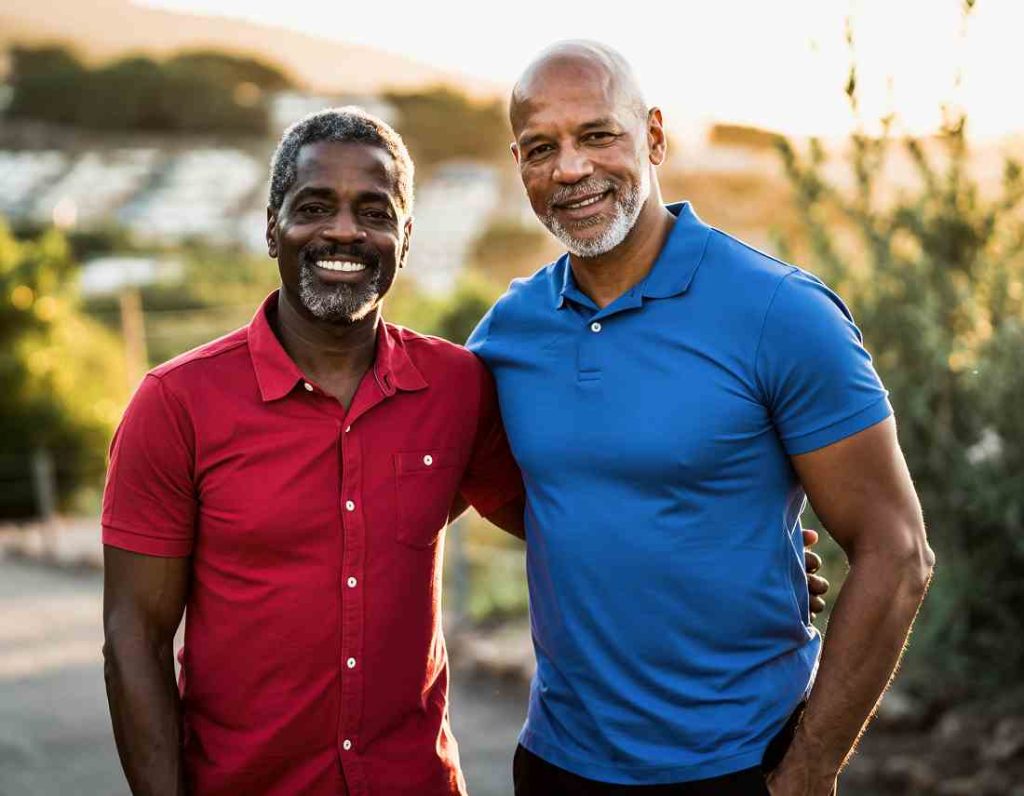
7 Steps for Safer Ageing as a Queer Man in Nigeria
While systemic change is essential, personal strategies—like legal planning, financial independence, chosen family networks, and harm-reduction approaches—can help gay and bisexual men in Nigeria age with greater safety and dignity.
1. Secure Your Legal Documents:
In Nigeria, the family often controls decisions about property, healthcare, and burial. Without clear documentation, partners or chosen family have no legal standing. Drafting a will and installing a power of attorney can protect assets and prevent disputes in later life.
2. Build a Trusted Support Network:
Isolation increases vulnerability. A strong chosen family network can provide emotional support and practical help when biological family is unsafe or unsupportive. Form a circle of trusted friends for mutual care. Consider community care pools where members contribute funds or resources for emergencies.
3. Prioritise Health Confidentiality:
Healthcare settings can be hostile or unsafe for LGBTQ+ individuals. Protecting privacy reduces the risk of discrimination or outing. Identify non-judgmental healthcare providers through referrals or advocacy groups.
4. Strengthen Financial Independence:
Financial security reduces reliance on family-controlled care systems and harmful survival strategies like coerced marriage. Start saving and investing early to create a basic safety net and maintain autonomy in old age.
5. Reduce Harm in Family Dynamics:
Social pressure to marry can be intense. If marriage feels unavoidable, consider alternative ethical arrangements that prioritise safety and reduce harm.
6. Leverage Diaspora Connections:
Diaspora networks can provide financial support, emotional care, and even relocation options later in life. Try to maintain strong ties with friends or family abroad.
7. Engage Advocacy and Safe Spaces:
Advocacy groups and discreet support networks can offer legal aid, health referrals, and emotional support. Connect with NGOs like TIERs, Queer Alliance Nigeria, or WHER for confidential assistance.
Conclusion
Ageing should mean freedom—not a return to the closet. For Black and all queer men, dignity in later life should include the right to be seen, supported, and safe without compromise. Building systems that honour this truth is the real test of whether our societies value every life across its full arc.
References
- Amnesty International. (2024, January 9). LGBTI Persons in Africa face discrimination due to their identity. https://www.amnesty.org/en/latest/news/2024/01/africa-barrage-of-discriminatory-laws-stoking-hate-against-lgbti-persons/
- Columbia Law School. (2017). Dignity Denied: Religious Exemptions And Lgbt Elder Services. https://lawrightsreligion.law.columbia.edu/sites/lawrightsreligion.law.columbia.edu/files/content/Reports/Report_DignityDenied_12.15.17.pdf
- Justice in Aging. (2015). Older adults in long-term care facilities: Stories from the field. https://justiceinaging.org/wp-content/uploads/2015/06/Stories-from-the-Field.pdf
- SAGE. (2025). Facts on LGBTQ+ Ageing: Older People. https://www.sageusa.org/wp-content/uploads/2025/08/sage-facts-on-lgbtq-aging-2025.pdf
- Stonewall. (2022). LGBT in later life. https://www.stonewall.org.uk/lgbt-later-life