
The familiar holiday image of matching pyjamas, big family dinners, and joyful gatherings can be comforting, but it doesn’t reflect everyone’s reality. Many people navigate complicated family dynamics, long distances, or emotional strain during this time of year. If you are a gay man spending the holidays away from biological family—whether due to rejection, conditional acceptance, distance/relocation, or boundaries you set to protect your mental health—that absence can feel sharper than usual.
You may feel emotionally stable earlier in the season and experience increased distress as the holidays approach. This isn’t a sign of personal weakness; it often reflects a natural response to unmet needs such as safety, recognition, emotional warmth, and the loss of an expected or idealised family structure.
This guide provides practical, research-backed steps for gay men spending the holidays away from biological family—so you can move through the season with less distress and more stability.
Why The Holidays Can Feel Heavy For Gay Men Spending It Alone
1. The “Perfect Family” Myth
Many queer people grow up with a cultural script that says family is forever, happy holidays prove it, and distance equals failure. When your lived reality doesn’t match that script, it often triggers doubt and a lack of confidence.
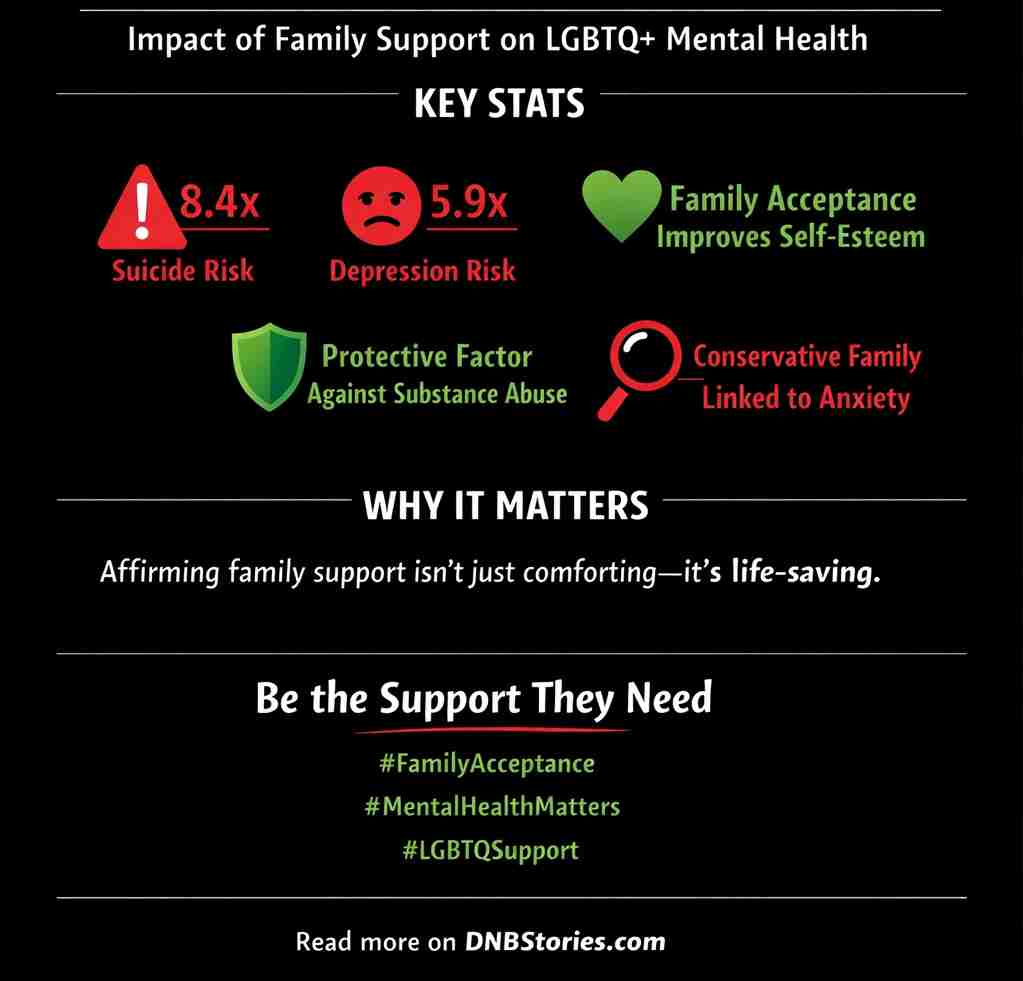
You’re not alone in this. Research shows that family and societal factors significantly impact mental health among young gay men. For example, Ryan et al. (2009)[4] found that high family rejection in young LGBTQ+ adults is linked to increased risk of suicide attempts and depression. In contrast, family acceptance acts as a protective factor, boosting self-esteem and lowering substance abuse and suicide risks (Ryan et al., 2010)[5].
2. The Case of “Ambiguous Grief”
Sometimes, we may be mourning the family you had before you came out, the family you wish you had, or the community you left behind when you relocated for work or school. Psychologists call this “ambiguous grief”—a unique type of loss where the person is alive but emotionally unavailable or physically inaccessible (Boss, 2009)[1]. Even if moving away was a positive step for your career or education, the physical distance often highlights the emotional distance, making the holidays a recurring reminder of that void.
3. Minority Stress is Amplified
The minority stress model explains that stigma leads to chronic vigilance—constantly anticipating discrimination—which increases mental health strain over time (Meyer, 2003)[3]. For a gay man spending the holidays without his biological family, loneliness and disconnection can hit hard, especially when social media is full of family celebrations. Cultural expectations of “togetherness” can make you feel excluded, and if you lack a strong support network, the isolation can deepen further.
A Quick Self-Check: What is Your Reality?
It is important that your coping plan matches your actual reality—not an idealised version of how you wish things were.
You may fall into more than one category:
- Estranged / No Contact: Complete separation for safety or peace.
- Low Contact: Brief, superficial interactions.
- Conditional Contact: “You can come, but don’t bring your partner/identity.”
- Emotionally Unsafe: You are allowed in, but subjected to microaggressions.
- Relocation, Travel or Demise: Family is supportive but no longer physically present.
Coping with Holiday Loneliness: Practical Tips for Gay Men
Planning for an ideal outcome—where everything is resolved and everyone behaves perfectly—can lead to frustration. Instead, focus on what’s within your control and what’s realistic for you right now. A plan grounded in reality is far more effective and helps reduce stress.
1. Connect With Supportive People
Reach out to supportive friends, chosen family, or LGBTQ+ community groups. Even a short video call or text exchange can remind you that you’re valued and not alone. If possible, plan a virtual gathering or join an online event—many LGBTQ+ organisations host holiday meet-ups.
2. Create Your Own Traditions
Holidays don’t have to follow the script you grew up with. If the old traditions hurt, you have the authority to design new ones: cook a favourite dish, indulge in a series you love, or decorate your room your way. These small rituals can create a sense of joy and belonging on your own terms.
- How to own Christmas:
- Cook a meal you actually love (steak, takeout, breakfast for dinner) rather than the traditional meal you felt obligated to eat.
- Decorate your space in a way that feels like you, or keep it completely neutral if tinsel feels triggering.
- Watch a show of film or read a book that comforts you. Many queer men find comfort in fantasy, horror, sci-fi, or dark comedy during the holidays because these genres are distinct from the hallmark family narratives.
3. Limit Stress Triggers
Social media can amplify feelings of isolation when everyone seems to be celebrating with family. Consider muting certain apps or setting time limits. Instead, engage with content that uplifts you—such as LGBTQ+ podcasts, affirming blogs, or positive news stories.
4. Take Permissioned Rest
Permissioned rest means giving yourself permission to rest without guilt. Schedule quiet moments for reading, journalling, or listening to music. If emotions feel overwhelming, use practical techniques like the “Timed Grief Container” to regulate strong emotions.
- Timed Grief Container ⏱️
- Sometimes the hardest part of grief is the fear that if you start feeling sad, you’ll never stop. Timed grief container creates a safe, time-bound space for those emotions, so they don’t overwhelm your entire day.
- How to do it:
- Set a timer for 20 – 40 minutes.
- Use that time to cry, journal, or look at old photos—whatever helps you process.
- When the timer goes off, close that box and do something unrelated, like a workout, a walk, or watching a film.
- Why it works:
- This technique creates a container for your feelings. It reassures you that grief has a beginning and an end, reducing the fear of being consumed by sadness. It’s a compassionate way to honour your emotions while protecting your mental health.

5. Always Plan Ahead
Creating a structured schedule way before the holidays can provide a sense of control and reduce feelings of isolation when the time comes. For gay men, this often means intentionally blending self-care activities—such as exercise, mindfulness, or creative hobbies—with community-focused engagements like attending LGBTQ+ events, volunteering, or connecting with chosen family. Travel can also be a powerful tool for breaking routine and gaining new experiences.
Seek professional support if struggling to cope
If you have access to therapy, book a session before or during the holidays. Many therapists offer virtual appointments. If therapy isn’t an option, please search on Google for online support groups or helplines like The Trevor Project or Switchboard LGBT+ Helpline in the UK. If feelings of loneliness become too overwhelming, talking to someone who understands can make a huge difference.
- When to Get Extra Support: It is normal to be sad, but seek professional support if you notice:
- Persistent panic or inability to function.
- Increased substance use to numb feelings.
- Flashbacks or intense dread.
- Thoughts of self-harm.
Chosen families are intentionally-formed support systems that provide crucial emotional, social, and practical care, especially for LGBTQ+ individuals who may be estranged from their biological relatives. For older LGBTQ+ persons, these protective networks prevent isolation, build resilience, and ensure reliable later-life care.

Gay Men: How to Build Chosen Family on Purpose
For many gay men, especially those who’ve faced rejection or strained family relationships, chosen family becomes a protective structure that offer something essential: unconditional acceptance.
Research confirms that chosen family support significantly buffers psychological distress (Kim et al., 2021)[2]. These networks provide emotional safety, belonging, and resilience—especially during challenging times like lonely holidays.
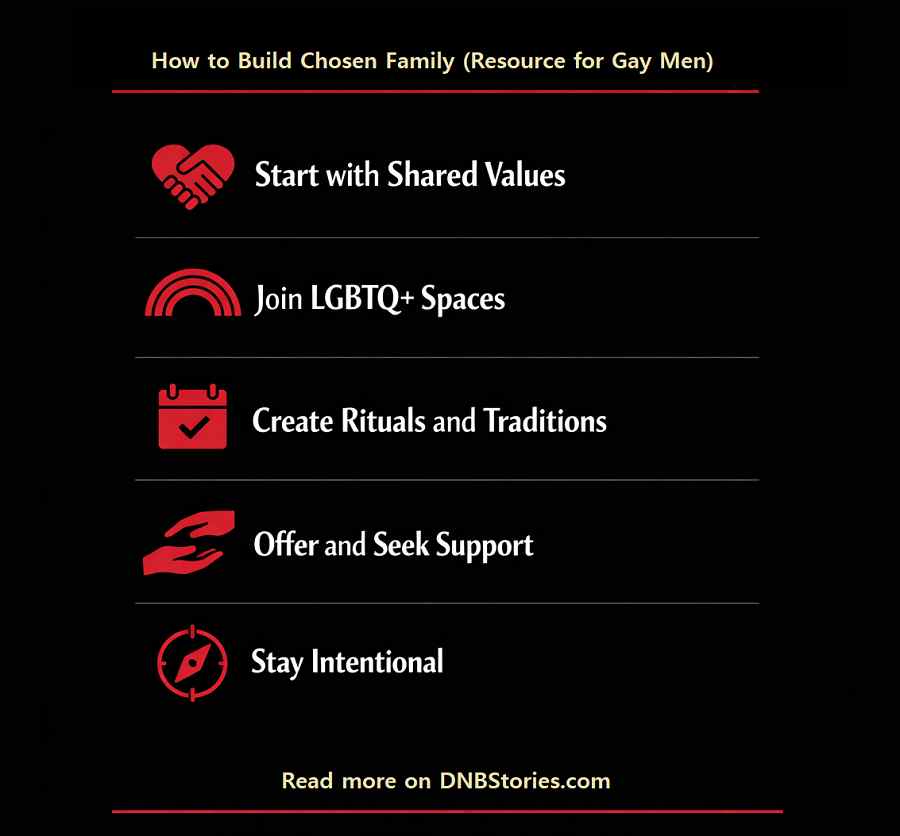
- Start with shared values
- Look for people who affirm your identity and respect your boundaries. This could be friends, mentors, or community members.
- Join LGBTQ+ spaces
- Attend local meet-ups, join online groups, or participate in cultural events like Pride or ballroom gatherings.
- Create rituals and traditions
- Shared meals, game nights, or holiday celebrations can strengthen bonds and create a sense of belonging.
- Offer and seek support
- Chosen family thrives on reciprocity—be there for each other emotionally and practically.
- Stay intentional
- Building a chosen family takes time. Nurture these relationships with care and consistency.
Gay Men With Abusive Families
In the case of abuse, spending the holidays away from biological family can be both painful and the healthiest choice you have ever made. Two things can be true at once: You can miss them, and you can refuse to be harmed by them. Many gay men do not just “get over” this grief—they build around it. They build chosen families, stronger boundaries, and lives where love does not require self-erasure.
Final Word: Stay Hopeful—Better Days Are Coming
The holidays can be tough, but they don’t define your worth or your future. Every step you take to care for yourself—whether it’s reaching out to a friend, creating your own traditions, or simply resting—is a powerful act of resilience. You deserve peace and joy, and even small choices can help you feel more grounded and connected. Better days are ahead, and you are not alone.
Helpful Resources
- The Trevor Project (US) – https://www.thetrevorproject.org | 24/7 LGBTQ+ crisis support
- Switchboard LGBT+ Helpline (UK) – https://switchboard.lgbt | Call 0800 0119 100
- Mind (UK) – https://www.mind.org.uk | Mental health support and resources
- LGBT Foundation (UK) – https://lgbt.foundation | Helpline and community services
- Stonewall (UK) – https://www.stonewall.org.uk | Advocacy and resources for LGBTQ+ people
Global Support: If outside the UK or U.S., please search on Google for local LGBTQ+ community centers; many offer WhatsApp-based peer support during the holidays.
References
- Boss, P. (2009). Ambiguous Loss. Harvard University Press. https://doi.org/10.2307/j.ctvjhzrh4
- Kim, S., & Feyissa, I. F. (2021). Conceptualizing “Family” and the Role of “Chosen Family” within the LGBTQ+ Refugee Community: A Text Network Graph Analysis. Healthcare, 9(4), 369. https://doi.org/10.3390/healthcare9040369
- Meyer, I. H. (2003). Prejudice, social stress, and mental health in lesbian, gay, and bisexual populations: Conceptual issues and research evidence. Psychological Bulletin, 129(5), 674–697. https://doi.org/10.1037/0033-2909.129.5.674
- Ryan, C., Huebner, D., Diaz, R. M., & Sanchez, J. (2009). Family rejection as a predictor of negative health outcomes in white and latino lesbian, gay, and bisexual young adults. PEDIATRICS, 123(1), 346–352. https://doi.org/10.1542/peds.2007-3524
- Ryan, C., Russell, S. T., Huebner, D., Diaz, R., & Sanchez, J. (2010). Family Acceptance in Adolescence and the Health of LGBT Young Adults. Journal of Child and Adolescent Psychiatric Nursing, 23(4), 205–213. https://doi.org/10.1111/j.1744-6171.2010.00246.x