Content warning: This article discusses interpersonal harm in Black queer spaces, including manipulation, femophobia, HIV stigma, and related dynamics. Some readers may find this emotionally activating—please proceed with care.
Introduction
Black queer spaces are crucial lifelines, offering vital affirmation, culture, and a sense of belonging that many people cannot find elsewhere. However, like any community shaped by shared pressures, these spaces, while mostly joyful, also feature challenging and sometimes undesirable dynamics.
To outsiders (and even some insiders), these patterns can look like “queer drama.” Social psychology and Black queer history suggest that some of these behaviours may have originally developed as survival strategies against a hostile world. However, when used against one another within the community, they become unflattering habits that mask the community’s true strength (Majors & Billson, 1992)6.
This article examines 19 common social patterns that can appear in some Black queer spaces. These are not presented as fixed traits or community stereotypes, but as context-shaped dynamics that may interfere with trust, safety, and connection when left unexamined. The goal is not to pathologise Black queer life, but to name patterns that can quietly weaken it.
Here are 19 social dynamics you might notice in Black queer spaces—what they look like, why they show up, and why they can be unattractive to see.
1. Defensive Performances and Strategic Self-Presentation
These are behaviours people use to manage visibility, image, status, or vulnerability.
a. Performative or ‘High-Volume’ Displays
What you might notice:
Loud voices, big gestures, “sass,” or animated storytelling that feels intense or “extra” in quieter settings.
The context:
This can be a form of code-switching influenced by drag, ballroom, and social media cultures that reward heightened, “stage-ready” personalities. For people whose voices are often ignored or silenced, turning the volume up is a way to resist invisibility.
When it becomes unflattering:
Expressiveness is not the problem. It becomes unflattering when it is used as armour to deflect accountability, hijack the room through vivid performance, or is repeatedly enacted in contexts that do not call for it.
b. Withdrawing Into ‘Cool Pose’
What you might notice:
Emotional distance, sunglasses indoors, scrolling through a phone instead of greeting or engaging with others. Maintaining a constant “unbothered” vibe.
The context:
“Cool pose” is a documented strategy among Black men: projecting confidence and emotional control as a way to cope with racism and social threat (Majors & Billson, 1992)6. For Black sexual minority men, it can also help manage homophobia and stigma in queer and non-queer spaces.
When it becomes unflattering:
What begins as self-protection can come across to others as distance, guardedness, or non-engagement, especially when accompanied by an arrogant front.
c. Attention-Seeking Dramatics—Main Character Energy
What you might notice:
Dramatic exits, public arguments designed to highlight status or accomplishments, social-media-ready storylines, or scenes that seem deliberately staged.
The context:
Reality TV and influencer culture reward exaggeration and spectacle. For marginalised groups like Black queer people, adopting a “main character mode” in community spaces can offer a quick boost in visibility and validation.
When it becomes unflattering:
Wanting attention is human, but constant, self-centred behaviour that dominates shared spaces turns communal areas into personal performance stages. This drains group energy, silences others, and blocks genuine connection.
d. The “Spotless Reputation” Performance
What you might notice:
Someone who constantly declares themselves “unproblematic,” “real,” or “the least messy,” despite a reputation that suggests otherwise.
The context:
This relates to the spotlight effect (overestimating how much others are watching us) and impression management—actively trying to control how we are seen (Gilovich et al., 200010; Goffman, 1959)2.
Why it is unflattering:
Reputation is social currency in close communities, but aggressively managing it can silence honest criticism and advice needed to improve. Additionally, a gap between the projected image and the lived reality often makes the performance look hollow and manipulative.
e. The “Exceptional” Narrative—False Hierarchies
What you might notice:
Comments like “I’m not like other gays,” or ranking others as “messy girls,” “ghetto,” or “ratchet”, while positioning oneself as “classy” or “above the drama.”
The context:
This is intra-community distancing rooted in assimilation pressures. Using phrases like “I’m not like other gays” or labelling others “messy” and “ghetto” shows a desire to be viewed as superior—an attempt to achieve mainstream acceptance by disparaging other queer people (Pachankis, 20078; Lee, 2016)5.
Why it is unflattering:
It reinforces harmful stereotypes, fractures community bonds, and turns queerness into a competition for proximity to “respectability” rather than a space for authenticity and solidarity.
2. Community Norms and Hierarchy Policing
These are behaviours that regulate who is acceptable, respectable, masculine, desirable, or aligned with the group.
a. Invasive Reading and Shade-Throwing
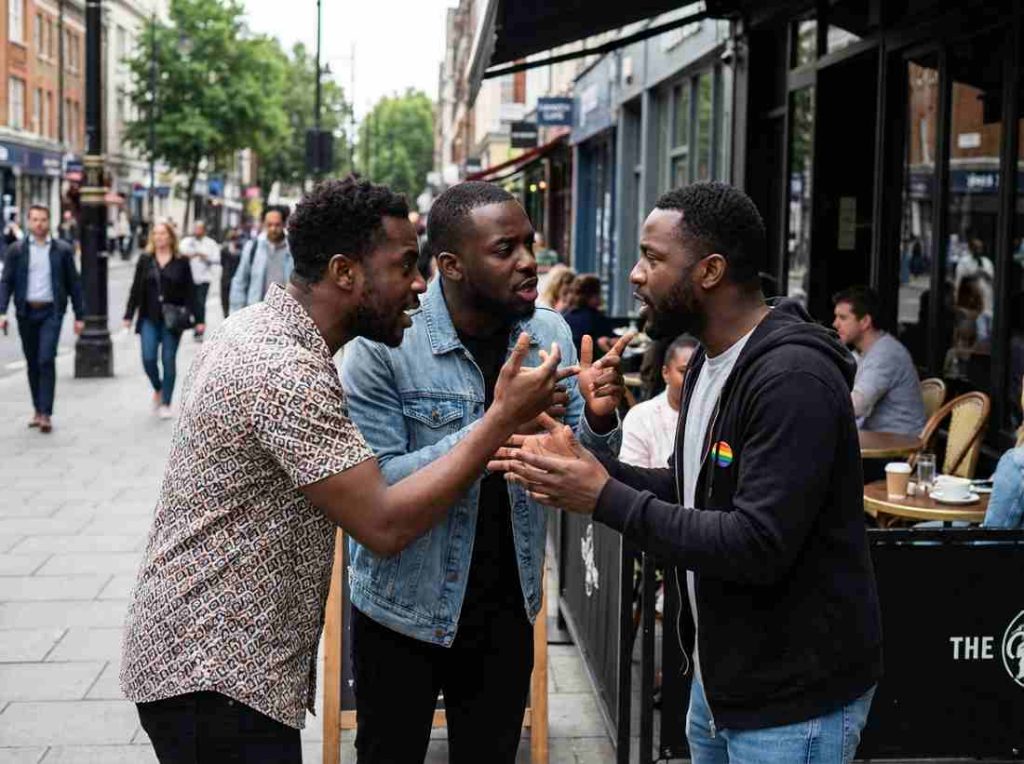
What you might notice: Conversations that become rapid-fire exchanges of witty insults. For outsiders, it can look like hostility or bullying.
The context: “Reading” and “shade” originated in Black and Latinx ballroom and drag cultures. They served as both entertainment and a coping mechanism for marginalisation (Serpell, 2021)[10].
Why it is unflattering: Reading can build resilience and also functions as a way to master verbal agility and gain status. But it establishes a hierarchy born of testing the thickness of skin. When used without consent or shared context or care, it can create an environment of humiliation rather than safety, especially to vulnerable individuals.
b. Policing Femininity and ‘Masc’ Norms
What you might notice:
“No fems” in profiles, jokes about feminine men, or pressure to “act straight” or “act like a man,” fronting a macho persona and other performed masculinity tactics.
The context:
Studies show that men who strongly internalise traditional masculine norms are more likely to hold negative attitudes toward effeminacy and to distance themselves from stereotypes associated with gay men (Sánchez & Vilain, 2012)9.
Why it is unflattering:
This is internalised homophobia and gender policing. It harms the community by supporting the same patriarchal hierarchies that were used to shame and oppress gay men—the idea that being gay makes someone “less of a man” (Latortue, 2023)4.
c. Sexual Position Surveillance—Role & Hole Politics
What you might notice:
Gossip about who is a “top,” “bottom,” or “vers,” debates about whether someone is “really” that role, and jokes about “how they took it”.
The context:
Sexual roles among men who have sex with men are often loaded with assumptions about power, status and desirability. Research shows that topping is frequently associated with dominance and masculinity, while bottoming is stigmatised as feminine or weak (Dangerfield et al., 20171; Winder, 2023)12.
Why it is unflattering:
Policing sexual roles enforces rigid, heteronormative gender scripts inside queer communities. This leads to shaming, lying, and other harmful behaviours that can compound into more concerning issues.
d. Groupthink and the Safety of Consensus
What you might notice:
Going along with the popular opinion in a group (whether about people, politics, or community issues), even when one privately disagrees.
The context:
Social belonging is a fundamental human need, and the desire to be liked and accepted often comes from a fear that disagreement will lead to rejection or ridicule. This pressures people to conform to the majority, prioritising safety over genuine expression (Tajfel & Turner, 1979)[11].
Why it is unflattering:
Individuals constantly hiding their feelings to stay liked lead to self-silencing, which damages personal confidence and self-respect. For a group, unchecked bad ideas and harmful actions create an inauthentic collective that prioritises conformity over honesty and growth.
e. Heteronormative Mapping—Gendering Sex Roles
What you might notice:
Referring to the “top” as the “man” or “husband” and the “bottom” as the “woman” or “wife,” or someone saying “I’m not a bottom” to mean he is masculine and dominant.
The context:
This is heteronormativity at work: imposing heterosexual relationship templates onto queer dynamics. (Winder, 202312; Sánchez & Vilain, 2012)9.
Why it is unflattering:
This behaviour imports heterosexual negativities, like misogyny, into all-male settings, creating new hybrid problems. Viewing sexual positions as fixed, gendered traits limits queer intimacy by imposing a restrictive “top = man/bottom = woman” binary that ignores the fluidity of queer relationships.
3. Competitive, Manipulative, and Exclusionary Conduct
These are behaviours that actively distort trust, damage standing, or create social insecurity for others.
a. Saying One Thing and Doing Another—Hypocrisy
What you might notice:
People who publicly preach community, brotherhood, healing, or “doing the work,” yet privately engage in the very behaviours they condemn—bullying, exclusion, gossip, or tearing others down.
Or someone loudly insists they’re “not into hookup culture” or that sex isn’t a priority, only to slip out moments later for a quick Grindr meet‑up. The issue isn’t the behaviour itself, but the mixed messages it sends to everyone else in the room.
The context:
This behaviour may result from several factors, such as deep insecurity, low self-esteem, fear of negative judgment, a chronic need for acceptance, lack of self-awareness/control, etc. Hypocritical behaviour can also signal manipulation (false signalling).
Why it is unflattering:
When this pattern becomes common, performance can start to replace accountability as the dominant social norm, worsening shame and damaging community trust.
b. Jealousy-Driven Undermining
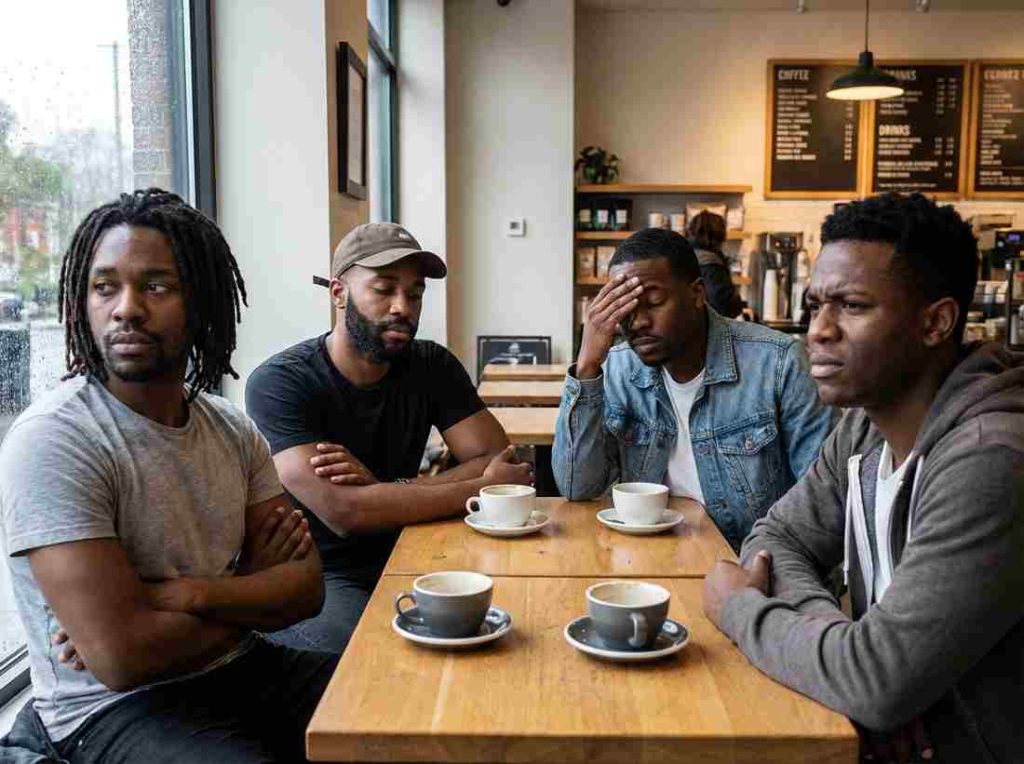
What you might notice:
Backhanded compliments (negging), subtle sabotage, or minimising a peer’s achievements in front of others.
The context:
A “crab-in-a-barrel” mindset often emerges when opportunities for recognition, resources, or visibility feel scarce. If people believe “only one of us can win,” another person’s success may feel like a direct threat.
Why it is unflattering:
Minority stress can redirect frustration away from systems and towards each other (Meyer, 2015)7. Instead of building collective power, people compete for limited validation, weakening the community from within.
c. Excessive Mirroring Between Two People in a Group
What you might notice:
Someone adopting another person’s slang, laugh, posture, or style to an extreme degree (usually the person they find attractive, powerful or popular). It also includes forming subteams within a group to mock or laugh at others.
The context:
Nonconscious mimicry, also called the chameleon effect, is a normal social process that helps people build rapport and feel connected (Lakin et al., 2003)3. However, when done excessively, it can alienate other members of the group.
Why it is unflattering:
In social settings, people often subconsciously mimic those with higher status or power. In Black queer contexts, this power can also come from “attractiveness” or “popularity.” While mimicry can foster connection, overdoing it, particularly when used to mock or ridicule other members of the group, can signal a lack of self-identity or chronic neediness.
d. Mind Games: Manipulation and Gaslighting
What you might notice:
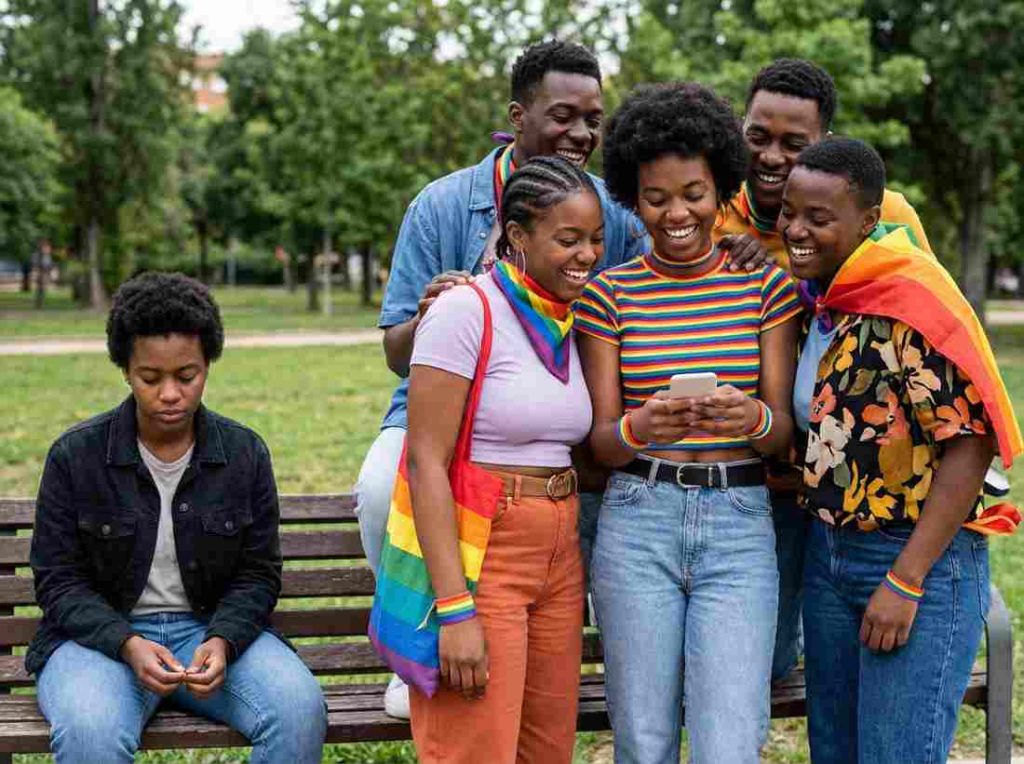
Triangulating friends against each other, lying to elevate status, denying obvious facts (“I’m telling you that never happened!”), or covert undermining as a retaliation tactic.
The context:
Manipulative people often create conflict to gain control and superiority. Gaslighting is another manipulative tactic used to make someone doubt their perception or sanity.
Why it is unflattering:
These behaviours—stirring conflict, gaslighting, and covert planning—are emotionally harmful and abusive because they deliberately strip the victim of clarity, safety, and control. They damage trust, create confusion and anxiety, and undermine community peace.

e. Reactive Devaluation After Rejection
What you might notice:
Someone initially very interested in a person suddenly calling them “ugly,” “trash,” or “not all that” immediately after being rejected or having a boundary enforced.
The context:
This is a textbook example of “Rejection Begets Aggression” (RBA)—a body of research demonstrating how rejection triggers resentment and aggressive responses in people. Psychologists note rejection could “puncture the ego”, and one way to cope is to devalue the rejector or retaliate.
Why it is unflattering:
Aggressive responses following a rejection reveal a manipulative and insecure character. Logically, this behaviour is counterproductive as it is likely to lead to further rejection and social isolation.
f. Corrupt Loyalty and Clique Protection
What you might notice:
Defending harmful behaviour (harassment, lying, theft, abusive jokes) when it comes from a friend, respected elder, or popular figure.
The context:
Moral disengagement and in-group bias explain why people justify or minimise harm when it comes from “one of us” (Tajfel & Turner, 1979)[11]. In marginalised communities, there is often fear that calling out harm will “break the group” or lead to social exile.
Why it is unflattering:
Fear of isolation fosters a culture of silence that allows harmful behaviour to grow unchecked. This drives away those who need safety, leaving a smaller, anxious, and less accountable group, bound not by trust or mutual respect, but by that same fear.
g. Concealing/Hiding A Mate—Mate Guarding
What you might notice:
Someone bad‑mouths a person they’re secretly attracted to—calling him “ghetto”, “broke,” “messy,” or “not worth it”—and warns friends to avoid him, then goes to a corner to text him: “Are you still free tonight?”
The context:
This is an example of mate guarding—using strategies like social sabotage to reduce a mate’s appeal or limit their access to potential partners. In competitive dating environments, individuals may use these strategies to secure a partner by hiding their attractiveness from others.
Why it is unflattering:
This behaviour is manipulative and rooted in insecurity. It treats potential partners like territory to be controlled rather than people with agency, and it involves deceiving friends for personal gain. Over time, this behaviour erodes trust, destabilises friendship circles, and makes the dating environment feel tense, competitive, and unsafe.
4. Fear and Stigma-Driven Breakdowns
These are behaviours shaped more directly by unresolved threat, shame, or structural pressure.
a. HIV Stigma and Health Misinformation
What you might notice:
Shaming people based on HIV status, gossiping about who is “clean” and not, judging PrEP users, or repeating myths about transmission.
The context:
HIV poses a real danger, but statistics consistently show a racial disparity, with Black queer men (including Africans) facing significantly higher risks due to structural inequalities in access to care, prevention, and safety.
Why it is unflattering:
HIV stigma is often rooted in fear and grief, but it shows up as moral judgment, which further discourages Black queer people from seeking testing, treatment, and PrEP use—ultimately worsening the problem.
b. Small Conversations Turning Into Big Conflicts
What you might notice:
A light conversation about music, fashion, or “messiness” suddenly becomes heated, personal, or explosive.
The context:
Topics such as masculinity, respectability, and representation have long histories of being policed by families, churches, and wider society (Winder, 2023)12. When those topics come up, people may feel like they are defending their dignity, not just an opinion.
Why it is unflattering:
Minority stress research shows that chronic exposure to stigma makes people more sensitive to threat and rejection (Meyer, 2015)7. Unaddressed pain can turn minor disagreements into volatile arguments, making honest discussion much harder.
Navigating These Dynamics With Safety and Clarity
Recognising difficult social behaviours is only one part of the work. The harder task is learning how to respond without becoming consumed by them. In Black queer spaces, especially, where community can be both protective and painful, people often feel pressure either to tolerate too much or to withdraw completely.
Neither extreme always helps. What is often needed instead is a steadier approach built on observation, boundaries, discernment, and self-respect.
Practical Strategies:
a. Learn to Separate Discomfort from Real Danger
Not every awkward interaction is a threat, but not every repeated slight is harmless either. Some behaviours are irritating but manageable; others signal manipulation, humiliation, stigma, or social sabotage. A useful first question is: Is this simply unpleasant, or is it beginning to affect my dignity and peace of mind?
b. Watch for Patterns, not Isolated Moments
One loud moment, one shady joke, or one defensive performance does not tell you everything about a person. Repetition does. When a behaviour appears consistently across settings, especially when it always protects image, punishes vulnerability, or destabilises others, it should be taken more seriously.
c. Avoid Responding to Deliberate Cruelty with Explanation
Do not over-explain yourself to people committed to misreading you. Some people do not want clarity; they want leverage. When a dynamic is driven by mockery, hierarchy, triangulation, or performative misunderstanding, endless explanation rarely produces understanding. It gives them more room to suck up your mental energy.
d. Reduce Unnecessary Exposure
Not every space deserves your presence. If a setting repeatedly rewards humiliation, role policing, gossip, or clique behaviour, reducing your presence there may be wiser than trying to win acceptance from it. Distance is sometimes not avoidance, but protection. In the Masculinity Conflict Framework, this is the logic of containment.
e. Refuse the Pressure to Perform Belonging
Many people stay trapped in unhealthy interactions, including UK DL/Mandem dynamics, because they fear being seen as too sensitive, too feminine, or too gay. But belonging that requires self-erasure is too expensive. You do not need to perform comfort in order to be accepted.
Sometimes the most stabilising move is a simple statement that names the dynamic and asserts a boundary: That felt disrespectful. I do not want to be spoken to that way. I am stepping back from this dynamic. Clear language can interrupt confusion, especially when others rely on vagueness to avoid accountability.
f. Protect Your Interpretation of Reality
Manipulative spaces often create confusion by normalising denial, inconsistency, selective memory, or group pressure. When something repeatedly feels off, write it down, discuss it with a grounded person, or step back long enough to assess it clearly. Confusion is often part of the dynamic, not proof that you imagined it.
h. Choose Peace Over Proximity
Shared identity does not automatically produce shared safety. Sometimes clarity means accepting that a familiar space, a desirable person, or a culturally important circle is not good for you in its current form. Walking away is not always rejection of community; sometimes it is a refusal of corrosion. Remember, you can always build your own community outside high-drama ecosystems. One of the most protective things a person can do is develop relationships that are not organised around spectacle, scarcity, desirability ranking, or social fear. A safer community often feels less exciting at first, but more breathable over time.
Conclusion
The goal is not to fear community, but to move through it with clearer eyes. Not every familiar space is safe. Not every admired person is trustworthy. Safety begins when we stop mistaking proximity for care, performance for character, and shared identity for shared protection.
Thank you for engaging with this difficult topic. Recognising these uncomfortable dynamics—both in ourselves and in others—and addressing them with compassion is vital to building Black queer spaces organised around honesty, accountability, and mutual protection.
References
- Dangerfield, D. T., Smith, L. R., Williams, J., Unger, J., & Bluthenthal, R. (2017). Sexual positioning among men who have sex with men: A narrative review. Archives of Sexual Behaviour, 46(4), 869–884. https://doi.org/10.1007/s10508-016-0738-y
- Goffman, E. (1959). The presentation of self in everyday life. Doubleday. Psycnet.apa.org
- Lakin, J. L., Jefferis, V. E., Cheng, C. M., & Chartrand, T. L. (2003). The chameleon effect as social glue: Evidence for the evolutionary significance of nonconscious mimicry. Journal of Nonverbal Behaviour, 27(3), 145–162. https://doi.org/10.1023/A:1025389814290
- Latortue, K. (2023, September 27). Internalised homophobia and transphobia among the Black queer community. Pulitzer Centre. https://pulitzercenter.org/projects/internalized-homophobia-and-transphobia-among-black-queer-community
- Lee, H., & Hicken, M. T. (2016). Death by a Thousand Cuts: The Health Implications of Black Respectability Politics. Souls, 18(2-4), 421–445. https://doi.org/10.1080/10999949.2016.1230828
- Majors, R., & Billson, J. M. (1992). Cool pose: The dilemmas of Black manhood in America. Lexington Books.
- Meyer, I. H. (2015). Resilience in the study of minority stress and health of sexual and gender minority groups. Psychology of Sexual Orientation and Gender Diversity, 2(3), 209–213. https://doi.org/10.1037/sgd0000132
- Pachankis, J. E. (2007). The psychological implications of concealing a stigma: A cognitive–affective–behavioural model. Psychological Bulletin, 133(2), 328–345. https://doi.org/10.1037/0033-2909.133.2.328
- Sánchez, F. J., & Vilain, E. (2012). “Straight-acting gays”: The relationship between masculine consciousness, anti-effeminacy, and negative gay identity. Archives of Sexual Behaviour, 41(1), 111–119. https://link.springer.com/article/10.1007/s10508-012-9912-z
- Serpell, C. N. (2021, January 15). Notes on shade. Post45. https://post45.org/2021/01/serpell-notes-on-shade/
- Tajfel, H., & Turner, J. C. (1979). An integrative theory of intergroup conflict. In W. G. Austin & S. Worchel (Eds.), The social psychology of intergroup relations (pp. 33–47). Brooks/Cole. https://psycnet.apa.org/record/2001-01466-005
- Winder, T. J. A. (2023). The discursive work of “bottom-shaming”: Sexual positioning discourse in the construction of Black masculinity. Gender & Society, 37(5), 774–799. https://doi.org/10.1177/08912432231186999