There is a persistent and often dangerous assumption in global LGBTQ+ advocacy: that visibility automatically leads to liberation. In Western settings, we’re taught to view “coming out” as the ultimate act of freedom, and to believe that visibility is the first step toward securing rights.
I have always believed in the relevance of context. Just as I argued against a universal “coming out” paradigm, I must emphasise that LGBTQ+ visibility and advocacy efforts also need to be viewed through a contextual lens, particularly when focused on Africa.
Before moving forward, a crucial point on solidarity:
Disciplined visibility demands care, strategy, and accountability—but it must also centre solidarity. Naming harmful dynamics is about increasing safety, not vilifying anyone. We aim to build bridges anchored in shared protection, love, and community—not create walls.
Diaspora Visibility and Safety: Protecting African LGBTQ+ Lives
Major African cities like Lagos and Accra may be known for their social vibrancy, but the presence of queer communities does not automatically mean safety. Across much of the continent, LGBTQ+ lives remain criminalised and heavily stigmatised, and in these conditions, careless acts of visibility can translate into exposure, surveillance, and violence.
The central question for advocates in London, New York, or any part of the diaspora is not whether a place is “queer enough” to be visible; rather, it is whether a place is safe and inclusive enough to be visible.
Diaspora visibility actions and LGBTQ+ advocacy should be judged by how much safety and stability they bring to local communities, not by how many views they get on Instagram. Advocacy that prioritises virality or moral victories over local safety has failed from the start.
SSMPA, Stigma and Anti-LGBTQ+ Laws in Africa
To understand why visibility is dangerous in some contexts, one must first understand the full description of the implications.
Nigeria’s LGBTQ community faces severe oppression. The 2014 Same‑Sex Marriage (Prohibition) Act (SSMPA) criminalises same‑sex relationships, creating legal and social hostility that deepens structural persecution, stigma, and targeted violence.
Arrests, harassment, and forced hiding shape daily life in major Nigerian cities, and convictions can carry prison sentences of up to 14 years. In this context, visibility is not just taboo—it becomes material evidence the state uses to prosecute and punish (HRW, 2016)[3].
These conditions reflect the harsh reality confronting many queer communities across Africa, where visibility often carries the risk of physical harm.
Kito Blackmail and Extortionist Scams in Nigeria’s LGBTQ Landscape
Furthermore, visibility can also fuel non-state violence.
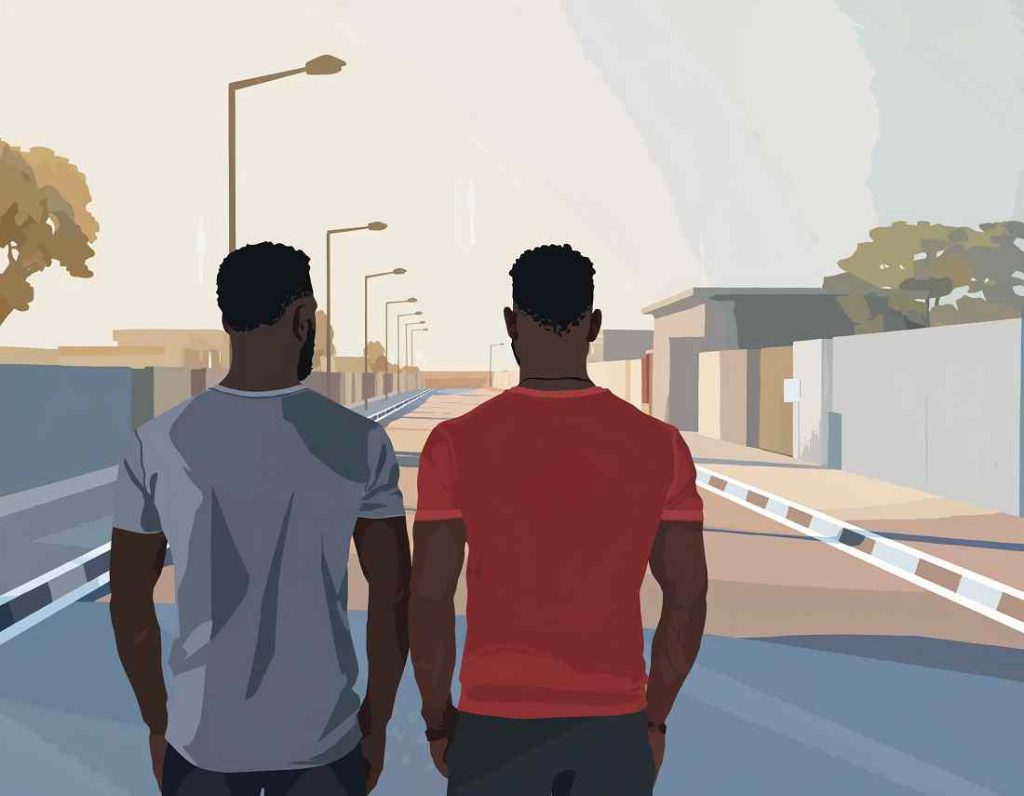
Kito scams—a pattern of blackmail and extortion schemes—pose a grave threat to Nigeria’s LGBTQ community, exploiting the climate of fear created by the SSMPA anti-gay criminalisation. Perpetrators pose as romantic partners online and lure victims to private locations where they ambush, threaten exposure, and force them to pay large sums of money.
In some cases, the criminal gang films LGBTQ+ victims during attacks, then uses the footage for repeated blackmail and extortion.
Advocacy groups report these scams are not isolated but are often carried out by coordinated gangs, sometimes aided by corrupt police who amplify the threat of arrest to hasten extortion.
How Performative Visibility Escalates Kito Violence
Community research shows kito perpetrators rely heavily on digital spaces—dating apps, Instagram, WhatsApp, X—to identify and approach queer people. They use false affection and other deceptive tactics to lure queer men into private spaces, then assault and threaten them with exposure to extort money (TIERS, 2023)[5].
Public posts, geotags, tagged faces, identifiable venues, and “here’s where the scene is” content make individuals and networks easier to locate and approach. Human rights groups warn that international media’s embellishment of local stories—often to boost LGBTQ+ advocacy—can unintentionally expose people or create risks if reporting lacks nuanced local context.
Amnesty International’s 2023 reporting[1] describes a sobering pattern: when external visibility narratives amplify exposure, LGBTQ+ people face heightened risks of arbitrary arrest and mob violence.

Visibility Is Conditional, Not Universal
Visibility is not a one‑size‑fits‑all solution; it is a strategy. And like any strategy, it must be context‑specific to be effective. What empowers in one setting can endanger in another, making local realities the cornerstone of meaningful advocacy.
| 📮Visibility In Protected Environments (e.g., London) | ☀️Visibility In Criminalised Environments (e.g., Lagos) |
| Builds political pressure: Shows numbers to influence policy. | Triggers moral panics: justifying police raids and strict law enforcement. |
| Normalises presence: Reduces stigma over time. | Collapses safety networks: Exposes safe houses and private gatherings. |
| Expands rights: leads to corporate and state recognition. | Escalates violence: targets already marginalised people for “Kito” or mob justice. |
The Ethics of “Do No Harm” in Queer Documentation
Any advocacy, journalism, or content creation involving LGBTQ+ visibility and safety in Africa must be governed by strict harm-reduction principles.
1. Anonymisation is Non-Negotiable
Avoid identifiable faces, real names, specific locations (landmarks), timestamps, and metadata. Digital traces are durable and searchable. A photo taken at a party in Lagos and posted in London can lead to the venue being raided days later (DRF, 2021)[2].
2. Informed Consent Must Be Rigorous
“Consent” means the participant understands the worst-case scenario. Do they understand that this content is permanent? Do they know it can be retrieved by Nigerian police or blackmailers years from now? Often, the subject may underestimate the reach of the internet; the advocate must not.
3. Platform Accountability
If people on the ground report increased risk after publication, ethical practice requires immediate review, takedown, or modification. Defensive reactions to safety worries aren’t supportive—they damage trust and prioritise ego over the well-being of those at risk.
The Power Imbalance: Diaspora vs. Local Reality
A stark disparity exists between advocates living in the Global North and residents of Lagos. Advocates in London enjoy legal protection, embassy access, and distance from immediate retaliation; locals in Lagos absorb the full risk with no foreign exit routes.
When external voices dismiss local caution as “fear,” “envy,” “internalised homophobia,” or a “lack of bravery,” they reproduce colonial patterns of authority. They export risk and import consequences for local people.
Strategic Invisibility in Lagos vs. Disciplined Visibility in London
Visibility is a context‑dependent survival strategy, not a universal path to liberation.
In Lagos, strategic invisibility refers to sophisticated survival tactics—quiet organising, coded language, and closed networks—refined over decades of navigating systemic persecution and the SSMPA.
In London, disciplined visibility refers to deliberate, context‑sensitive strategies that leverage relative safety to challenge norms and demand recognition, while acknowledging that visibility can still be weaponised by law enforcement, vigilantes, or hostile publics in certain spaces (OAI, 2022)[4].
Safety-First Advocacy: Practical Steps
- Digital hygiene: Scrub metadata, blur or obscure faces, and remove geotags and identifiable details before posting.
- Centre harm reduction: Prioritise questions of risk over visibility; ask whether a post could lead to arrest, harassment, or violence and act accordingly.
- Respect strategic invisibility: Never out people, venues, or networks for clout; defer to local activists on what visibility is safe and useful.
- Support safeguarding and the duty of care. If you’re an organisation or ally, adopt clear safeguarding policies and referral pathways for people at risk.
- Prepare emergency plans. Know local legal resources, safe houses, and digital security helplines; share them only with trusted contacts.
How to Support Ethically
Ethical solidarity does not mean silence; it’s alignment. If the goal is to support LGBTQ+ people in Nigeria and Africa, follow the leadership of organisations and grassroots activists embedded in local realities.
Credible groups in Nigeria include The Initiative for Equal Rights (TIERS) and Women’s Health and Equal Rights. Centring local voices and building diaspora partnerships creates sustainable advocacy.
Conclusion: Liberation Without Safety Is A Betrayal
Visibility can be powerful—but only when it is intentional, contextual, and accountable. Ethical visibility rejects performative openness in favour of strategic choices rooted in care, solidarity, and a clear assessment of consequences.
Liberation is a betrayal when it ignores safety and abandons those who bear the risk. The measure of good advocacy is not applause. It is whether people live to see tomorrow.
References
- Amnesty International. (2023). Nigeria: Human rights situation. https://www.amnesty.org/en/location/africa/west-and-central-africa/nigeria/
- Digital Rights Foundation (DRF). (2021). Gender, surveillance, and online safety. https://digitalrightsfoundation.pk/
- Human Rights Watch (HRW). (2016). “Tell me where I can be safe”: The impact of Nigeria’s Same Sex Marriage (Prohibition) Act. https://www.hrw.org/report/2016/10/20/tell-me-where-i-can-be-safe/impact-nigerias-same-sex-marriage-prohibition-act
- OutRight Action International (OAI). (2022). Pride around the world: The context of visibility. https://outrightinternational.org/
- The Initiative for Equal Rights (TIERS). (2023). 2022 human rights violations report based on sexual orientation and gender identity. https://theinitiativeforequalrights.org/