The Brain Is Not Always Chasing Sex — Sometimes It Is Chasing Recognition
Apart from the physical sensation of pleasure, sex, at its deepest level, sex can also carry an emotional reward. It can make a person feel seen, wanted, chosen, desired, and valued. For Black queer men who grew up facing shame, policing, exclusion, racism, homophobia, and emotional scarcity, that reward can become even more powerful.
This does not mean every Black queer man relates to sex in the same way. It also does not mean sex is automatically shallow, harmful, or desperate. Sex can be joyful. It can be tender and freeing. But under certain conditions, sex can also become a shortcut to something deeper: recognition.
Research on sexual motivation shows that people have sex for many reasons beyond physical pleasure, including emotional closeness, coping, self-affirmation, intimacy, and relationship needs. Sexual activity is also tied to reward, attachment, and bonding systems in the body, which helps explain why sex can feel emotionally significant as well as physically pleasurable (Barrada et al., 2021).
This short article explains why recognition, shame, concealment, and scarcity can shape the way many Black queer men seek intimacy.
Sex as Emotional Reward
For a person who has been denied affirmation for too long, being desired can feel powerful. To be touched can feel like evidence. To be chosen can feel like repair. Proof of being wanted can feel like confirmation that the body the world has often treated as less than, disposable, shameful, excessive, or unwanted still has value.
This is why sex can become emotionally charged for many Black queer men. The pleasure is not only in the body. It is also in the message that the experience appears to send:
You are wanted.
You are visible.
Someone has chosen you.
That means you still matter.
That emotional reward can become especially intense when a person has grown up in environments where queer desire had to be hidden, denied, mocked, punished, or translated into secrecy.
Concealment, DL Secrecy, Masking, and Masculinity Performance
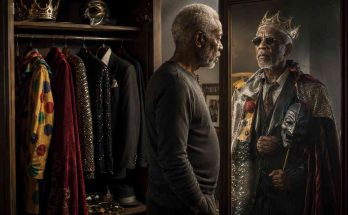
Under conditions of concealment, DL secrecy, masculinity performance, and masking, sex can start to feel like the only available route to recognition.
This is because concealment reduces the number of places where a person can be fully seen. If a Black queer man cannot speak openly about desire, cannot love without calculation, cannot express softness without social punishment, and cannot move through the world without managing how much of himself is visible, then recognition becomes restricted. He may still be desired, but not fully known. He may still be touched, but not fully witnessed.
Many Black queer men are wanted in private, but not affirmed in public.
That creates a difficult emotional arrangement. Sex becomes one of the few spaces where the hidden self receives attention. Desire becomes proof. Touch becomes confirmation. Being chosen becomes a temporary answer to the deeper question: Do I really matter here?
Why Concealment and Performance Intensify The Chase
DL secrecy can intensify this pattern. When intimacy is forced into hiding, the emotional reward of sex may grow stronger because the rest of the person’s life remains tightly managed. Masculinity performance can do the same. If a man has been trained to appear hard, controlled, dominant, unemotional, or untouchable, sex may become one of the few places where longing is allowed to appear, even if only briefly and privately.
But this also creates risk. When sex becomes the main route to feeling valued, a person may begin to chase the feeling of being wanted without asking whether they are also being respected, understood, protected, or cared for. He may start confusing access with affection, attention with intimacy, secrecy with depth, and desire with love.

The Difference When These Conditions Are Relaxed
This is why loosening the conditions of DL secrecy and hypermasculinity performance in Black queer life matters a lot.
Where shame, concealment, and performance lose some of their grip, a Black queer man can begin to find value in many other parts of his genuine self — through his talent, compassion, humour, eloquence, creativity, warmth, brilliance, community contribution, and vivacity. He can be recognised not only as a body to be desired, but as a full person to be known.
That is the deeper freedom. Sex may still matter. Desire may still matter. Pleasure may still matter. But they no longer have to bear the entire burden of proving their value.
Sex as a Shortcut To Recognition as a Black Queer Man
As explained above, under conditions of concealment, performance, and masking, sex can start to feel like the only available route to recognition. If a man cannot be openly loved, he may settle for being privately desired. If he cannot be publicly chosen, he may cling to being secretly wanted.
When a Black queer man cannot find affirmation through community, tenderness, creativity, or belonging, sex may become the fastest way to feel briefly valuable.
The brain is not only chasing sex. It is often chasing the emotional reward of being recognised as valuable.
Whichever route meets that need, the brain learns from it and begins to reward the path that delivered it. This is why repeated sexual validation can become powerful, especially when other routes to affirmation have been blocked or underdeveloped.
This is not a moral failure. It is an emotional economy. This is part of what my Economics of Black Queer Desire (EBQD) framework tries to explain: why many Black gay men are pushed into chasing sex by the numbers instead of seeking intimacy with depth.
The EBQD Explanation
Many Black gay men are not simply “promiscuous”, “shallow”, or “addicted to attention”. Some are navigating a desire market marked by scarce recognition, racialised beauty standards, masculinity as rank and desirability and sexual attention as proof of value.
In this kind of environment, sex can become a numbers game because numbers appear to offer proof.
Numbers can show the person is getting more attention, more taps, more messages, more sexual access, more bodies, and ultimately more evidence that they are still wanted. In this sense, many Black queer people start using numbers to solve a deeper problem of value and recognition.
But Numbers Do Not Solve The Real Problem
Numbers do not always create depth. They can give the feeling of being chosen without creating the safety of being known.
That is the difference.
Being wanted is not the same as being understood. Being desired is not the same as being held. A Black queer man being chosen for sex is not the same as being valued in their full humanity.

Finding Recognition Beyond Sex
The answer is not shame.
Shaming Black queer men for seeking sex only deepens the same wound that made sexual recognition feel so urgent in the first place. The better question is: what other routes to value can be opened?
A Black queer man can find recognition through his talent, compassion, humour, eloquence, creativity, warmth, brilliance, community contribution, intellectual life, friendship, care, and vivacity.
Sex may be one route to feeling wanted, but it should not have to become the only route to feeling valuable.
That is why community matters. Language matters. Healing spaces matter. Honest friendship matters. Creative expression matters. Knowledge matters.
Because when people have more places to be seen, sex does not have to carry the entire burden of their self-worth.

Final Reflection
The brain is not always chasing sex.
Sometimes, it is simply chasing the feeling of being recognised as valuable.
For many Black queer men, the deeper issue is not simply desire. It is the emotional hunger created by shame, concealment, exclusion, and scarcity. This does not mean sex is bad. It means sex often carries more meaning than people admit.
My work does not claim to know everything. But I have spent years studying Black queer life, culture, desire, shame, and survival. Instead of using that work as a weapon, we can use it as a resource.
However small the help may be, we can still use what we know to help one another.
References
- Acevedo, B. P., Poulin, M. J., Geher, G., Grafton, S., & Brown, L. L. (2019). The neural and genetic correlates of satisfying sexual activity in heterosexual pair-bonds. Brain and Behavior, 9(6), e01289. https://doi.org/10.1002/brb3.1289
- Barrada, J. R., Ruiz-Gómez, P., Correa, A. B., & Castro, Á. (2021). Motives to have sex: Measurement and correlates with sociodemographic, sexual life, and psychosexual characteristics. Frontiers in Psychology, 12, Article 645493. https://doi.org/10.3389/fpsyg.2021.645493
- Dawes, H. C., Eden, T. M., Hall, W. J., Srivastava, A., Williams, D. Y., & Matthews, D. D. (2024). Which types of social support matter for Black sexual minority men coping with internalized homophobia? Findings from a mediation analysis. Frontiers in Psychology, 15, Article 1235920. https://doi.org/10.3389/fpsyg.2024.1235920
- Debrot, A., Meuwly, N., Muise, A., Impett, E. A., & Schoebi, D. (2017). More than just sex: Affection mediates the association between sexual activity and well-being. Personality and Social Psychology Bulletin, 43(3), 287–299. https://doi.org/10.1177/0146167216684124
- Graham, L. F., Aronson, R. E., Nichols, T., Stephens, C. F., & Rhodes, S. D. (2011). Factors influencing depression and anxiety among Black sexual minority men. Depression Research and Treatment, 2011, Article 587984. https://doi.org/10.1155/2011/587984
- Meston, C. M., & Buss, D. M. (2007). Why humans have sex. Archives of Sexual Behavior, 36(4), 477–507. https://doi.org/10.1007/s10508-007-9175-2
- Meyer, I. H. (2003). Prejudice, social stress, and mental health in lesbian, gay, and bisexual populations: Conceptual issues and research evidence. Psychological Bulletin, 129(5), 674–697. https://doi.org/10.1037/0033-2909.129.5.674