Black Queer Men Carry the Fight Backwards
For Black queer men who have been psychologically conditioned this way, cruelty may feel relieving in the moment. This feeling of relief is often misread as emotional regulation and power when it is, in fact, only a temporary displacement of underlying distress.
The brain may wrongly reward cruelty, creating a feedback loop in which harming others becomes a person’s default response to emotional discomfort. As human beings, we all experience unsettling emotions from time to time: shame, invisibility, insecurity, or feeling emotionally cornered.
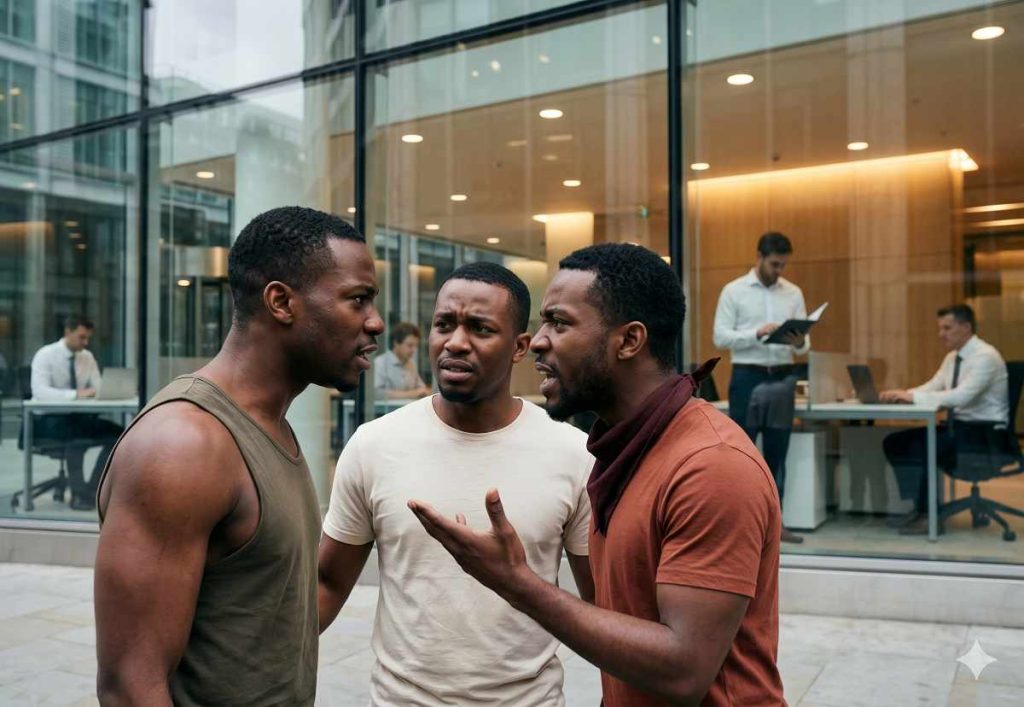
Instead of processing that pain, some men externalise it. They harden, mock, humiliate, or seek to punish others. In the moment, this can look like control, power or self-protection. But psychologically, cruelty is not healing. It is pain redirected. And redirected pain does not simply disappear; it returns in another form—often more corrosive than before.
Group cruelty does not just destroy interpersonal relationships. It is also a structural trap. By locking Black queer men’s energy into sideways conflict, it distracts them from what more reliably guarantees survival: wealth-building, stability, and institutional power.
This article explains why cruelty fails as a form of emotional regulation, especially for Black queer men navigating compounded minority stress, racial fatigue, and concealment stress. More importantly, it shows how oppressive systems exploit internal hostility to keep Black queer men divided and fighting one another, leaving them locked out of power.
- Black Queer Men Carry the Fight Backwards
- Why Many Black Queer Men Struggle with Emotion Regulation
- Lateral Violence: Cruelty as False Control
- Why Group Cruelty Fails Black Queer Men
- Four Ways Group Cruelty Harms Black Queer Men
- Why Group Cruelty Fails as Emotional Regulation
- Shame Proneness and Cruelty in Black Queer Men
- Shared Cruelty as Price for Belonging
- Breaking The Cycle of Cruelty in Black Queer Spaces
- References
Why Many Black Queer Men Struggle with Emotion Regulation
Many Black queer men struggle with emotion regulation under the compounded weight of minority stress, systemic racism, homophobia, trauma, and the rigid demands often imposed on Black masculinity. Research on Black queer men in the UK shows that these pressures can contribute to anxiety, depression, hypervigilance, isolation, internalised homophobia, and difficulty forming healthy relationships, while also encouraging the suppression of sexual identity, values, and feelings in order to survive dominant masculine norms (Davis & Morahan, 2024).
In such conditions, suppression, detachment, and externalisation can become maladaptive responses to emotional discomfort, worsening mental distress rather than alleviating it. Research on aggression and emotion regulation similarly suggests that aggressive behaviour can function as a maladaptive attempt to manage distress rather than resolve it (Roberton et al., 2012).
Minority Stress Theory helps clarify why this matters so profoundly in queer life: when stigma becomes chronic, the pressure to cope intensifies. In this context, the mind can mistake survival strategies for healing, even when those strategies stay defensive or destructive (Singh et al., 2023).
These emotional patterns make the pull toward cruelty stronger, especially in communities already strained by stigma.
Lateral Violence: Cruelty as False Control
When cruelty starts to pass for coping, someone who feels small may try to feel bigger by making another person smaller. Someone who feels insecure may seek stability by humiliating someone who exposes that insecurity. Another who has learned that acceptance is conditional may try to purchase safety by distancing themselves from softness, femininity, visible need, and anything that threatens their place in the hierarchy.
Someone whose honesty or vulnerability has been punished before may come to perform hardness by ridiculing others. Such gestures may seem personal, but they often serve as social translations of a broader order. They show how oppression becomes intimate, portable, and repeatable within the oppressed.
In the moment, the move can feel strategic. But while the harm done to the target may feel immediate and real, the psychological damage to the person inflicting it is often deeper and far more enduring.
The False Relief of Cruelty
Cruelty offers three immediate but ultimately false rewards.
- First, it can create a fleeting sense of superiority. When shame diminishes a person’s sense of self, cruelty can feel like a reversal of status—an illusion of power.
- Second, it redirects anger away from its true source. When systems are difficult to challenge, peers become safer, more accessible, and more reactive targets.
- Third, cruelty allows someone to avoid vulnerability and accountability. It is easier to sneer at someone than to admit pain.
This is what makes cruelty so deceptive. It produces movement without repair. It gives the body something to do with pain, but denies it the labour of real healing. Human beings learn to regulate difficult emotions not by suppressing or externalising them, but by staying with them long enough to understand and metabolise them. Avoiding that work means the person may turn to cruelty again when another wave of discomfort hits, leaving the psyche layered with unprocessed distress.
Cruelty Creates More Corrosive Emotions
Over time, that distress can harden into more enduring patterns: chronic anger, internalised contempt, resentment, self-loathing, shame, low self-esteem, hypervigilance, quickness to attack, compulsive performance for acceptance, people-pleasing, dependence on other maladaptive coping strategies, and a diminished trust in one’s own capacity to face emotional pain or survive it without harming others.

Why Group Cruelty Fails Black Queer Men
Cruelty fails because it confuses discharge with healing. It may produce a brief emotional release, but it does not build self-respect. It may create a momentary sense of dominance, but it does not create safety. Group cruelty may help a person avoid vulnerable feelings for a few minutes, but it weakens the very relationships through which deeper regulation becomes possible. What appears to be control is often only the temporary dulling of distress, followed by a harsher return to the original wound (Roberton et al., 2012).
For Black queer men, that failure is especially expensive because a trustworthy community is not optional. It is one of the few available buffers against minority stress.
How Group Cruelty Leaves Black Queer Men Exposed
A 2024 study by Dawes and colleagues identifies key drivers of depression among Black gay and bisexual men. The researchers found that internalised homophobia directly increases depressive symptoms. They also found that when these men receive less support from family, friends, or the Black community, depression worsens. By contrast, a lack of support from the broader gay community, including white-dominated gay spaces, does not predict depression in the same way. The authors explain that mainstream gay spaces often centre White cultural norms that alienate Black men and fail to meet their distinct emotional and social needs.
This means that for Black queer men, support is not interchangeable. When it comes to support and improving mental health, the kind of community offering the support matters a lot. This helps explain why cruelty within Black queer spaces is so corrosive: it damages one of the very supports that could otherwise make minority stress more survivable for Black queer men (Dawes et al., 2024).
If you can only feel TALL when someone else is on their knees, then you have a serious problem___Toni Morrison
Four Ways Group Cruelty Harms Black Queer Men
Causing harm to others can feel powerful in the moment, but it often returns as injury in the perpetrator’s own psyche, relationships, body, and economic standing.
1. Psychological and Moral Fracture
When people cross their own ethical lines, the result is often not relief but inner fracture. This can take the form of moral injury: a destabilising conflict between what one has done and the kind of person one believes oneself to be.
Shame then begins to function as a punishing reflex, triggering mental spirals, self-sabotaging behaviour, and a deepening sense of unworthiness. Instead of resolving distress, cruelty can leave the perpetrator more vulnerable to intrusive thoughts, depressive collapse, and emotional disorganisation.
2. Social and Interpersonal Fear
Hurting others does not leave the perpetrator socially untouched. Cruelty corrodes trust, weakens belonging, and damages the very relationships people depend on for support and co-regulation.
When people bond over the misery of others, they do not create safety; they create a social environment in which everyone remains alert, fearful, and unsure of their place, rather than at ease and fully held within genuine belonging.
3. Physical and Physiological Strain
Perpetration of harm can also register in the body. Acts of cruelty may trigger acute stress responses, while the unresolved guilt, vigilance, and emotional dissonance that follow can keep the nervous system under prolonged strain.
In an effort to manage this discomfort, some perpetrators may turn to increased use of alcohol, drugs, or other numbing behaviours. What felt like release in the moment is then followed by a deeper cycle of bodily stress, emotional depletion, and maladaptive coping.
4. How Group Cruelty Keeps Black Queer Men Out of Power
Perhaps the most devastating tragedy of group cruelty is that it does the oppressor’s work for free. When Black queer men mobilise to mock, exclude, or tear down another, they are actively eliminating the very people the system already views as a threat.
Many do not realise it, but this is exactly how systemic oppression thrives: through distraction. By keeping Black queer men trapped in an exhausting hamster wheel of performing “trade” masculinity and fighting for scraps of desirability, the system ensures Black queer men never look up.
While Black queer men exhaust their energy policing each other on apps and in social circles, they lose focus on the things that actually guarantee survival—building wealth, securing institutional power, and organising for their collective rights. Group cruelty isn’t just toxic on a personal level. Structurally, it keeps Black men poor, powerless, and profoundly distracted.
Cruelty Creates a Cycle of Coping Through Harm
Cruelty rarely ends with the act itself. Once harm is done, the mind often shifts to protect its moral self‑image. This is where rationalisation takes over. A person may minimise the damage, blame the target, frame the cruelty as necessary, or convince himself he is defending standards, preserving order, or merely reacting to provocation. In psychological terms, these moves reflect moral disengagement—the separation of harmful behaviour from one’s ethical self‑concept.
Lying to ourselves is much harder than lying to others because we cannot close our minds to ourselves. When your mind tries to reconcile who you think you are with what you have actually done, it doesn’t create relief—it creates chaos. Over time, this internal conflict breeds deep shame and relentless self-criticism.
As one drifts further from their true self, their internal foundation starts to crumble. Some people turn to more cruelty as a desperate coping mechanism, but this only accelerates the damage, eventually fracturing their identity completely.
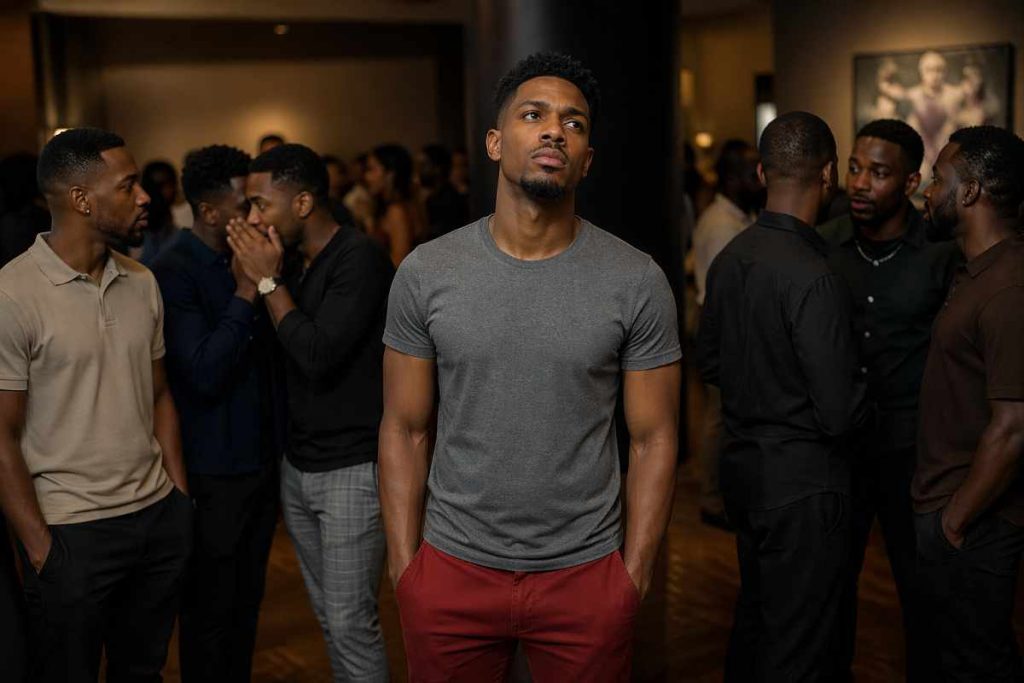
The signs of a fractured self-concept include:
- Deep-rooted shame and persistent self-blame.
- Constantly shrinking oneself to avoid conflict.
- Chronic rejection sensitivity.
- A profound fear of attachment or abandonment, driven by an inability to process “ugly” emotions.
These signs show that someone no longer has a solid internal foundation to stand on. Cruelty does not resolve this inner conflict; it multiplies it. It leaves behind not only the original psychological wound but a permanently diminished sense of self.
Why Group Cruelty Fails as Emotional Regulation
When individuals or communities are overwhelmed by systemic pressures, chronic shame, or rigid hierarchies, group cruelty can begin to function as a coping mechanism. On the surface, joining others to mock, exclude, or belittle a target can feel like a long-missed bonding experience.
It offers a fleeting sense of power and a brief release of tension. For a community starved of genuine belonging, this kind of group behaviour can mimic one. But group cruelty is emotionally bankrupt as a regulatory strategy. It acts like a psychological painkiller that not only fails to heal the original wound but also damages the very relational conditions needed for long-term emotional stability and true belonging.
1. Group Cruelty Offers Performative Bonding, Not Co-Regulation
Healthy emotional regulation depends heavily on co-regulation: the ability to find safety, soothe the nervous system, and process difficult feelings through secure connection with others. When people unite to ridicule or discipline a target, often branding them “messy” or “too much,” members may experience a sudden rush of in-group solidarity. But this bond is built on shared exclusion, not shared vulnerability.
Because it depends on a target to sustain itself, it offers no genuine platform for people to say what they truly feel. Instead, the group hears only echoes of its own logic, sometimes amplified by wider structures of power that enlist some Black queer men as proxies for their work. What appears to be co-regulation is often only a temporary surge of displaced aggression.
2. Group Cruelty Breeds Chronic Paranoia
A community that uses cruelty to regulate distress teaches its members a chilling lesson: this is what happens to people who misstep. If a group bonds by mocking someone else’s boldness, softness, or emotional exposure, each member internalises the rules of that hierarchy. Belonging starts to feel conditional. The result is often hypervigilance, self-surveillance, and more performance instead of trust.
People cannot fully relax, be earnest, ask for help or go for what they want if it goes against the rules of the hierarchy, because they know exactly how the group treats those who stumble. Instead of becoming a safe harbour for emotional regulation, the community becomes another site of threat.
3. It Fractures the Self Through Rationalisation
Not everyone begins from wickedness. To participate in group cruelty, people often have to override empathy and rationalise harm. The more undeserving the target appears, the more psychological work is required to justify what is happening. When someone joins in humiliating another person to protect status or secure belonging, the mind must reconcile that harm with the desire to remain decent.
One common way of resolving that tension is to convince oneself that the target deserved it. Over time, these repeated justifications create fractures in the self. As a person drifts further from their core values, they become increasingly dependent on a defensive mask held together by performance, denial, and moral disengagement to carry on.
4. Group Cruelty Displaces Pain Instead of Processing It
Emotional regulation requires naming, tolerating, and moving through difficult feelings such as grief, rejection, humiliation, or inadequacy. Group cruelty does the opposite. It avoids the real feeling by exporting it. When people cannot safely challenge the structures, hierarchies, or unresolved wounds actually hurting them, they strike laterally at peers.
Laughing at someone else’s perceived flaw may briefly distract from one’s own shame, but displaced pain is still unprocessed pain. The original wound remains unresolved and is pushed deeper into the nervous system, where it continues to accumulate and drive further dysregulation (Lagios et al., 2025).
Group cruelty is a survival reflex disguised as power. It temporarily outsources internal distress onto a scapegoat, but in doing so, it creates an environment in which true emotional regulation, which depends on vulnerability, earnestness, and secure attachment, becomes increasingly inaccessible.

Shame Proneness and Cruelty in Black Queer Men
For Black queer men, shame proneness is often not an inherent character flaw. It is a vulnerability many queer men develop from facing constant social scrutiny, rejection, exclusion, internalised homophobia, and punitive religious environments.
Shame does not automatically produce aggression. However, because chronic shame can overwhelm emotional regulation and intensify perceived devaluation, displacing that pain onto others may feel momentarily relieving—and far easier than confronting the unsettling feelings of worthlessness driving the discomfort.
Ultimately, that relief is false. Turning unprocessed pain into social harm only deepens isolation, reinforces dysregulation, and leaves the original wound not only untouched but more deeply embedded (Davis & Morahan, 2024; Bochon et al., 2023).
How Desirability Hierarchies Disrupt Emotional Regulation
In many Black queer communities, masculinity and desirability operate as mutually reinforcing social currencies. Because these currencies act as public markers of value, they trap men in a cycle of performing visible signs of both simply to secure acceptance, status, or belonging.
This performance is rarely driven by genuine personal desire; rather, it is a survival response to societal or communal expectations. When a community’s hierarchy privileges hyper-masculinity, “DL” posturing, and proximity to heteronormative ideals, it does more than dictate who is admired. It keeps queer men suspended in a constant and exhausting pursuit of external validation to confirm whether they are passing or failing.
Outsourcing stability to these fickle external metrics places immense strain on the mind. It leaves no time or space to develop an internal foundation capable of absorbing the shock of emotional distress. Gradually, true emotional life is displaced by performance: individuals stop processing what they actually feel and instead project the emotions most likely to be rewarded.
A man who runs from himself will always find himself waiting at the finish line.
Masculinity Scripts and The Erosion of Co-Regulation
Masculinity hierarchies in many Black queer spaces often turn peers into rivals rather than safe havens. When showing vulnerability is treated as a social danger, emotional safety vanishes. Without the secure bonds required for co-regulation, Black queer men are left to navigate profound loneliness, even in packed spaces. This kind of toxic isolation doesn’t just make emotional regulation difficult—it can make it feel entirely out of reach.
Weaponising Distress as “Drama”
When people become overwhelmed and express hurt, confusion, or a need for accountability, they are frequently labelled “messy,” “too much,” or “dramatic.” This language does more than dismiss pain; it disciplines it. By punishing visible emotional struggle rather than offering care, communities teach their members to suppress their feelings and shame those who cannot. Ultimately, this cycle perfectly reinforces the very hierarchy that is producing distress in the first place.
Shared Cruelty as Price for Belonging
In Black queer life, cruelty is often entangled with respectability and masculinity. Some men try to survive hostile worlds by moving closer to what seems least punishable: hardness, stoicism, sexual hierarchy, anti-femininity, emotional restraint, or a performance of being above need. Under that logic, humiliating someone more visibly vulnerable can feel like evidence of one’s own safety. It can feel like proof that one is not the one most likely to be ridiculed (Jaspal et al., 2019).
If cruelty genuinely regulated emotion in any lasting way, people who relied on it would become calmer, more secure, and more connected over time. The evidence points in the opposite direction. UK work on racially minoritised LGB populations has linked discrimination, victimisation, rejection, internalised homophobia, and concealment pressures to poorer mental-health outcomes, including depressive symptomatology (Jaspal et al., 2019).
Breaking The Cycle of Cruelty in Black Queer Spaces
For Black queer men, breaking the cycle of using cruelty to regulate emotion often begins with building an inner life that is less dependent on external results.
- Cultivating a definitive sense of self—knowing exactly who they are.
- Anchoring yourself in personal values rather than community trends.
- Embracing your individuality and the autonomy to forge your own path.
- Developing emotional literacy to name, acknowledge, and process uncomfortable feelings.
- Discovering the profound satisfaction of spending time alone with yourself.
- Treating yourself and others around you with compassion and care.
References
- Bochon, L., Bird, B. M., & Watson, N. V. (2023). Excluded and ashamed: Shame proneness interacts with social exclusion and testosterone reactivity to predict behavioural aggression. Psychoneuroendocrinology, 157, 106355–106355. https://doi.org/10.1016/j.psyneuen.2023.106355
- Davis, A. J., & Morahan, M. (2024). Decolonising integrative practice with Black queer men who experienced trauma: A thematic analysis. Counselling and Psychotherapy Research, 24(3), 1044–1056. https://doi.org/10.1002/capr.12780
- Dawes, H. C., Eden, T. M., Hall, W. J., Srivastava, A., Williams, D. Y., & Matthews, D. D. (2024). Which types of social support matter for Black sexual minority men coping with internalised homophobia? Findings from a mediation analysis. Frontiers in Psychology, 15, 1235920. https://doi.org/10.3389/fpsyg.2024.1235920
- Frost, D. M., Lehavot, K., & Meyer, I. H. (2015). Minority stress and physical health among sexual minority individuals. Journal of Behavioural Medicine, 38(1), 1–8. https://doi.org/10.1007/s10865-013-9523-8
- Jaspal, R., Lopes, B., & Rehman, Z. (2019). A structural equation model for predicting depressive symptomatology in Black, Asian and Minority Ethnic gay, lesbian and bisexual people in the UK. Psychology & Sexuality, 12(3), 1–18. https://doi.org/10.1080/19419899.2019.1690560
- Lagios, C., Restubog, Simon Lloyd D., Schilpzand, P., Kiazad, K., & Aquino, K. (2025). Disrupting the Chain of Displaced Aggression: A Review and Agenda for Future Research. Journal of Organisational Behaviour. https://doi.org/10.1002/job.2893
- Roberton, T., Daffern, M., & Bucks, R. S. (2012). Emotion regulation and aggression. Aggression and Violent Behaviour, 17(1), 72–82. https://doi.org/10.1016/j.avb.2011.09.006
- Singh, A., Dandona, A., Sharma, V., & Zaidi, S. Z. H. (2023). Minority Stress in Emotion Suppression and Mental Distress Among Sexual and Marginalised Gender Groups: A Systematic Review. Annals of Neurosciences, 30(1), 097275312211203. https://doi.org/10.1177/09727531221120356