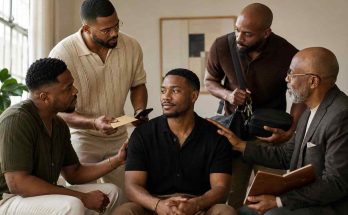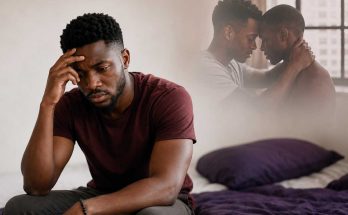
While some men are perceived as embodying society’s classic ideals of manhood — tall, muscular, athletic, affluent, or socially dominant — these standards can feel unattainable to many others. The pressure to measure up may generate anxiety, insecurity, and, in some cases, what sociologists and psychologists describe as masculine overcompensation.
Hypermasculinity is best understood as a compensatory strategy adopted by some men who perceive themselves as falling short of their culture’s idealised version of masculinity.
This emphasis on perception is important. The insecurity that drives hypermasculine behaviour is often internally generated and self-conceptualised, shaped less by any actual deficiency than by the man’s own assessment of his masculine standing.
Understanding masculinity as a cultural construct rather than an innate trait provides a clear reason why no man should have to perform society’s narrow ideal of manhood in order to earn respect.
Scope of Article
This article explores how dominant white queer systems of taste, punishment, desirability, and institutional access can reward hypermasculine performance in Black queer men while keeping real power — education, law, policy, ownership, leadership, and collective organisation — out of reach.
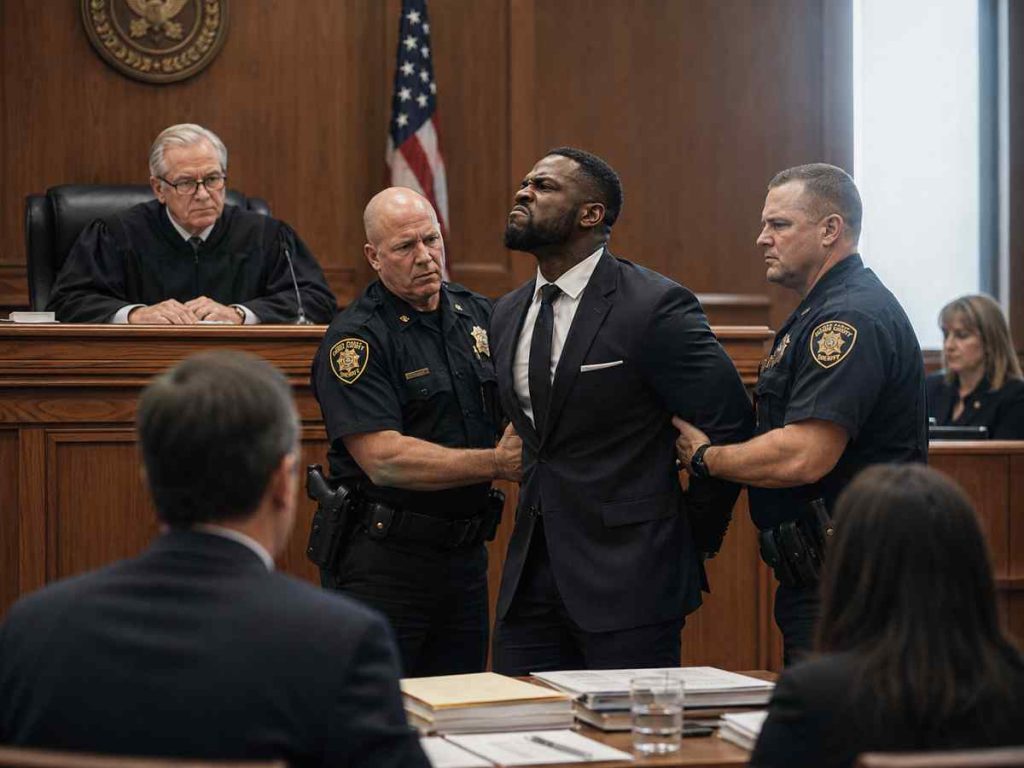
The trap is simple but devastating: Black queer men may be rewarded for appearing dominant, sexually powerful, emotionally hard, or intimidating, yet those same traits can later be used to justify surveillance, exclusion, punishment, and control.
- Scope of Article
- From Masculine Insecurity to Overcompensation
- How Mainstream White Queer Culture Uses Masculinity to Control Black Men
- Black Queer Men and the Trap of Hypermasculinity
- The Weaponisation of Masculinity to Divide Black Men
- How White Queer Culture Uses Masculinity to Keep Black Queer Men Out of Power
- Any Value White Queer Authority Places on Hypermasculinity Is Fake
- Education Does Not Reduce Black Masculinity — It Empowers It
- White Queer Authority Wants Black Queer Bodies for Consumption, Not Power
- A Note on Nuance
- True Black Power Has No Business with Masculinity Performance
- Hypermasculinity Has Given Black Queer Communities Nothing
- Hypermasculinity Has Not Built Black Queer Power — It Has Drained It
- The Evidence: Less Wealth, Less Safety, Less Power
- Conclusion
- References
From Masculine Insecurity to Overcompensation
Many Black queer men lack the language and social insight to immediately recognise this truth: some of the loudest displays of machismo — exaggerated domination, performative aggression, straight-passing labour, emotional shutdown, sexual bravado, and open contempt for softness — do not prove that a man possesses more masculinity than others.
In many cases, the exaggeration functions as compensation: an attempt to manage insecurity about his own masculine standing.
The loudest performance of masculinity is not always the most secure one.
How Mainstream White Queer Culture Uses Masculinity to Control Black Men
Research on masculine overcompensation shows that when men perceive a threat to their masculine identity, some respond by intensifying stereotypically masculine behaviours — including dominance displays, sexual boasting, support for violence, and homophobic behaviour — to restore their sense of manhood (Willer et al., 2013).
White supremacy helped construct Black masculinity as dangerous, hypersexual, violent, and in need of control[3]. Yet many inherited scripts of status and desirability still place Black male value inside the very traits white authority already framed as threatening: dominance, sexual power, hardness, aggression, and emotional invulnerability.
This creates a cruel control mechanism. In the pursuit of status and male respect, some Black queer men may perform exaggerated masculinity through dominance displays, sexual aggression, emotional shutdown, or violence. These performances may feel like a reclamation of power, but they can also be weaponised as confirmation of the same racist logic that marked Black masculinity as dangerous, excessive, and in need of surveillance or close monitoring.
This is what I call the Trap of Hypermasculinity.
Black Queer Men and the Trap of Hypermasculinity
Dominant white queer culture tells Black queer men: I like you dominant, sexually aggressive, emotionally hard, and top only.
In response, some Black queer men turn to hypermasculinity to embody the very traits white queer authority has framed as desirable. They learn that dominance brings attention, aggression brings status, and sexual role hierarchy brings value.
Hypermasculinity survives in Black communities by teaching Black men one destructive lesson: prove your power by dominating another Black man.
This is the grand manipulation. The same white queer spaces that helped manufacture the demand for dominance can then turn around and say:
See? These Black men are so dangerous. They need to be watched closely. Look at how they treat people they perceive as weaker in their communities.
First, dominant white queer spaces help sell hypermasculinity to Black queer men as premium desirability, and reward them handsomely for performing it.
When that same performance leads to harm, the white queer culture that helped incentivise hypermasculinity in Black queer men often withdraws and takes a back seat. Institutions are then left receiving repeated reports of anti-social behaviour involving Black people, reinforcing an old racist reading of Black masculinity as dangerous, excessive, and in need of control.
The Weaponisation of Masculinity to Divide Black Men
In other words, the performance of Black masculinity meant to prove manhood can become the very evidence used to argue that Black men are naturally dangerous and must be controlled.
This logic also circulates inside Black communities. When a Black man uses aggression to assert power[1] or polices softness in other men, he rarely directs that aggression upward at white authority or the historical power structures. More often, he turns it sideways, against another Black brother[6].
Over time, this creates a painful condition in which Black men begin to fear one another. And a community taught to fear itself cannot easily organise for collective growth, protection, or repair. It is the old logic of divide and conquer — masculinity edition.
How White Queer Culture Uses Masculinity to Keep Black Queer Men Out of Power
Look closely, and you will see the pattern: some of the loudest rewards for hypermasculine performance among Black queer men come from the very systems that have historically denied Black men real power.
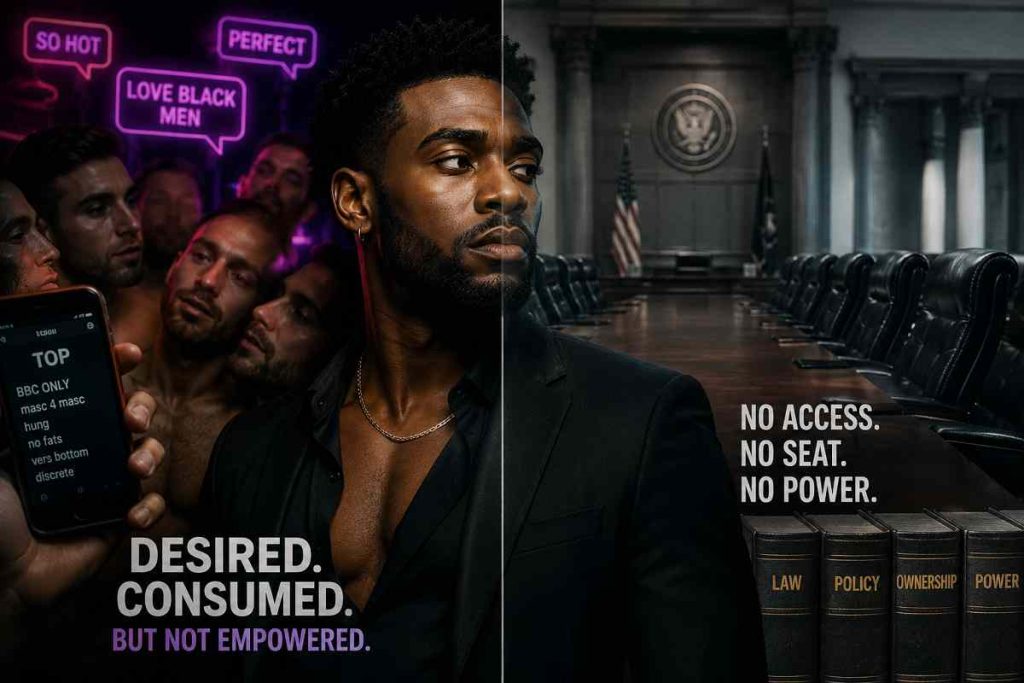
This is especially visible when Black masculinity is rewarded primarily through domination, sexual aggression, emotional hardness, shaming, and the policing of other men. On platforms like Grindr, for example, Black men are often most desired when they perform a narrow fantasy of dominance: total top, dominant top, aggressive, sexually powerful, physically hard, DL, hood or emotionally unavailable. The more dominant the performance, the higher the perceived value.
But what does that tell us?
It tells us that this kind of desirability is not always liberation. Sometimes it is control.
Any Value White Queer Authority Places on Hypermasculinity Is Fake
A false value is placed on hypermasculinity, encouraging Black men to invest their energy in proving dominance rather than building the forms of power that can secure a thriving Black queer future: education, political influence, legal knowledge, economic mobility, institutional access, community leadership, and collective organisation.
In the UK, for example, we should not only ask how often people see Black men as sexually desirable, feared, or socially intimidating. We should ask a deeper and more relevant question: how many institutions actively support Black men into real power — law, medicine, academia, public office, policy work, media ownership, and the rooms where people make decisions that shape lives?
This is where the trap becomes clearer. Some Black queer men reach their forties still fighting masculinity threats, gossip wars, sexual status battles, and dominance contests, while overlooking the kinds of power that would make their lives safer, freer, and more influential. The performance becomes a cage.
That is the trick: while Black men are distracted by masculinity contests, the real architecture of power remains intact.
Education Does Not Reduce Black Masculinity — It Empowers It
The idea that education, emotional intelligence, or gentleness somehow weakens Black masculinity is another damaging cultural script. That belief does not come from freedom. It comes from social conditioning that teaches Black men to mistake hardness for power and anti-intellectualism for strength.
The brainwashing runs deep, my brothers.
The social conditions surrounding Black men actively train them to prove masculinity by dominating one another. When this pattern continues, Black queer men become less likely to come together, build together, study together, organise together, heal together, or confront the structures that benefit from their division.
That is not power. It is containment[2].
White Queer Authority Wants Black Queer Bodies for Consumption, Not Power
Dominant white gay spaces often fetishise Black men for their perceived hypermasculinity, reducing them to fantasies of dominance, sexual power, physical strength, and emotional hardness.
At the same time, these same spaces frequently exclude Black men from romance, tenderness, leadership, social belonging, and mainstream community life through racist sexual “preferences.”
A Note on Nuance
Desire is not always fetish. Attraction on gay dating apps like Grindr and Jack’d can come from genuine personal, cultural, and embodied preferences. But desire is also shaped by social conditioning, racial hierarchy, porn culture, app culture, and repeated patterns of sexual exclusion or fetishisation.
Similarly, not all white queer spaces exclude Black queer men uniformly. The issue is not individual sameness, but structural pattern: the ways dominant white queer culture can reward Black queer men for hypermasculine performance while still keeping them vulnerable to exclusion, fetishisation, and institutional control.
True Black Power Has No Business with Masculinity Performance
Despite the heavy consumption of Black queer culture, Black LGBTQ+ people remain severely underrepresented in decision-making roles, corporate boardrooms, public institutions, funding bodies, media ownership, and even leadership within legacy LGBTQ+ organisations.
True power is not measured by how dominant, masculine, sexually desirable, feared, or physically imposing a Black queer man appears. True power requires systemic support, institutional access, resources, protection, policy influence, ownership, and wealth redistribution.
Hypermasculinity Has Given Black Queer Communities Nothing
In what ways has hypermasculinity truly benefited Black queer communities?
The honest answer is simple: it has not.
It has not given Black queer men more safety, more love, better mental health, deeper joy, stronger community bonds, greater political power, institutional access, economic protection, or collective organisation.
Nothing.
Hypermasculinity Has Not Built Black Queer Power — It Has Drained It
What hypermasculine performance often offers Black queer communities is not freedom, but fear: shame, sexual hierarchy, emotional distance, social policing, reputational violence, and the constant pressure to prove manhood even in spaces where men should feel relief.
Hypermasculinity has not liberated Black queer communities. It has distracted Black queer men from pursuing true power[4]. It has kept them divided, suspicious, and untrusting of one another. And too often, it has kept them fighting each other while the real structures of power remain untouched[5].
The Evidence: Less Wealth, Less Safety, Less Power
Instead, Black queer people continue to face higher rates of economic disparity, housing instability, healthcare gaps, social exclusion, and institutional neglect. This means dominant structures often profit from Black queer culture, language, style, labour, bodies, and visibility without transferring real power to the communities that produce them.
That is why masculinity performance cannot be mistaken for liberation.
Mainstream white queer spaces can shower a Black queer man with desire, fetishisation, and praise for dominance while still keeping him out of the rooms where institutions decide his safety and well-being. It can celebrate him as fantasy while denying him safety, funding, housing, healthcare, leadership, and long-term social protection.
Conclusion
True Black power has no business being trapped inside masculinity contests. It belongs in education, law, policy, land, media, ownership, care systems, community leadership, healing infrastructure, and collective organisation.
True Black queer power will not come from domination, emotional shutdown, sexual hierarchy, or the policing of softness. It will come from learning, organising, healing, building, protecting one another, and refusing to mistake performance for freedom.
Masculinity can be beautiful when it is grounded, ethical, tender, and secure.
But masculinity is not the destination.
Freedom is.
References
- Adams, L. B., DeVinney, A., Aljuboori, D., Bachman, S., Lateef, H., Habteyesus, A., & Willie, T. C. (2026). Performing strength: Racialized masculinity in the lived experiences of Black men at risk of suicide. American Journal of Men’s Health, 20(1), 15579883251408351. https://doi.org/10.1177/15579883251408351
- Davis, M. H., & Friedman, A. B. (2021). Not staying in their place: An historic analysis of mechanisms of controlling movement of Black men in America through the lenses of social identity and gender. Journal of Black Studies, 52(7), 750–767. https://doi.org/10.1177/00219347211021091
- Ferber, A. L. (2007). The construction of Black masculinity: White supremacy now and then. Journal of Sport and Social Issues, 31(1), 11–24. https://doi.org/10.1177/0193723506296829
- Milton, T. B. (2011). Class status and the construction of Black masculinity. Ethnicity and Race in a Changing World: A Review Journal, 17–31. https://doi.org/10.7227/ERCT.3.1.2
- Sunderland, J. (2023). Fighting for masculine hegemony: Contestation between alt-right and white nationalist masculinities on Stormfront. Men and Masculinities, 26(1), 3–23. https://doi.org/10.1177/1097184X221120664
- Wesley, L. (2015). The intersection of race and gender: Teaching reformed gender ideologies to Black males in the context of hegemonic masculinity. Journal of Black Sexuality and Relationships, 1(4), 63–84. https://doi.org/10.1353/bsr.2015.0010
- Willer, R., Rogalin, C. L., Conlon, B., & Wojnowicz, M. T. (2013). Overdoing gender: A test of the masculine overcompensation thesis. American Journal of Sociology, 118(4), 980–1022. https://doi.org/10.1086/668417